- Category
- Herbs and spices
- State
- Powdered
- Usual unit
- teaspoon
What it is
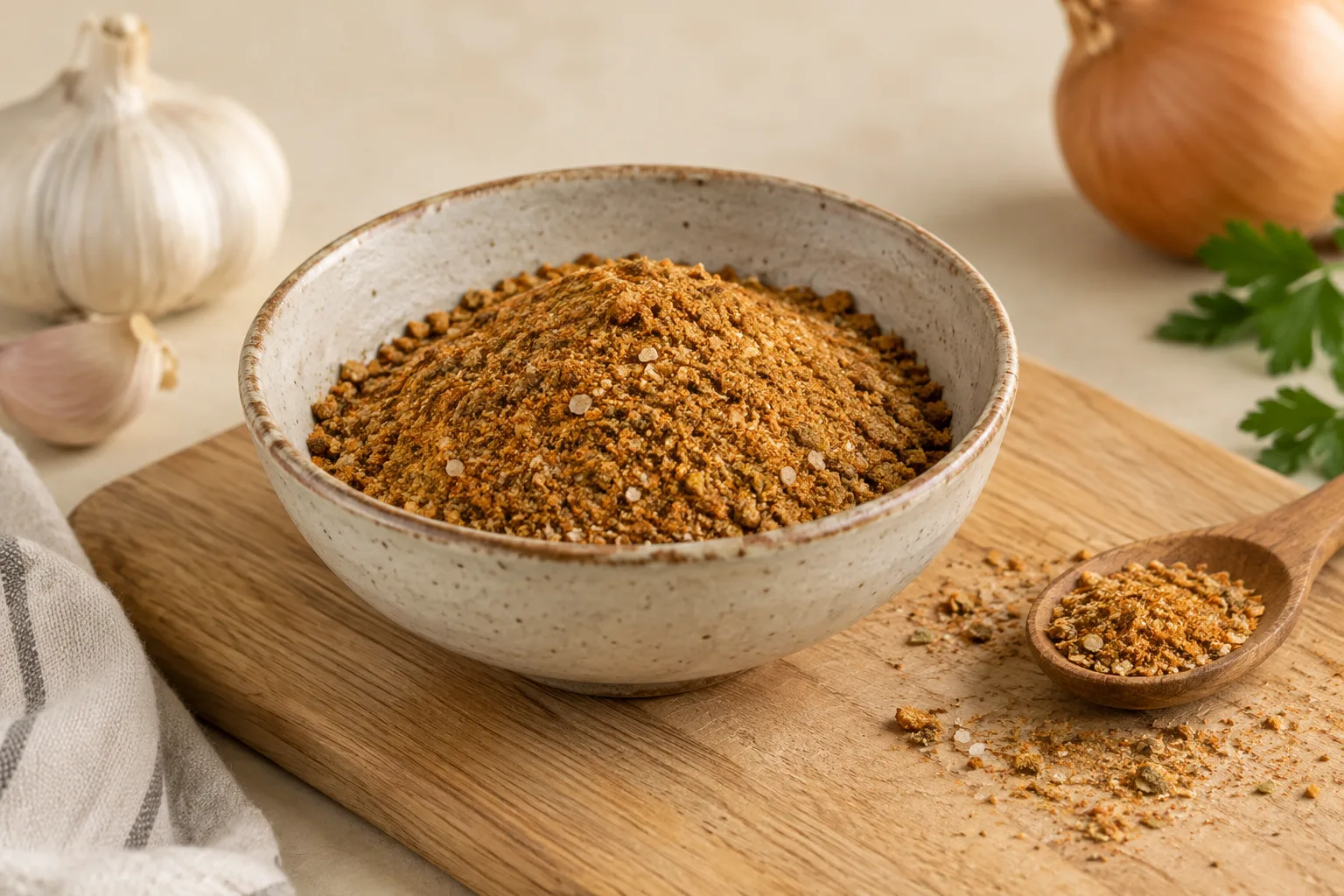
Adobo is a name used for seasoning preparations that vary in form and ingredients. This profile focuses on the dry powdered seasoning; the term is also used for liquid preparations or marinades. There is no single ingredient list that defines every adobo blend. One example of a liquid adobo combines oil, vinegar, paprika, cumin, oregano, garlic and bay leaf, while other descriptions mention vinegar, garlic and seasonings. The name alone therefore cannot tell you the formula, intensity or saltiness of a packaged product. Check its ingredient list before using it, especially when a recipe or dietary need depends on particular ingredients.
When to use it
Use adobo when you want to add a spiced, aromatic note and the specific product suits the other ingredients. It can season meat, fish, vegetables, eggs or tofu, but blends differ in intensity and foods vary in how they respond to marinades. For a dry seasoning, start with a small amount and taste as you go. If a recipe calls for liquid adobo, do not assume powdered seasoning can replace it in the same proportion: the moisture and ingredients are different.
How to use it
Check the product label and directions first: blends called adobo do not share one standard formula. To season food, sprinkle on a little or mix it with other ingredients, then adjust after tasting. You can also add it to a marinade, sauce or cooking mixture, bearing in mind that some adobos are liquids containing ingredients such as oil, vinegar, garlic or spices. If a recipe calls for liquid adobo and you only have the powder, remember that the powder supplies seasoning but does not by itself provide the recipe’s liquid or oil. Adapt the preparation rather than assuming an exact one-to-one substitution.
Flavour and texture
The flavor depends on the blend: it may be spiced, aromatic, salty or more or less intense, but the name does not guarantee a particular taste. Powdered seasoning remains dry until mixed into food or liquid. Check the label to learn what it contains and whether salt is included; do not assume a fixed recipe or heat level.
How to choose it
Read the ingredient list and package information, especially if you need to limit salt or avoid a particular ingredient. Compare products by their actual ingredients rather than relying on the word “adobo” alone: it can describe different blends as well as liquid preparations. Choose an intact, sealed package with clear storage directions.
Storage
Follow the manufacturer’s directions and keep the package closed to protect the seasoning from moisture and surrounding odors. Store it in a suitable place for dry products, and use a clean, dry spoon if dispensing it from the package. Follow any specific storage condition printed on the label.
Substitutions
For a substitute, combine available dry seasonings, such as garlic with paprika, oregano or cumin, and adjust to taste; the result will not necessarily match the original blend. If the recipe calls for a liquid marinade, powder does not supply its oil, vinegar or moisture, so replacing only the seasoning will not recreate the preparation.
Common mistakes
Do not assume every adobo has the same ingredients, saltiness or intensity. Avoid replacing a liquid marinade with powder at an automatic ratio, and do not add a large amount before tasting: the product may already contain salt or other seasonings.
Safety and allergens
Read the label if you need to avoid a particular ingredient, and follow the package directions. Keep the seasoning away from moisture and do not use it if the package is damaged or its contents appear altered.
Culinary uses
- Aportar sabor y aroma
- Condimentar alimentos antes o durante la cocción
Recommended techniques
- Mezclar con otros condimentos secos
- Incorporar a una marinada o a una preparación líquida
Pairs well with
- Carnes
- Pescados
- Verduras
- Tofu y huevos
Frequently asked questions
Is adobo always a powdered seasoning?
No. The name is also used for liquid preparations and marinades. This profile covers the dry seasoning, so check the product’s form and label.
What ingredients are in adobo?
There is no universal formula. Some preparations include garlic and spices; one liquid example combines oil, vinegar, paprika, cumin, oregano and bay leaf. Check the specific product label.
Can I replace a marinade with powdered adobo?
Not directly. Powder supplies seasoning but not necessarily the liquid, oil or vinegar in a marinade. Adjust the other recipe ingredients as needed.
Estimated nutrition
- Fat
- 0 g
- Saturates
- 0 g
- Carbohydrate
- 0 g
- Sugars
- 0 g
- Fibre
- 0 g
- Protein
- 0 g
- Salt
- 40 g
Sources and review
Automatically researched, cross-checked and validated content. Sources consulted:
- Client Challenge doi.org
- The Essential Glossary of Cooking Terms for the Culinary Arts - Escoffier escoffier.edu
- "Food Storage Cooking School" by Rebecca Low and Deloy G. Hendricks digitalcommons.usu.edu
- Agencia Española de Seguridad Alimentaria y Nutrición aesan.gob.es
- Qué es una marinada o adobo, cómo utilizarlos en la cocina y siete trucos para mejorar nuestras recetas directoalpaladar.com
- Nunez Culinary Launches Summer Cooking Class Series | Nunez Community College nunez.edu
- Good Grinding for Wise Dining Glossary Adobo nutritioncenter.ctahr.hawaii.edu
- "Effect of Refrigerated Storage on Meat Quality" by Jillian Reid Richardson open.clemson.edu
- Home food preservation | OSU Extension Service extension.oregonstate.edu
- Independent Lens | The Grocery List Show | Seafood City in Chicago | Ep 1 | WILL-TV video.will.illinois.edu
- Adobo - Denominación de Origen Estepa doestepa.com
- ▷ Domina el adobo: Guía completa para realzar tus platos | La Casa de los Sabores lacasadelossabores.com