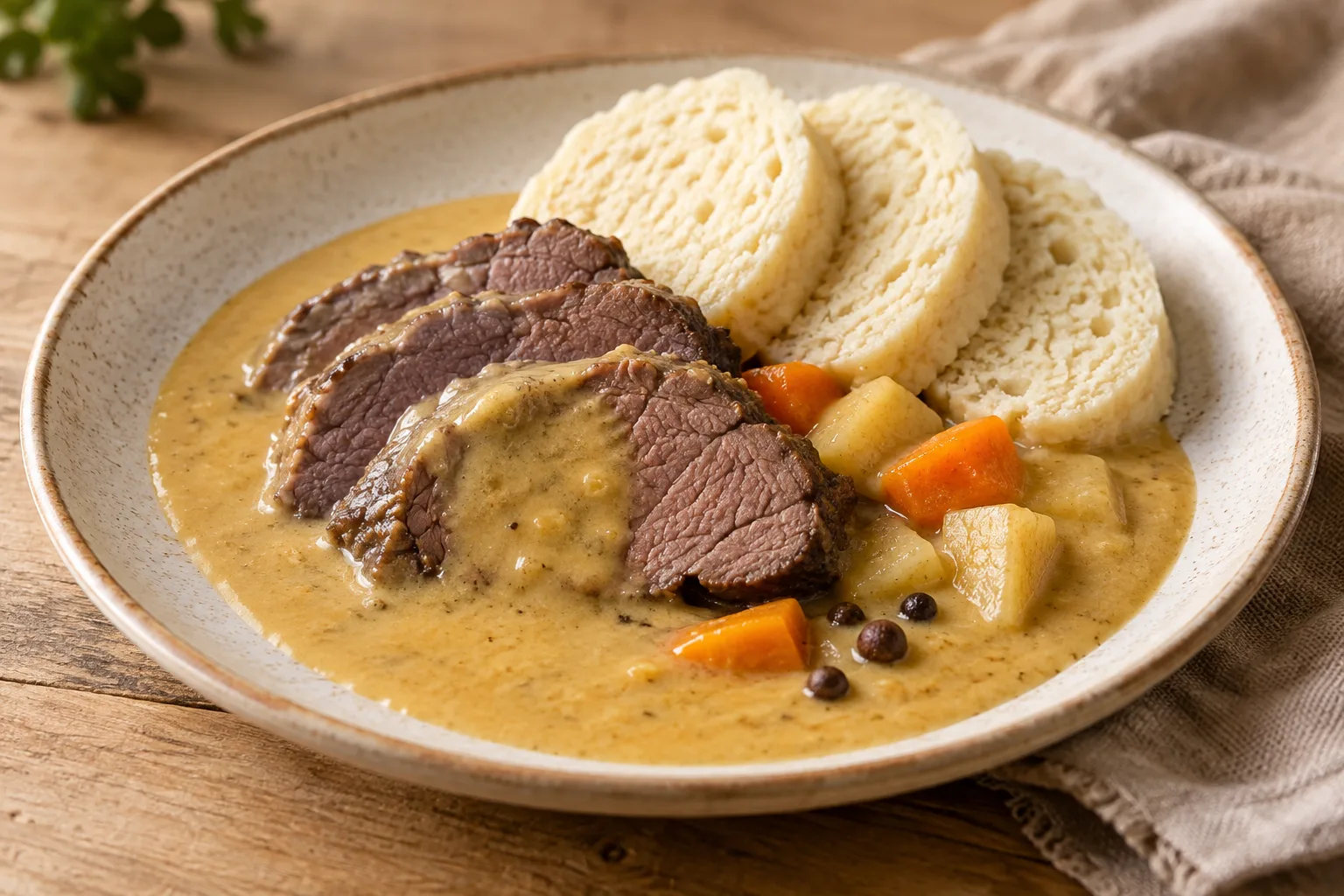
- Category
- Herbs and spices
- State
- Dry
- Usual unit
- berry
What it is
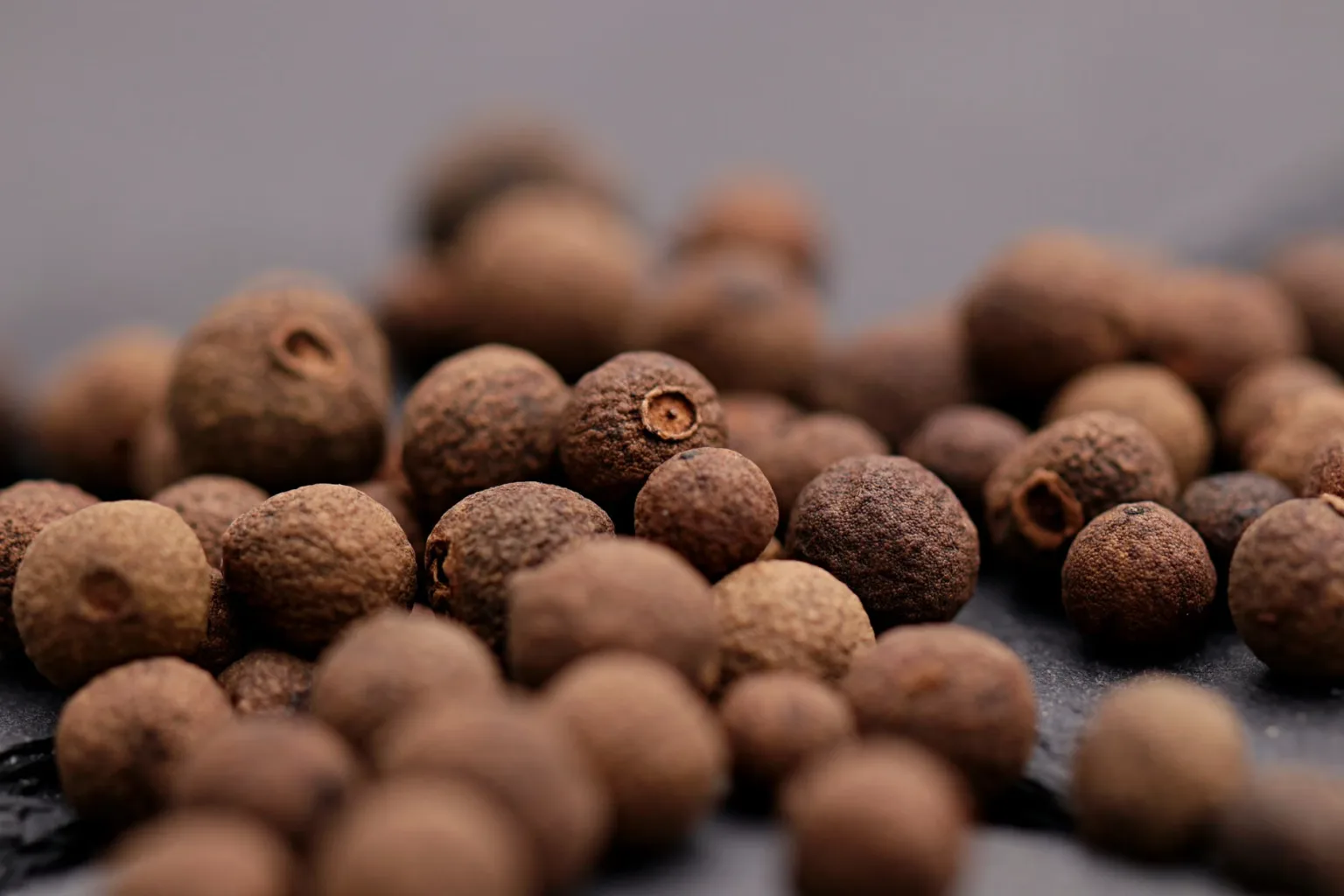
Allspice consists of the dried berries of Pimenta dioica, a tree in the myrtle family. Despite its name, it is neither true pepper nor a blend of several spices; it is a single spice. The berries are harvested green or before fully ripening and turn brown as they dry. They are sold whole or ground. The name allspice refers to an aroma that can suggest clove, cinnamon, nutmeg, and pepper, not to a mixture containing those ingredients. Whole berries can infuse a liquid and be removed afterward, while ground allspice blends directly into a dish. Its warm, distinctive character can suit both savory cooking and sweet baking.
When to use it
Choose allspice when you want a warm, complex spice character without adding several separate seasonings. It can flavor marinades and meat dishes, stews, soups, sauces, pickles, and some fish preparations. In sweet recipes, use it in cakes, breads, puddings, fruit compotes, and spice blends. It can also lend aroma to infusions and spiced drinks. Whole berries are useful when you want to remove the spice before serving; ground allspice is easier to distribute throughout a mixture. Its flavor is pronounced, so start with a small amount and adjust to taste.
How to use it
Use allspice whole or ground. Add whole berries to a broth, soup, stew, pickling liquid, or drink while it cooks or infuses, then remove them before serving if you do not want whole berries in the finished dish. For marinades, sauces, doughs, and spice blends, grind whole berries shortly before use or measure ground allspice directly into the recipe. Ground spice spreads through a dish, while whole berries release their flavor more gradually. Allspice pairs naturally with clove, cinnamon, and nutmeg and works in savory meat dishes as well as cooked fruit and baked goods. Begin with a small amount: too much can overwhelm the other flavors.
Flavour and texture
Its warm, complex aroma suggests clove, cinnamon, and nutmeg, with a gently peppery note. These are flavor associations, not ingredients in a premixed spice. Dried berries are firm and somewhat rough; ground allspice becomes an aromatic powder that blends easily into recipes. The intensity and particular notes can vary between products and growing origins.
How to choose it
For whole berries, look for mostly intact, clean-looking grains with a noticeable warm aroma when crushed or ground. Excess loose powder or many broken pieces may indicate that the product is heavily fragmented. Ground allspice is convenient, but its aroma can fade sooner than that of whole berries. Choose the form for the job: whole for infusing and removing, ground for doughs, sauces, and spice blends.
Storage
Keep whole or ground allspice in a tightly closed container, away from direct light, moisture, and heat. Protection from these conditions helps preserve its aroma. Whole berries generally retain their aroma longer than ground spice, so grind only what you need when practical. Avoid leaving the container open near cooking steam.
Substitutions
To approximate allspice’s complex profile, combine small amounts of ground clove, cinnamon, and nutmeg. The result will not be an exact match, so add the blend gradually and taste as you go. Nutmeg alone can work as a simple alternative, but it has a different, less similar flavor. Adjust the substitute to suit the recipe and its other seasonings.
Common mistakes
Do not mistake allspice for a prepared spice blend or for black pepper. Its aroma recalls several spices, but it is the dried berry of one plant. Another common mistake is using too much: its flavor can dominate the other ingredients. If using whole berries, remove them when you do not want them in the finished dish; use ground allspice when you want the flavor distributed throughout.
Safety and allergens
Use the spice when it is clean and in good condition; do not use it if it is damp, moldy, visibly contaminated, or has an unusual odor. The available evidence does not identify a specific food-safety warning for ordinary culinary use.
Culinary uses
- Aromatic seasoning for savory dishes
- Warm spice for baking and desserts
- Flavoring for infusions and drinks
Recommended techniques
- Use whole berries to infuse liquids, then remove them before serving
- Grind shortly before use for a more pronounced aroma
- Add ground berries to marinades, sauces, and baking mixtures
Pairs well with
- Clove, cinnamon, and nutmeg
- Meat, stews, and marinades
- Fruit compotes and baked goods
- Bay leaf and citrus peel
Frequently asked questions
Is allspice a spice blend?
No. It is the dried berry of Pimenta dioica. Its aroma resembles several warm spices, but the product is not a blend of them.
Can I use allspice berries whole?
Yes. Add them to liquids, stews, or pickling mixtures to infuse, then remove them before serving if you do not want whole berries in the dish.
Is it better to buy allspice whole or ground?
Whole berries tend to keep their aroma longer and can be ground as needed. Ground allspice is convenient for doughs, sauces, and blends.
Sources and review
Automatically researched, cross-checked and validated content. Sources consulted:
- ¿Por qué la muerte es origen de miedos y tabúes? doi.org
- Gastronomía de México - Wikipedia, la enciclopedia libre es.wikipedia.org
- Pimienta de Jamaica: El Secreto de la Cocina Tropical - Espècies Teixidor teixidor.com
- ¡Vamos a conocer mejor la pimienta de Jamaica - Blog - Piccantino Tienda Online España piccantino.es
- Pimienta de Jamaica para profesionales | Alveus alveus.eu
- Pimienta de Jamaica, molida (¿cruda? ¿orgánica?) | Fundación G+E diet-health.info
- Pimienta de Jamaica: Descubre esta especia - Blog de La Parada de las Especias comprarespecias.net
- ▷ Uso de la pimienta de Jamaica: Propiedades y beneficios lacasadelossabores.com
- La pimienta de Jamaica en la naturaleza, la cocina y la perfumería ~ Materias primas fragrantica.es
- La Pimienta De Jamaica: Entre Clavo, Nuez Moscada Y Canela - Restaurante Romero restaurante-romero.es
- Pimienta de Jamaica (Pimenta dioica) directoalpaladar.com