- Category
- Vegetables
- State
- Fresh
- Usual unit
- unit
What it is
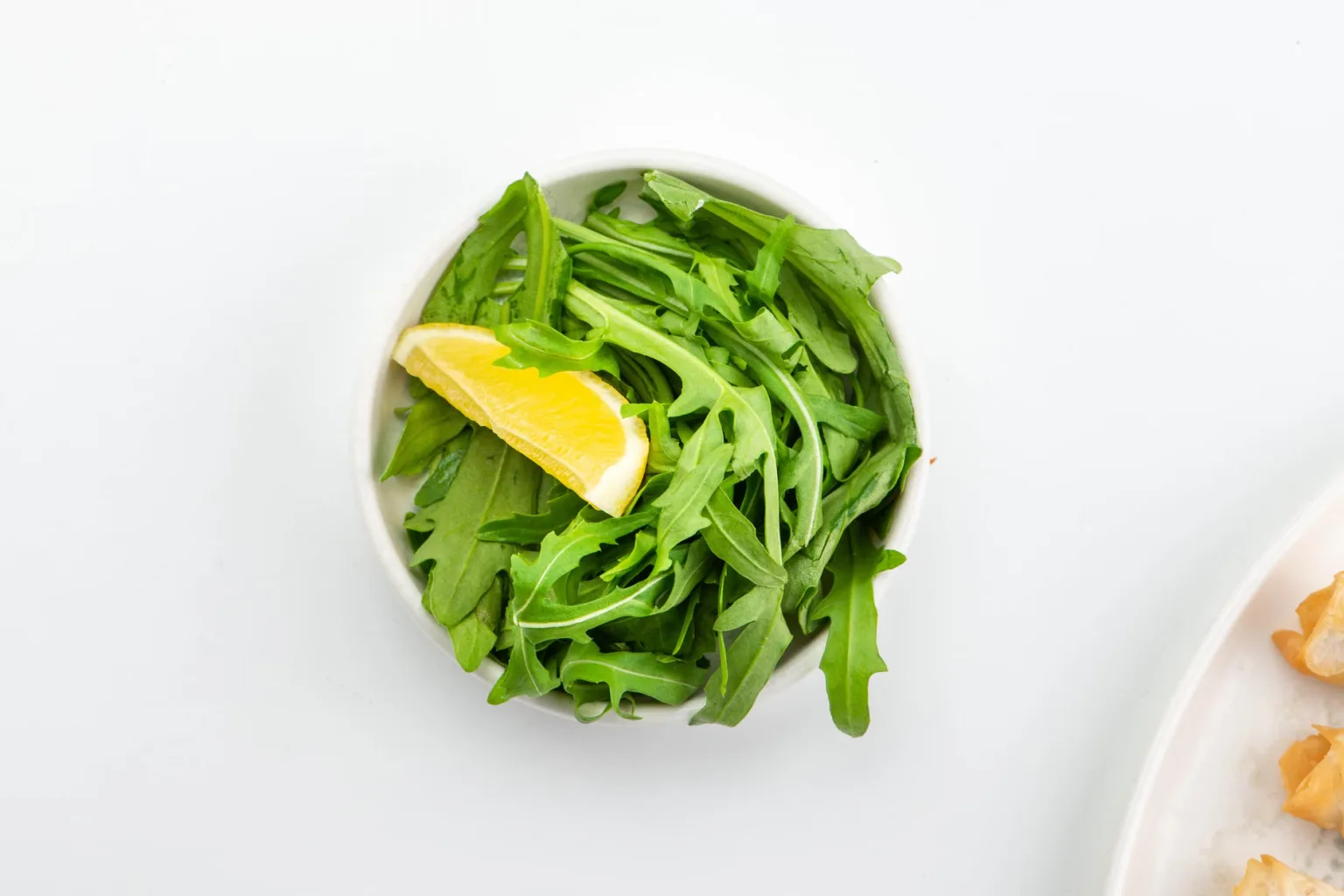
Arugula is an edible leafy green in the Brassicaceae family, the broad botanical family that also includes vegetables such as broccoli and radish. It is sold as loose leaves or in salad mixes, and may be offered as young leaves or more mature leaves. Leaf shape, size and flavor intensity vary with the type of plant and harvest stage, so some arugula is tender and mild while other leaves taste more assertive. It is not a kind of lettuce: its distinctive flavor makes it useful as a salad base or as a fresh green accent in prepared dishes.
When to use it
Use arugula when a dish needs a fresh leafy flavor with a little bitterness and peppery bite. It works in salads, mixed greens, toast and sandwiches, and contrasts well with mild, creamy ingredients such as burrata or mozzarella. It also refreshes pizza; add it after baking or near the end so it does not lose all its texture. For warm pasta, stir it in close to the end of preparation so the heat softens the leaves slightly without cooking them down too far.
How to use it
Check the leaves and remove any that are damaged or spoiled. Unless the package says the arugula is washed and ready to eat, rinse it under running water and dry it with a clean cloth or paper towel; follow the package directions for prewashed greens. For a salad, combine it with tomato, fruit, nuts or cheese and dress just before serving to keep the leaves pleasant. Use it on its own or mix it with milder greens. Scatter it over freshly baked pizza, or stir it into hot pasta at the end. Arugula also works in sandwiches and on toast, and can be blended into pesto. Avoid cooking it for a long time if you want to retain its fresh flavor and lively character.
Flavour and texture
Arugula usually tastes fresh, lightly bitter and peppery, sometimes with a mild mustard-like note. Intensity depends on the type and maturity of the leaves: young leaves tend to be more tender and mild, while some mature leaves or more assertive types have a more persistent bite. Its fresh, slightly firm texture contrasts with creamy cheese, juicy fruit and other mild ingredients.
How to choose it
Choose leaves that look fresh and have good color, without rotten, wilted or badly damaged areas. For bagged or cut arugula, check that the package is refrigerated and in good condition, and read the label to see whether it is washed and ready to eat. Young leaves are usually more tender; more assertive leaves can provide a stronger contrast. Buy an amount you can use while it still looks fresh.
Storage
Keep fresh, perishable arugula in a clean refrigerator. Refrigerate cut or packaged arugula and follow the package storage directions. Handle it with clean hands and utensils, and keep it separate from raw meat, poultry and seafood and from utensils that have touched them. No specific storage life is established here for every product: check the leaves before use and discard any that are rotten.
Substitutions
For a milder leafy base, replace arugula with mesclun, a tender mixed-leaf blend, romaine or butter lettuce. These options will not reproduce arugula’s exact peppery bitterness; for a closer contrast, mix a small amount of arugula with milder leaves. Adjust the quantity to suit the dish and the character of the greens available.
Common mistakes
Do not assume all arugula tastes equally strong: taste a leaf and adjust the amount. Leaving it in dressing for too long can reduce its texture. Adding it too early to pizza or cooking it too long with pasta also diminishes its freshness. Do not wash leaves with soap or detergent; rinse under running water unless the package identifies them as prewashed and ready to eat.
Safety and allergens
Wash your hands before preparing arugula, and rinse the leaves under running water unless the package identifies them as prewashed and ready to eat. Do not use soap or detergent. Keep greens that will be eaten raw separate from raw meat, poultry and seafood and their utensils; refrigerate perishable arugula and discard rotten leaves.
Culinary uses
- Salad green and leafy base
- Fresh finishing green for pizzas, sandwiches, pasta and toast
Recommended techniques
- Serve raw after washing and drying
- Toss into warm pasta near the end of preparation
- Add to pizza after baking or near the end of baking to retain freshness
- Blend into pesto
Pairs well with
- Tomato and soft cheeses such as burrata or mozzarella
- Fruit, nuts and aged cheeses
- Sandwiches, pizza and pasta
- Basil and other salad greens
Frequently asked questions
Can arugula be eaten raw or cooked?
It can be eaten raw in salads, sandwiches and on toast, or added near the end to hot dishes such as pasta and pizza. Adding it late helps preserve its fresh character.
Why is some arugula more peppery than other arugula?
Flavor can vary by type and by the size or harvest stage of the leaves. Young leaves tend to be milder; taste one before deciding how much to use.
Should bagged arugula be washed?
Check the label. If it says the greens are prewashed and ready to eat, they can be used without washing again, provided they do not touch unclean surfaces or utensils. Otherwise, rinse them under running water.
Estimated nutrition
- Fat
- 0.59 g
- Saturates
- 0 g
- Carbohydrate
- 3.53 g
- Sugars
- 2.35 g
- Fibre
- 1.2 g
- Protein
- 2.35 g
- Salt
- 0.07 g
Sources and review
Automatically researched, cross-checked and validated content. Sources consulted:
- Client Challenge doi.org
- USDA FoodData Central libguides.marist.edu
- Cookbooks and Reading Suggestions - UNT Food Pantry - Guides at University of North Texas guides.library.unt.edu
- Food Timeline: food history research service libguides.umflint.edu
- Para la ciudadanía aesan.gob.es
- Selecting and Serving Produce Safely | FDA go.unl.edu
- Blackberry Basil Arugula Salad Recipe | Institute of Culinary Education ice.edu
- Arugula townesharvest.montana.edu
- SCTC Culinary Arts Hosts Ninth Annual PAIRINGS Event % sctech.edu
- Online Culinary School | Online Culinary Degree - Escoffier escoffier.edu
- Rúcula: Propiedades, beneficios y cómo usarla en cocina lafamigliarestaurantes.com
- Brote de rúcula - Florette florette.es
- Qué es la rúcula: propiedades, beneficios y cómo usarla en la cocina con cinco recetas más allá de las ensaladas directoalpaladar.com
- Tipos de rúcula: cuáles existen y en qué se diferencian - I Love Fruit And Veg From Europe ilovefruitandvegfromeurope.com