- Category
- Vegetables
- State
- Fresh
- Usual unit
- g
What it is
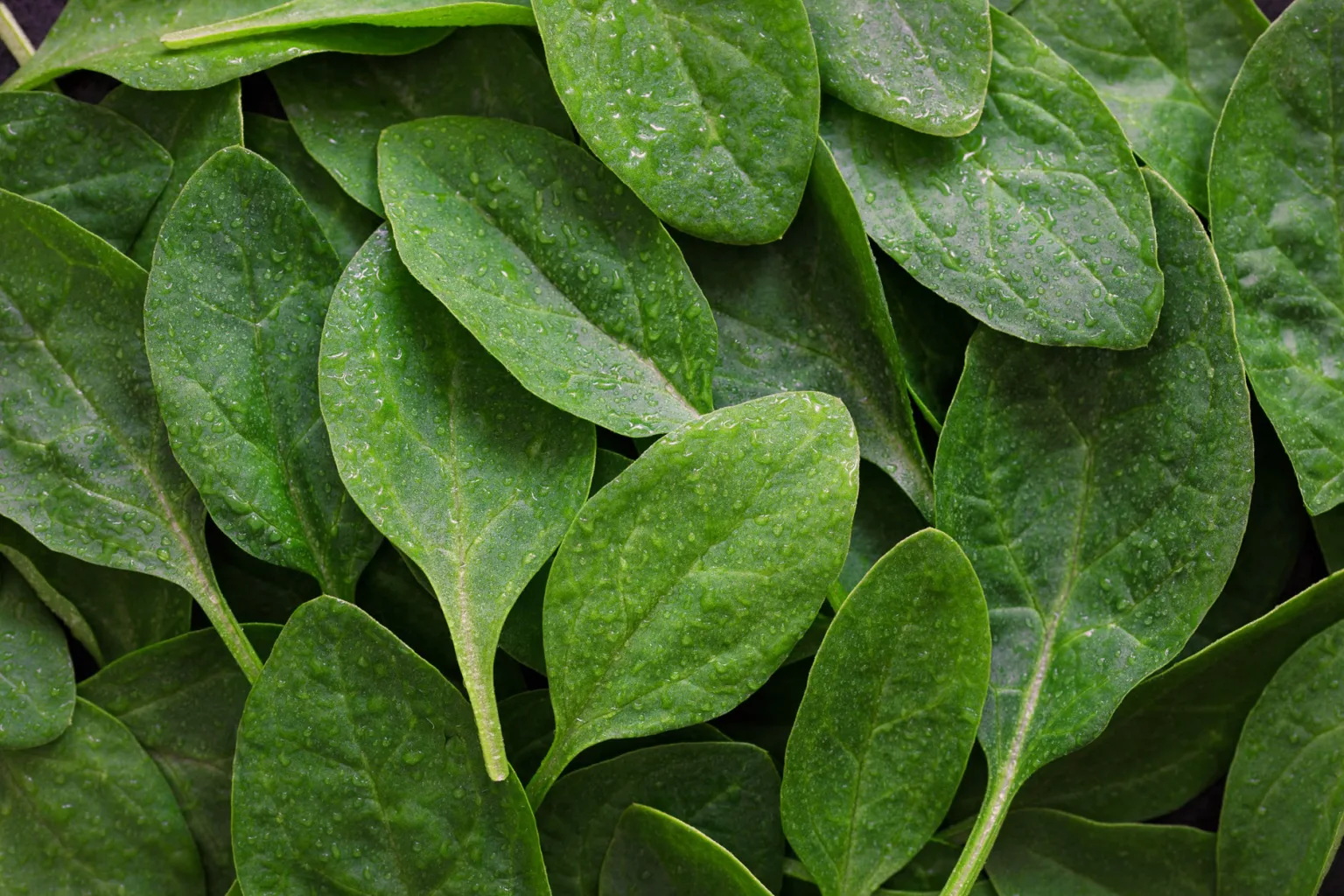
Baby spinach is spinach harvested while young, with fine leaves and only lightly developed stems. It is sold fresh and can be eaten raw or cooked. Its flavor may have a mild bitter note, particularly when the leaves are eaten uncooked. Because the leaves are delicate, handle them gently and remove any that are wilted or damaged. The name describes the early harvest and tender leaves; small leaves should not be assumed to represent a separate spinach type.
When to use it
Use baby spinach raw when you want a tender salad base or a fresh leafy addition to a meal. It can also be added to pasta, stews, soups, quiches, omelets and fillings. For a softer texture, steam or sauté the leaves; blanching and draining them can soften their flavor and reduce some water-soluble nitrate. Remember that a large pile of raw leaves takes up much less space after cooking, so allow for substantial shrinkage when planning portions.
How to use it
Remove damaged leaves and wash the spinach carefully before serving it raw or cooking it. For a salad, dry it gently and combine it with the other ingredients shortly before serving. You can cut the leaves into strips and add them to pasta or stews. For a hot preparation, steam or sauté them until they soften to your liking; the leaves shrink markedly. If blanching, drain the leaves afterward and do not use the cooking water in the dish. Add the cooked spinach to soups, quiches, omelets or fillings, allowing for its reduced volume.
Flavour and texture
Young leaves are fine, tender and delicate, with lightly developed stems. Raw baby spinach can taste mildly vegetal with a subtle bitter note. Blanching can soften that note and reduce a slightly astringent sensation. When heated, the leaves soften and lose considerable volume, so a generous-looking pile may become a much smaller cooked portion.
How to choose it
Choose leaves that look fresh, firm and evenly colored, without brown patches or a limp appearance. Baby spinach is delicate, so check that its package has not been crushed and does not contain damaged leaves. When buying loose spinach, inspect leaves at the top and bottom of the pile. Fresh appearance is a more useful guide than size alone: baby spinach is distinguished by its early harvest and fine texture.
Storage
Baby spinach leaves are delicate, so avoid squeezing or handling them roughly. Remove wilted or damaged leaves and follow any storage directions printed on the package. For salads, wash and dry the leaves gently shortly before serving; this limits handling and helps prevent damage during preparation.
Substitutions
Mature spinach is a close alternative, although its leaves and stems are usually sturdier and may need different preparation. Tender chard can play a similar role in cooked leafy dishes, but it has a different texture and flavor. When substituting, consider the final cooked volume you want and adjust the preparation to suit the thickness of the leaves.
Common mistakes
Do not handle baby leaves as roughly as thicker greens: vigorous washing or drying can damage them. Avoid filling a pan without allowing for the substantial shrinkage that occurs during cooking. If you blanch the leaves, do not keep the cooking water for the dish. Do not choose wilted or brown-spotted leaves on the assumption that cooking will restore their quality.
Safety and allergens
Wash the leaves carefully before eating them raw and discard any that are spoiled. Handle them gently during preparation and follow any storage directions on the package.
Culinary uses
- salad green
- ingredient for pasta, soups and stews
Recommended techniques
- serve raw
- blanch
- steam
- sauté
Pairs well with
- pasta
- eggs
- chickpeas
- garlic
Frequently asked questions
Can baby spinach be eaten raw?
Yes. It can be served raw, for example as a salad base. Wash the leaves carefully and dry them gently before serving.
Why does baby spinach shrink so much when cooked?
The tender leaves lose considerable volume when heated. Allow for this when planning portions for soups, stews, quiches or omelets.
How can I soften its flavor?
Blanch and drain the leaves, or steam or sauté them. Blanching can soften the bitter note and slightly astringent sensation.
Estimated nutrition
- Fat
- 0 g
- Saturates
- 0 g
- Carbohydrate
- 3.53 g
- Sugars
- 0 g
- Fibre
- 2.4 g
- Protein
- 2.35 g
- Salt
- 0.19 g
Sources and review
Automatically researched, cross-checked and validated content. Sources consulted:
- Client Challenge doi.org
- The Essential Glossary of Cooking Terms for the Culinary Arts - Escoffier escoffier.edu
- espinacas tiernas | Fundación G+E diet-health.info
- UCCE efforts improve quality of and demand for fresh ... ucanr.edu
- EFNEP Hispanic Heritage Recipes | Community Nutrition | Extension/College of Agriculture, Health & Natural Resources | University of Connecticut communitynutrition.cahnr.uconn.edu
- The best vegetables to grow in Oregon's coastal climate | Servicio de Extensión de OSU extension.oregonstate.edu
- edible Jaltomata sites.ccsu.edu
- Cómo cocinar espinacas y qué beneficios nos aporta esta verdura - Helios helios.es
- Espinaca: nutrición, beneficios para la salud y la dieta medicalnewstoday.com
- ESPINACA - Petit Fit by Cris petitfitbycris.com