- Category
- Vegetables
- State
- Fresh
- Usual unit
- unit
What it is
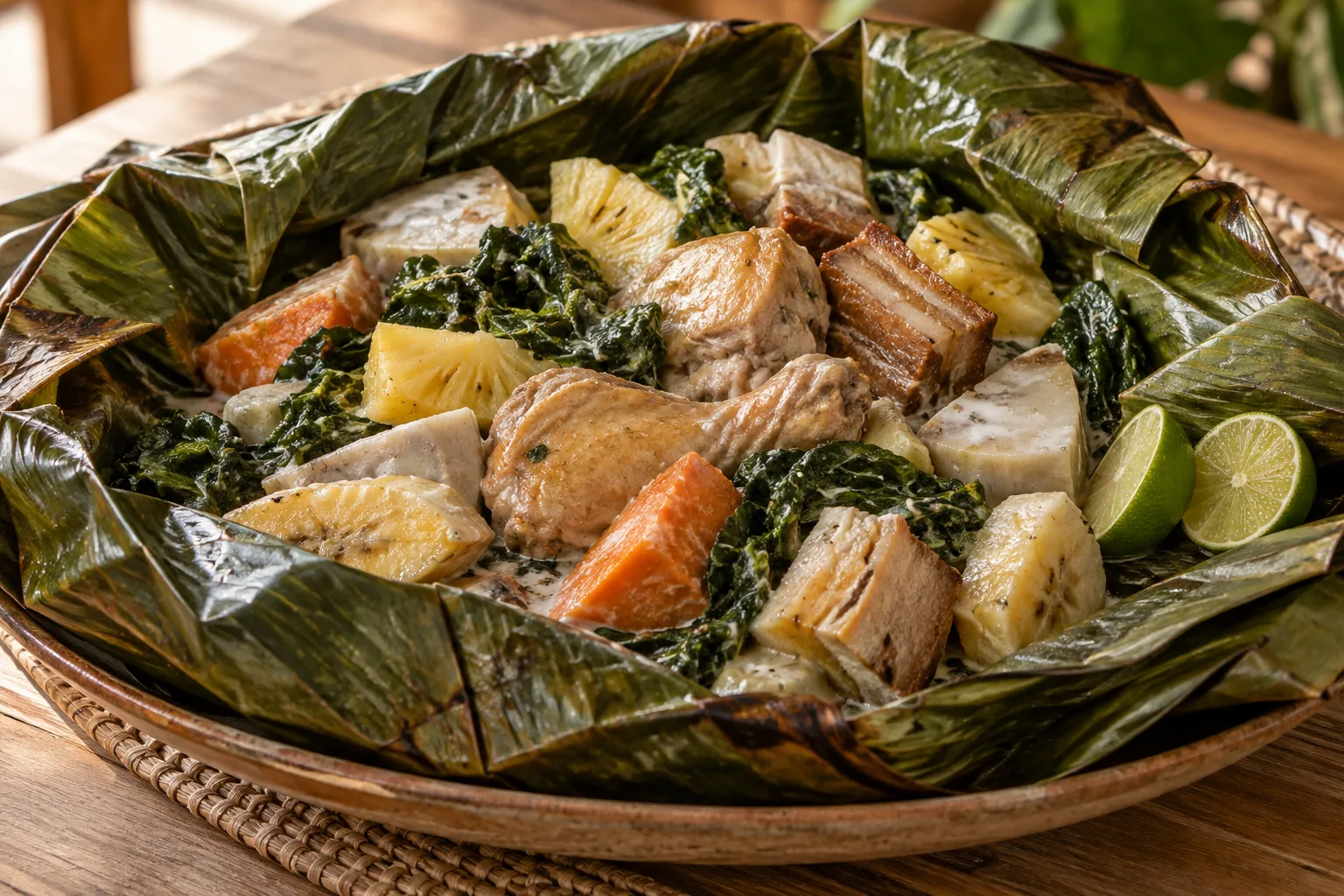
A banana leaf is the large leaf of the banana plant, used in some cuisines as a food wrapper or serving surface. It is not the fruit; in these dishes its main job is to wrap, cover or separate food while it cooks or is served. It is used with doughs, rice, meats and other fillings, including in tamales, hallacas and juanes. When heated, a leaf may lend the food a mild vegetal aroma and help keep a wrapped preparation moist. Fresh leaves can be firm and may split when folded, so some cooks briefly heat them to make them more pliable. The leaf is generally removed before eating; it should not be treated as an ingredient that is necessarily consumed as part of the dish.
When to use it
Choose banana leaves when you want to wrap portions for steaming or boiling, shape a filled parcel, or present food on a broad surface. They are common in preparations such as tamales, hallacas and juanes, and can also wrap meats, doughs or fillings. They are useful when you want to protect food during cooking and retain moisture, with a subtle vegetal aroma as an additional feature. A clean leaf can also be used as a serving base. If you need to fold a leaf, briefly heat it to make it more pliable. If leaves are unavailable, or you want a neutral wrapper, choose an alternative while allowing for a change in aroma and presentation.
How to use it
Before cooking, choose leaves in good condition, rinse them, and trim away sections that interfere with the shape of your preparation. If a leaf feels stiff, briefly pass it over a heat source to make it more pliable and less likely to split during folding. Place the portion of dough or filling on the side you want facing the food, fold the leaf carefully, and secure the parcel as your recipe directs. Steam or boil the parcel when that is the dish’s method; some preparations also use banana leaves as a wrapper for grilling. Do not assume the leaf itself determines cooking time: follow the recipe’s method for the filling. To serve, a clean leaf can be laid out as a base, but remove it if the dish uses it only as a wrapper.
Flavour and texture
Banana leaves mainly function as wrappers, but heating them can give food a mild vegetal aroma. They also help shield a preparation and retain moisture during cooking. A fresh leaf is broad and flexible, although it can tear if folded while cold or handled roughly. Brief heating can soften it and make it easier to fold. It is not usually used to provide a strong flavor; the result depends on the filling, cooking method and the leaf itself.
How to choose it
Look for leaves sold for culinary use, whole or cut into pieces large enough for the parcels you plan to make. For wrapping, choose leaves that are flexible and do not have large tears where the folds need to close. Color can vary, so prioritize condition and the absence of obvious spoilage rather than a particular shade. If buying frozen or packaged leaves, check that the product is identified for cooking and follow its package directions.
Storage
Store leaves according to the form in which you bought them and the package directions. Protect fresh leaves from drying out and avoid leaving them exposed unnecessarily; there is no universal storage period that applies to every product. Keep frozen leaves frozen until use and thaw them according to the manufacturer’s instructions. Discard leaves with obvious spoilage. Do not rely on a plant-leaf wrapper to keep perishable food safe at room temperature.
Substitutions
Corn husks can replace banana leaves in recipes that allow a different wrapper, though their size, flexibility and aroma differ. Parchment paper may help wrap or cover food, but it does not provide the vegetal scent of a banana leaf and gives a different presentation. Before substituting, make sure the chosen material suits both the cooking method and the food. Do not assume a substitute will behave identically when steamed, boiled or used on a grill.
Common mistakes
Trying to fold a stiff leaf without softening it can make it split and allow filling to escape. Another mistake is relying on a badly torn leaf to close a parcel without reinforcing the opening. Do not assume the leaf is meant to be eaten: it is commonly used as a wrapper or serving surface. Finally, using a leaf does not guarantee that the filling is cooked; follow the appropriate method for the ingredients and remove the wrapper when needed.
Safety and allergens
Use leaves intended for culinary use and rinse them before use. A wrapper does not replace proper cooking of the filling or safe food handling and storage. Follow package directions for packaged or frozen leaves, and discard any that show obvious spoilage.
Culinary uses
- Envoltura para cocinar y mantener la humedad
- Base natural para servir y presentar alimentos
- Aportar un aroma vegetal suave a los alimentos cocinados
Recommended techniques
- Envolver y cocer al vapor
- Envolver para hervir
- Usar como envoltura para cocinar a la parrilla
- Pasar brevemente por calor para flexibilizar antes de plegar
Pairs well with
- Masas y rellenos de maíz
- Arroz sazonado y rellenos de carne
- Pescado, carnes asadas y guisos
Frequently asked questions
Do you eat banana leaves?
In common preparations, they serve as a wrapper or serving base and are usually removed before eating. Follow the instructions for the dish.
Why heat a banana leaf before wrapping?
Brief heating can make a leaf more pliable and easier to fold, reducing the chance that it will split.
What can I use if banana leaves are unavailable?
Corn husks work in some recipes, and parchment paper can wrap or cover food. Neither gives exactly the same aroma or presentation as a banana leaf.
Sources and review
Automatically researched, cross-checked and validated content. Sources consulted:
- The Essential Glossary of Cooking Terms for the Culinary Arts - Escoffier escoffier.edu
- Usos culinarios apropiados de las variedades de plátano verde barraganete, dominico y maqueño, en la gastronomía ecuatoriana. | Revista de Gastronomía y Cocina doi.org
- Banana - Wikipedia, la enciclopedia libre es.wikipedia.org
- Washington State Food Access English-Spanish Glossary wpcdn.web.wsu.edu
- Agencia Española de Seguridad Alimentaria y Nutrición aesan.gob.es
- A Recipe for Memory: Hispanic Heritage as Told Through Cultural Dishes news.sunyempire.edu
- La Hoja de Plátano: El Envase Natural que Define Sabores chefyerika.com
- View of De las hojas del plátano a las bolsas de plástico pubs.lib.umn.edu
- Meet the Chefs hdhdining.ucsd.edu
- Ecological uses of banana leaves cursus.edu
- Vista de Usos de la hoja de plátano (Musa paradisiaca L.) ... academiaculinaria.org
- Hoja de plátano: recetas fáciles y usos en cocina goya.es
- Las hojas de plátano y sus cualidades - Formacion en Gastronomia formacionengastronomia.com
- Discovering Mi Guatemala: A Flavorful Journey Through Providence’s Culinary Soul - Shahjalal University of Science and Technology csecarnival.sust.edu