- Category
- Meat
- State
- Fresh
- Usual unit
- g
What it is
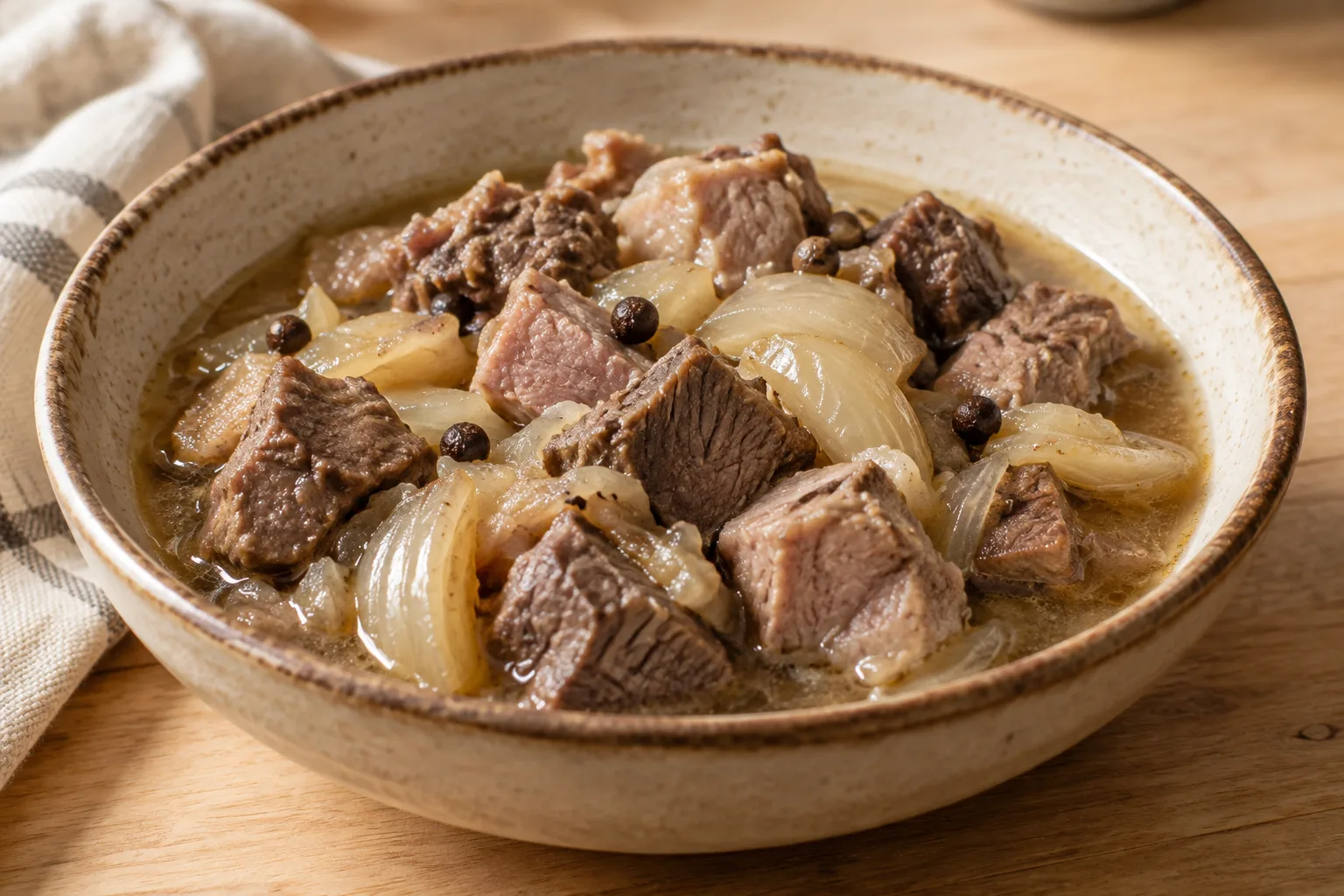
Beef chuck is a beef cut from the forequarter, around the neck and the start of the loin. It is not a completely uniform piece: proportions of muscle, fat and connective tissue can differ, and the fibres may be more or less pronounced. As a result, two pieces sold under similar names may not cook in the same way. Depending on the exact cut and thickness, some pieces can work for searing or grilling; more fibrous portions are often better suited to moist, longer cooking, such as braising or stewing. The retail name can also vary by region or butcher. Before choosing a recipe, check whether the piece is bone-in, how it has been cut, and what cooking method is recommended for that specific portion.
When to use it
Choose chuck when you want a versatile beef cut and can match the technique to the piece. A relatively tender portion sold as a steak may be suitable for quick searing or grilling. If it has pronounced fibres or appreciable connective tissue, it is more sensible to use it in a stew, braise or another moist, longer preparation. Minced chuck can also be cooked as a filling, for example with onion and tomato. Do not assume that every piece of chuck has the same thickness, tenderness or fat content: ask about the specific cut and adapt the recipe to its format.
How to use it
Before cooking, identify whether you have a steak, a braising piece, minced beef or a bone-in cut; the name alone is not enough to determine the method. For a piece sold as suitable for quick cooking, you can dry the surface and sear it on a hot griddle or grill, adjusting to its thickness. If it has more fibres or connective tissue, choose a moist, longer method such as braising or stewing rather than treating it like a tender steak. Minced chuck can be cooked for a filling and combined with onion and tomato; it can also be used in a pastry-topped preparation. Follow the package instructions and official food-safety guidance when handling raw meat.
Flavour and texture
Chuck can have a pronounced beef flavour and a juicy quality, but these characteristics vary with the particular piece and its fat content. Fibre and connective tissue also vary: some portions suit quicker cooking, while others benefit from moisture and more time. Do not expect every cut sold under this name to have the same texture. Thickness, bone and the way the piece has been cut all affect how it cooks and eats.
How to choose it
Ask which specific part of the chuck you are buying and whether it is intended for searing, grilling or stewing. Check its thickness, whether it is bone-in, and whether it is sold whole, as steaks or minced; these details are more useful than the name alone. Some visible fat may suit a particular preparation, but the cut is variable and marbling differs. If the label or counter description does not make the intended use clear, ask the butcher before choosing a recipe or substitute.
Storage
Keep fresh beef according to its package instructions and the official food-safety guidance that applies where you live. Protect the meat and prevent raw-meat juices from contacting ready-to-eat foods. If you are unsure how long it can be stored, do not infer a shelf life from the cut name; check the label or an official source. For freezing or thawing, follow official and product-specific instructions rather than guessing at times or temperatures.
Substitutions
Cut names differ between regions and butcher shops, so chuck may be sold under another local name. Before substituting, confirm that the alternative is a beef shoulder or forequarter cut with a structure suited to the same cooking method. Another shoulder cut may work in a similar preparation if the butcher confirms its use; do not assume that every beef cut will behave the same way in quick or slow cooking.
Common mistakes
A frequent mistake is treating every piece of chuck like a tender steak: fibre and connective tissue can vary substantially. It is also easy to choose a method without considering thickness, bone or format. Check the recommended use before cooking; reserve more fibrous pieces for moist, longer preparations, and do not apply one universal cooking time to pieces of different sizes.
Safety and allergens
Handle raw meat cleanly, follow the package instructions, and consult official food-safety guidance for storage and cooking. No specific storage duration or temperature is given here; these depend on applicable guidance, the product instructions and how the meat has been handled.
Culinary uses
- Cut for braises and stews when the piece has noticeable connective tissue
- Beef for searing or grilling when the particular piece is suitable
Recommended techniques
- Braising or slow, moist cooking for more fibrous pieces
- Searing or grilling for pieces sold and cut for quick cooking
Pairs well with
- Onion and tomato sauce in a cooked minced-beef filling
- Puff pastry for a baked beef pastry filling
Frequently asked questions
Can beef chuck be cooked on a griddle?
Some pieces can be griddled, depending on the exact cut and thickness. Ask whether the portion is suitable for quick cooking; more fibrous pieces are usually better suited to stews or braises.
What is the difference between chuck for steaks and chuck for stewing?
The pieces may differ in fibre, connective tissue, thickness and format. One may be sold for quick cooking, while a more fibrous piece is often better suited to moist, longer cooking. Confirm the intended use with the seller.
Can I use minced chuck in a filling?
Yes. Minced beef can be cooked as a filling, combined with ingredients such as onion and tomato, and used in a pastry-topped preparation. Handle it in accordance with official food-safety guidance.
Estimated nutrition
- Fat
- 12 g
- Saturates
- 5.07 g
- Carbohydrate
- 0 g
- Sugars
- 0 g
- Fibre
- 0 g
- Protein
- 19.1 g
- Salt
- 0.2 g
Sources and review
Automatically researched, cross-checked and validated content. Sources consulted:
- ¿Por qué la muerte es origen de miedos y tabúes? doi.org
- Duke University Dissertation Template dukespace.lib.duke.edu
- Mesa para dos. La Gastronomía en la Poesía y el Cine ... scholarworks.umass.edu
- Etiquette, Dress, and Food in XIX Century Mexico - Publishing digital.lib.washington.edu
- Para la ciudadanía aesan.gob.es
- Comodidad en las camas – Dairy dairy.extension.wisc.edu
- Cortes de carne económicos | Extensión de la UMN es.extension.umn.edu
- Aguja de ternera: qué corte es y cómo cocinarlo | El Mercado de Origen elmercadodeorigen.com
- Aguja de ternera - Wikipedia, la enciclopedia libre es.wikipedia.org
- Agujas de ternera: cómo hacer en casa las míticas empanadas de hojaldre madrileñas | El Comidista | Gastronomía | EL PAÍS elpais.com
- Agujas de ternera | Ven a la Cocina venalacocina.com