- Category
- Vegetables
- State
- Fresh
- Usual unit
- unit
What it is
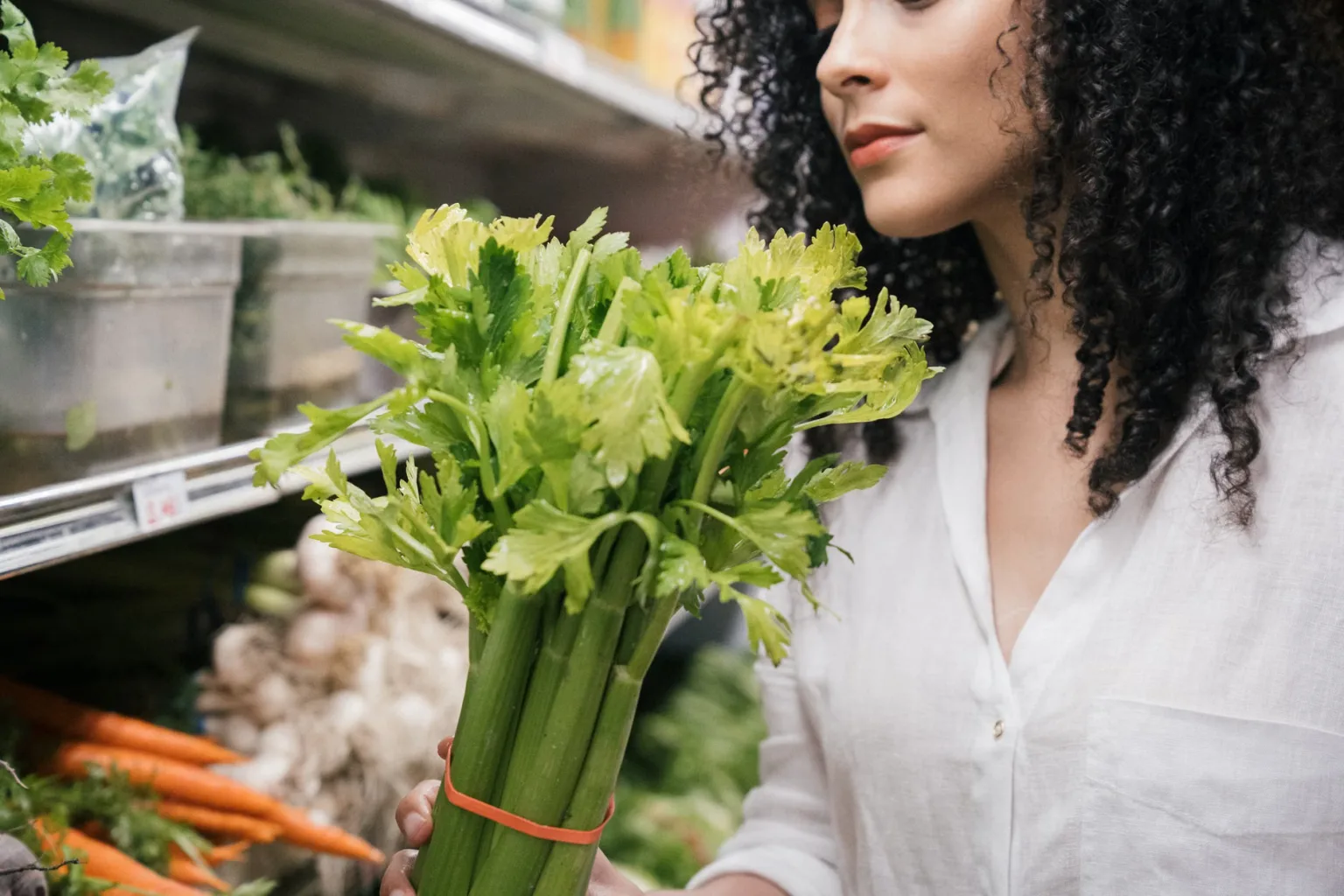
Common celery, Apium graveolens, is a vegetable in the Apiaceae family. Here, “celery stalks” means the edible stalks, not celeriac, which develops a large rounded root, or lovage, a different plant used mainly as a seasoning. Celery stalks are described as thick, ribbed, hollow and crunchy. The leaves and seeds are also used in cooking. Stalks may be green, yellow or pinkish, so green is not the only possible color. Celery is used fresh as well as in boiled dishes and soups. Its fresh, slightly tart vegetable character makes it useful both as a crisp ingredient served raw and as part of a cooked preparation.
When to use it
Use celery stalks raw when a salad or a plate with lettuce and carrots would benefit from a crisp texture and fresh flavor. Chopped celery also works in chicken salads. For warm dishes, add the stalks to soup or boil them with other ingredients when a softer texture and integrated flavor are wanted. Celery can accompany bread with butter, oil and vinegar, or add texture to a dish served with dressing. It is a useful choice when a recipe calls for a stalk vegetable that can be served either raw or cooked.
How to use it
Separate the stalks you need and cut them into slices or pieces for salads, toppings and chicken dishes. To retain their crisp presence, serve them raw and add them near serving time. For soup or another boiled preparation, include the stalks with the other vegetables and cook until they reach the texture you prefer; the available information does not establish a specific cooking time. You can also serve celery with buttered bread, oil and vinegar, or combine it with lettuce, carrots and dressing. Celery leaves have culinary uses too, so they can be used when a dish benefits from their vegetable flavor.
Flavour and texture
Celery tastes fresh, vegetal and slightly tart. Its stalks are ribbed, thick, hollow and crunchy when raw; boiling or adding them to soup makes them softer. Their color can range from green to yellow or pinkish, so color alone does not describe every quality or use of the vegetable.
How to choose it
Choose stalks that look intact and crisp, and look for the characteristic ribs. Celery can be green, yellow or pinkish, so do not expect a single correct color. Take care not to mistake the stalks for celeriac, which has a large rounded root, or for lovage, a different plant used as a seasoning.
Storage
The available information does not specify a storage method or shelf life for celery stalks. For a pleasant result, cut only the amount you plan to use and aim to keep stalks served raw crisp. Check their condition before using them and discard any that are spoiled.
Substitutions
If you do not have stalks, celery leaves can provide celery character in preparations where crisp texture is not essential. They are not an exact replacement: they change the shape and texture of the dish. If a recipe calls for whole stalks but you want pieces, chop the stalks; this changes the format, not the ingredient.
Common mistakes
Do not confuse common celery with celeriac or lovage: they are different products and do not have the same form. Another mistake is expecting cooked celery to stay as crisp as raw celery. Color also varies, so celery is not always green.
Safety and allergens
Use celery sold as food and wash it before serving raw. Do not eat wild plants identified only by their resemblance to celery.
Culinary uses
- Crunchy raw vegetable
- Aromatic base or addition for soups and cooked dishes
Recommended techniques
- Chop or slice for salads and toppings
- Simmer or boil in soups and other cooked preparations
Pairs well with
- Carrots and lettuce
- Oil and vinegar
- Chicken with hot sauce
- Bread and butter
Frequently asked questions
Can celery stalks be eaten raw?
Yes. They are used raw in salads and dishes with lettuce, carrots or chicken, where they add a crisp texture.
Is celeriac the same as celery stalks?
No. Celeriac develops a large rounded root; celery stalks are the elongated, ribbed stalks.
What does celery taste like?
It tastes fresh, vegetal and slightly tart. Raw stalks are crisp; boiled or soup-cooked stalks are softer.
Estimated nutrition
- Fat
- 0 g
- Saturates
- 0 g
- Carbohydrate
- 2.73 g
- Sugars
- 0.91 g
- Fibre
- 1.8 g
- Protein
- 0.91 g
- Salt
- 0.2 g
Sources and review
Automatically researched, cross-checked and validated content. Sources consulted:
- ¿Por qué la muerte es origen de miedos y tabúes? doi.org/10.64628/aao.fccyk3qj3 doi.org
- Gastronomía de Costa Rica - Wikipedia, la enciclopedia libre es.wikipedia.org/wiki/Gastronom%C3%ADa_de_Costa_Rica es.wikipedia.org
- Apio: qué es, beneficios y usos culinarios bonviveur.com/es/noticias/apio bonviveur.com
- Verdura - Wikipedia, la enciclopedia libre es.wikipedia.org/wiki/Verdura es.wikipedia.org
- Qué es (y qué no es) la estadística, usos y abusos de una disciplina clave en la vida de los países y las personas | Estudios económicos doi.org/10.52292/j.estudecon.2015.740 doi.org
- Maqueta nº 10.2 aesan.gob.es/dam/jcr:1538b6eb-680f-44b8-bbc5-b08d810b00dc/comite_cientifico_10.pdf aesan.gob.es
- Propuesta de aplicación de técnicas de elaboración de pasta con especias dulces en preparaciones de cocina de autor | OpenAlex openalex.org/W2935162661 openalex.org
- tallos de apio Archives | Dinner Tonight dinnertonight.tamu.edu/ingredient/tallos-de-apio/ dinnertonight.tamu.edu
- Análisis y seguimiento agronómico de dos variedades de coriandrum sativum l (cilantro) en el centro de semillas del jardín botánico José Celestino Mutis | OpenAlex openalex.org/W7132767896 openalex.org