- Category
- Fish and seafood
- State
- Powdered
- Usual unit
- tablespoon
What it is
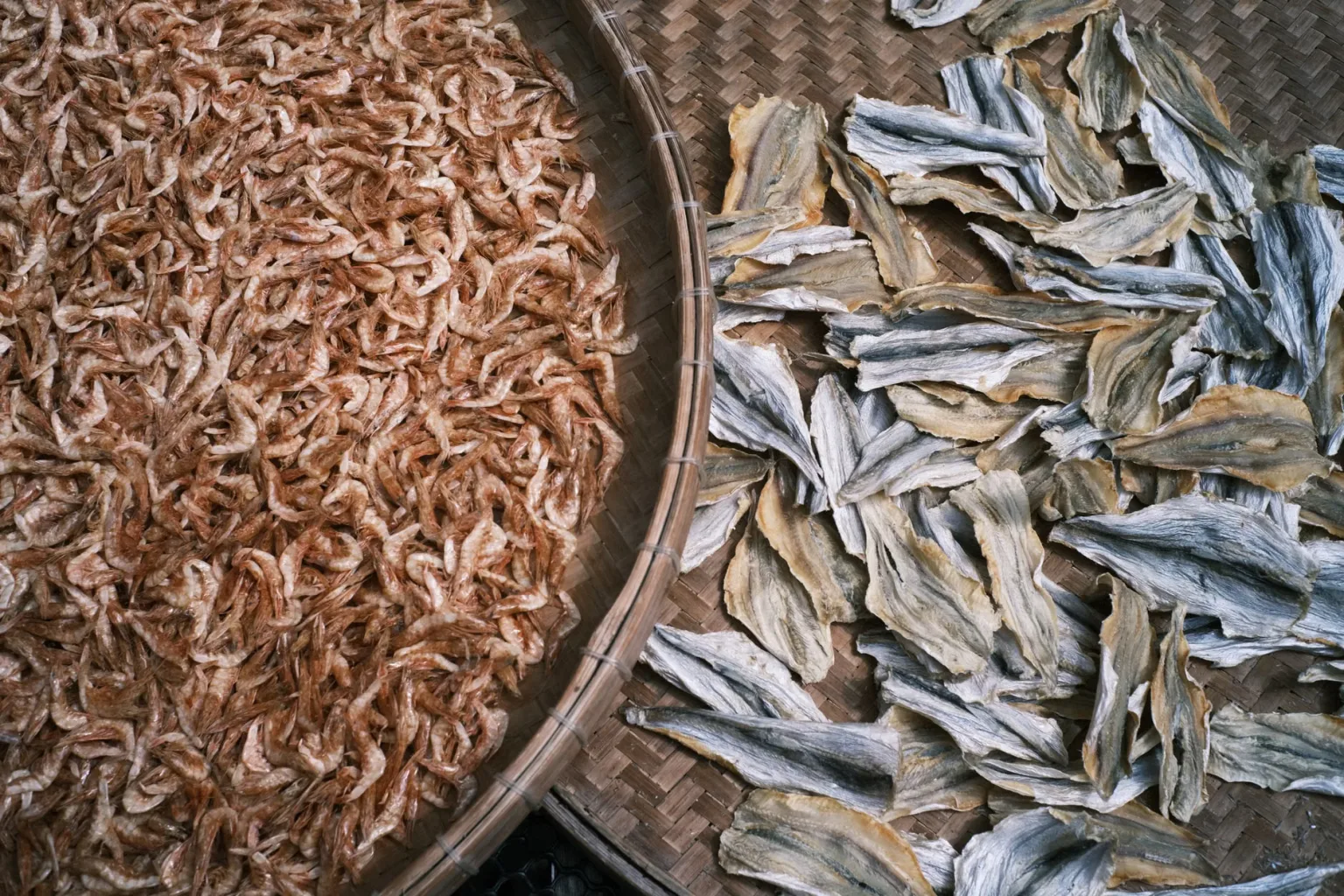
Dried fish powder is dehydrated fish that has been ground and is used as a seasoning in some dishes. The name does not describe one standard recipe: different fish species may be used, and the product may be sold on its own or mixed with other ingredients. Some regional preparations use ground dried fish to flavor wontons, broths and other dishes; other dry seasonings containing fish are sprinkled over rice or added to soups, stews and fish dishes. The name alone therefore does not tell you which species it contains, how it was made, or whether salt or other ingredients have been added. Read the label and check that the package identifies it as food for human consumption. Do not confuse a culinary seasoning with fish meal or powder intended for animal feed.
When to use it
Use it when you want to add a concentrated savory, marine flavor to a dish such as broth, noodle soup, stew, wonton filling or rice. You can stir it in during cooking to distribute it through the dish, or add it at the end as a seasoning. Since flavor and composition vary between products, start with a small amount and adjust after tasting. Before using it, confirm that the product is labeled for human consumption and check the package for its ingredients and directions for use.
How to use it
Before opening the package, identify the product, read the full ingredient list and confirm that it is intended for human consumption. For soup, broth or stew, add the powder gradually and stir to distribute it; taste before adding more, especially if it contains salt or other seasonings. For cooked rice, you can sprinkle it on just before serving. You can also mix it into a savory filling or dumpling mixture, taking care to distribute it evenly. The right amount depends on the product and recipe, so no universal quantity is specified here. Follow the package directions for use and storage. Do not use powder labeled as animal feed or an animal-feed ingredient in food for people.
Flavour and texture
It adds a dried-fish flavor and a marine note, with intensity that depends on the product and its ingredients. A fine grind blends readily into liquids and fillings; sprinkled on a dish, it may be more noticeable on the surface. Some blends include salt, seaweed, seeds or other components, so flavor and texture are not the same across products. Check the label and add it gradually to control the result.
How to choose it
Choose a package that clearly identifies the product as food for human consumption and provides a readable ingredient list. Check which fish it contains, whether other ingredients are included, and what the directions say about use and storage. The generic name can refer to different products, including fish powders intended for animal feed, so do not rely on the word “fish” alone. If the label does not confirm that it is food for people, do not use it in cooking.
Storage
Follow the package storage directions, which may vary by product and how it was made. Keep the powder in its identified package and closed as directed, and observe the date and any instructions for use after opening. Refrigeration is described for one particular homemade ground dried-fish preparation, but that does not establish a universal rule for all commercial products. If necessary storage directions are missing, do not guess how long or where the product should be kept.
Substitutions
You can substitute another dried fish powder labeled for human consumption, bearing in mind that the species and flavor may differ. A furikake-style seasoning containing dried fish may work as a rice topping, but it may include other ingredients and change the flavor and composition of the dish. Check both labels and adjust the amount to taste; these are not identical substitutes.
Common mistakes
Do not assume that all fish powders contain the same species or have the same flavor and composition. Avoid adding a large amount all at once: taste and adjust, especially if the product contains salt. Do not mistake a culinary seasoning for fish meal intended for animal feed, and follow the package directions about ingredients, use and storage.
Safety and allergens
This product contains fish. If you have a fish allergy or are cooking for someone who does, check the package ingredients and allergen information; do not use the product if its composition is unclear. Choose only a product identified as food for human consumption and follow its use and storage directions. Do not use products intended for animal feed.
Culinary uses
- Seasoning for soups, broths and stews
- Flavoring for rice and savory fillings
Recommended techniques
- Sprinkle over cooked food or stir into a dish
- Mix into broth, soup or filling
Pairs well with
- Cooked rice
- Wonton, noodle and other savory soups
- Savory fillings and dumplings
- Stews and fish dishes
Frequently asked questions
What dishes can I use dried fish powder in?
It can season broth, soup, stew, rice and savory fillings. Check the label and start with a small amount, since flavor and composition vary by product.
Are all dried fish powders the same?
No. The species, grind and added ingredients can vary. Read the ingredient list and confirm that the product is intended for human consumption.
How should I store it?
Follow the package directions. There is no single storage rule for every product; homemade preparations and commercial products may differ.
Estimated nutrition
- Fat
- 13.4 g
- Saturates
- 2.85 g
- Carbohydrate
- 0 g
- Sugars
- 0 g
- Fibre
- 0 g
- Protein
- 62.4 g
- Salt
- 0.5 g
Sources and review
Automatically researched, cross-checked and validated content. Sources consulted:
- En el etiquetado alimentario hay algunas menciones que son obligatorias eletiquetadocuentamucho.aesan.gob.es
- ¿Por qué la muerte es origen de miedos y tabúes? doi.org
- The Essential Glossary of Cooking Terms for the Culinary Arts - Escoffier escoffier.edu
- Nutrition After Your Transplant - Health Online healthonline.washington.edu
- EFNEP Hispanic Heritage Recipes | Community Nutrition | Extension/College of Agriculture, Health & Natural Resources | University of Connecticut communitynutrition.cahnr.uconn.edu
- La diabetes y la alimentación: Cómo planificar y cocinar comidas sabrosas y saludables | CAES Field Report fieldreport.caes.uga.edu
- neoliberal multiculturalism in early digital discourse about food. iro.uiowa.edu
- Furikake, el condimento japonés que enriquece cualquier plato: qué es, cómo prepararlo y las mejores formas de utilizarlo directoalpaladar.com
- Making cured bacon at home | Servicio de Extensión de OSU extension.oregonstate.edu
- Para la ciudadanía aesan.gob.es
- ¿Qué son la harina de pescado y el aceite de pescado, y por qué se utilizan en alimentos para la acuicultura? - Skretting skretting.com
- Polvo de Pescado de Tierra_Baidu Enciclopedia baike.baidu.com
- Polvo de Pescado Seco - Soluciones de Alimentación Animal con Alto Contenido de Proteínas spanish.alibaba.com