- Category
- Herbs and spices
- State
- Dry
- Usual unit
- teaspoon
What it is
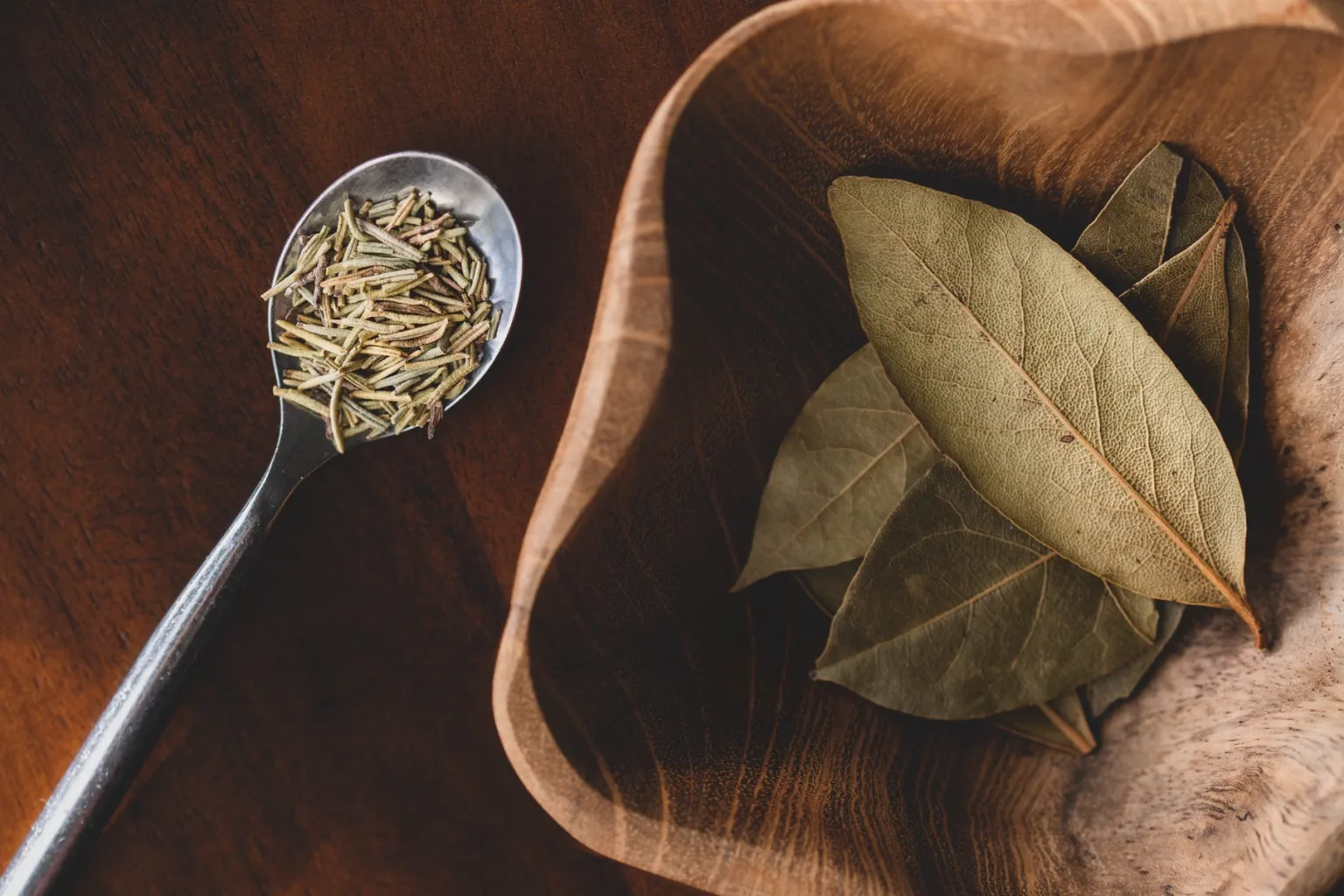
Dried rosemary is the dehydrated leaf of the rosemary herb, used as a culinary seasoning. Its small, firm leaves have a pronounced aroma, with resinous notes and a slightly bitter edge. The leaves can be added whole or crumbled to dishes that cook, and they are also used in herb blends and marinades. Because it is dry, it does not have the tender texture of fresh rosemary; whole leaves can feel tough if left in the finished dish. Its concentrated character can add fragrance to simple food, but careful measuring helps prevent it from overwhelming other flavors.
When to use it
Choose dried rosemary when you want a persistent herbal flavor in cooked dishes, especially stews, soups, roasts, sauces and baked vegetables. It is also convenient for marinades, seasoning blends and recipes where you want an aromatic herb on hand without fresh sprigs. Its flavor works with potatoes, tomatoes, mushrooms and other vegetables, as well as lamb and oily fish. Add it judiciously: its strong aroma can mask more delicate ingredients.
How to use it
Measure a small amount and add it while the dish is cooking so the heat can help its aroma blend into the food. Dried rosemary can be left whole in soups and stews if you plan to remove it later, or crumbled when you want it distributed through the dish. Lightly rubbing or crushing the leaves just before use helps release aroma, though crushing them too far in advance can make that aroma fade. Taste before adding more, since the flavor is concentrated. Use it in marinades, with potatoes or roasted vegetables, in sauces, or in blends with thyme, oregano, garlic or bay leaf. If whole leaves seem too tough, remove them or crumble them more finely.
Flavour and texture
Its flavor is aromatic and intense, with resinous notes and a somewhat bitter finish. The dried leaves are firm and may feel coarse when eaten whole, so they are often crumbled or removed after cooking. Heat helps their aroma blend into a dish.
How to choose it
Look for dried rosemary sold for food use, in a well-sealed package, with leaves that still have a recognizable aroma. When possible, choose packaging that limits exposure to light and moisture. Avoid buying more than you are likely to use while it retains a pleasant aroma; it should smell herbal rather than dull or unusual.
Storage
Keep dried rosemary in a closed container in a dry place away from light. Avoid leaving it near steam, splashes or sources of moisture, and reseal the package after each use. These steps help preserve its aroma; rosemary that has lost its fragrance may contribute less flavor when cooking.
Substitutions
Thyme, oregano or savory can play a similar herbal role, but none tastes exactly like rosemary. Choose according to the other ingredients and begin with a small amount, adjusting after tasting. A blend of thyme and oregano gives a more layered herbal note without precisely reproducing rosemary’s resinous character.
Common mistakes
Adding too much dried rosemary can let its strong, slightly bitter flavor dominate a dish. Large whole leaves can also be unpleasant to eat. Start with a small amount, crumble it if you want it distributed more evenly, and taste before adding more.
Safety and allergens
Use dried rosemary sold as a food seasoning and follow the package directions. This profile covers culinary use; do not use the seasoning as a substitute for medical advice or care.
Culinary uses
- Aromatic seasoning for savory dishes
- Herb for infusing oils, sauces and cooked foods
Recommended techniques
- Add to soups, stews and braises during cooking
- Crush or rub the leaves lightly before adding to release their aroma
- Use in marinades, seasoning blends and roasted dishes
Pairs well with
- Thyme, oregano and savory
- Garlic, onion, bay leaf and wine
- Potatoes, tomatoes, mushrooms and other vegetables
- Lamb and richer fish such as sardines or mackerel
Frequently asked questions
Can dried rosemary replace fresh rosemary?
Yes. It can flavor many of the same kinds of dishes, though its flavor and texture are not identical. Start with a small amount and adjust after tasting.
Should I crush dried rosemary before cooking?
Not always. You can leave the leaves whole in stews and remove them later, or crumble them to distribute the flavor and avoid large pieces.
What flavors go well with dried rosemary?
It pairs with thyme, oregano, garlic, onion and bay leaf, and is also used with potatoes, tomatoes, mushrooms, lamb and oily fish.
Sources and review
Automatically researched, cross-checked and validated content. Sources consulted:
- Client Challenge doi.org
- The Essential Glossary of Cooking Terms for the Culinary Arts - Escoffier escoffier.edu
- Qué es y cómo usar el romero | JUST SPICES ® justspices.es
- Glimpses of an 18th century Colonial Kitchen in Manila archium.ateneo.edu
- Revista del comité científico de la aecosan número 24 aesan.gob.es
- Cloud Forest | The Healers Project healers.uoregon.edu
- Evaluation of Packaging Effects on the Phenolic Profile and diposit.ub.edu
- - YouTube youtube.com
- Romero, seco (¿orgánico?) | Fundación G+E diet-health.info
- Romero- Gastronomía - Región de Murcia Digital regmurcia.com
- Romero: propiedades, beneficios y para qué sirve bonviveur.com