- Category
- Grains, flour and pasta
- State
- Dry
- Usual unit
- g
What it is
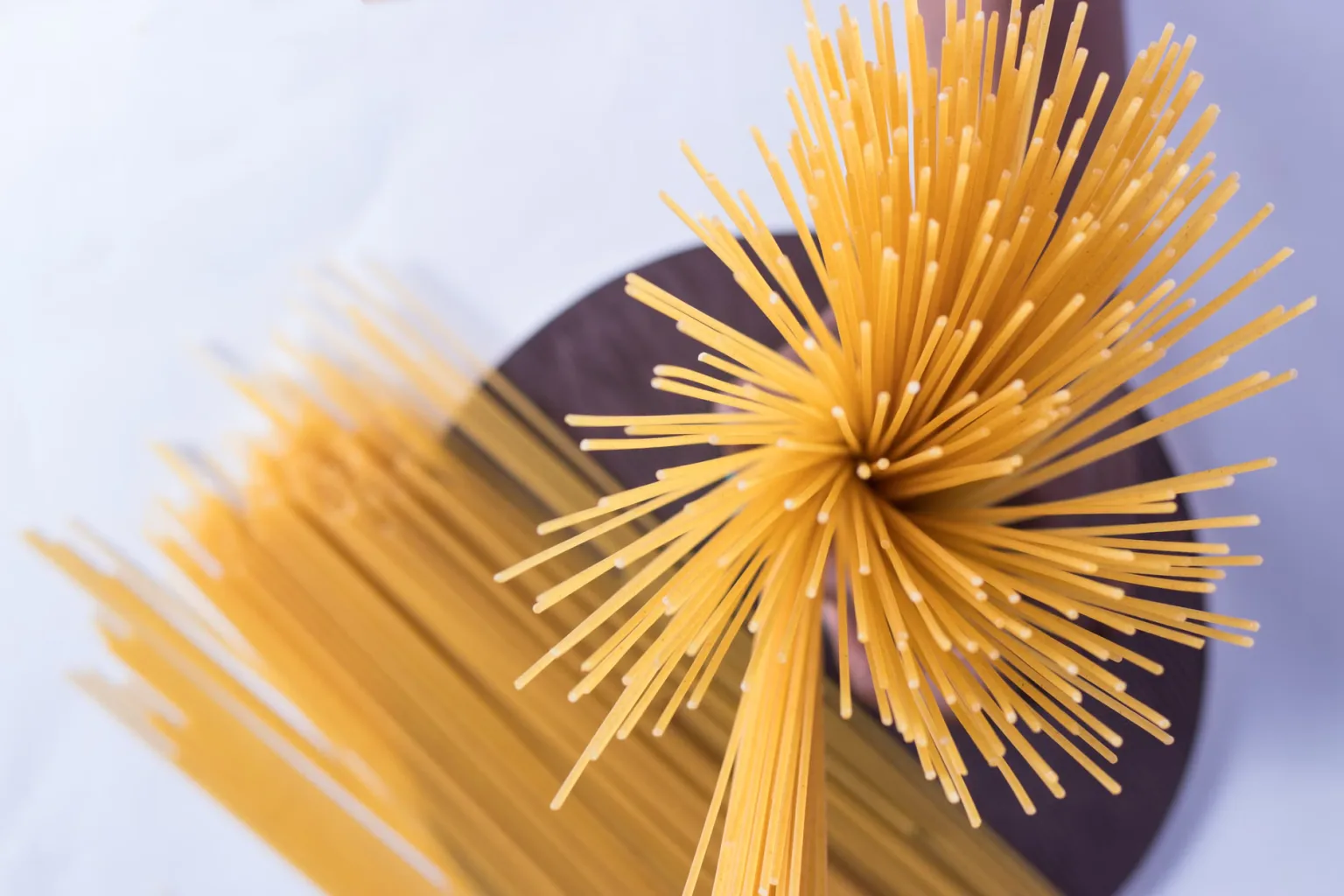
Extra-fine semolina is a granular cereal product milled to a finer particle size than coarse semolina. The word semolina can refer to products made from wheat, corn, rice, and other grains, so the name alone does not identify the source grain. Fineness can also vary between products. Semolina is not necessarily the same as fine flour: particle size affects texture and the result in a dish. Before cooking, check the ingredient list for the grain and read any use guidance from the manufacturer. This profile describes the extra-fine form without assuming one particular cereal variety.
When to use it
Choose extra-fine semolina when a recipe specifically calls for fine-grained semolina or when you want a less coarse texture than a coarser grind is likely to provide. Depending on the grain stated on the package, it may suit some doughs, porridge-style preparations, soups, creams, and desserts. Do not assume wheat, rice, and corn semolina will give the same result: flavor, texture, and suitability for a recipe can differ. If a recipe specifies a grain or grind, use that detail to guide your choice.
How to use it
Start by reading the package to confirm the grain, fineness, and any suggested uses. Measure the amount specified by your recipe and follow its method rather than assuming semolina from another grain will behave the same way. It can be used in soups or creams, in doughs, or in sweet preparations when a recipe calls for it. For a liquid-based dish, add and work it in according to the recipe so the texture matches your intention. If substituting another semolina or flour, expect the particle size and possibly the flavor to change. The available evidence does not establish one universal ratio or cooking time for every product sold as extra-fine semolina.
Flavour and texture
Its texture is finer than that of coarse semolina, although the result depends on the specific grain and milling. There is no single flavor for all semolina: wheat, corn, and rice products are not equivalent. In a finished dish, the amount of liquid and the method affect whether the result is creamier or retains some graininess. Check the package rather than identifying the grain from color or name alone.
How to choose it
Look for both the term extra-fine and the source grain on the package; semolina is a broad label for products from different grains. If a recipe specifies durum wheat, rice, or corn, do not choose a product whose grain is unclear. Check that the stated grind suits the texture you want, since fine and coarse semolinas are not always interchangeable. The supplied evidence does not establish a universal technical grade for the term extra-fine.
Storage
The available evidence does not provide a validated shelf life or specific storage conditions for this form. Follow the storage directions printed on the package and check the label for the product you have. Do not assume that every product called semolina has the same ingredients or instructions. If the package does not provide enough information, ask the manufacturer or retailer rather than setting a storage period or condition yourself.
Substitutions
Substitution depends on the grain and the role semolina plays in the recipe. Rice or corn semolina can change flavor and texture compared with wheat semolina; these are not neutral swaps. Fine flour may work in some preparations, but the result will be less granular and may behave differently. Keep the specified grain when it matters to the dish, and do not apply universal ratios without recipe-specific guidance.
Common mistakes
A common mistake is treating all semolina as the same ingredient. Grain and particle size affect flavor, texture, and the final result; corn semolina is not equivalent to wheat semolina. Do not assume extra-fine means powdered flour or that it can be substituted without adjustment. Read the package and compare it with the recipe specification.
Safety and allergens
Check the ingredient list and allergen information for the specific product. If it contains wheat, do not treat it as gluten-free. The available evidence provides no additional specific official warning for this form.
Culinary uses
- Cereal component in soups, creams, and porridge-style preparations
- Ingredient for pasta, couscous-style dishes, and some sweet preparations
- Coating or dusting ingredient when a recipe specifies semolina
Recommended techniques
- Stir into soups, creams, or porridge-style preparations according to the recipe
- Use in pasta dough or couscous-style preparations when the grain and grind match the recipe
- Use for coating or dusting where the recipe calls for semolina
Pairs well with
- Broth or water in soups and creams
- Vegetables in soups or couscous-style dishes
- Sauces in pasta preparations
- Milk in sweet semolina preparations
Frequently asked questions
Is extra-fine semolina always made from wheat?
The name alone does not establish that. Semolina can be made from different grains, so check the ingredient list to identify the source.
Is it the same as flour?
Not necessarily. Semolina is described as a granular milled product, and its texture depends on particle size. Flour is generally finer, so substituting it can change the result.
Can I swap in rice or corn semolina?
Only if the recipe allows that change. A different grain can change flavor and texture, so the substitution is not neutral.
Sources and review
Automatically researched, cross-checked and validated content. Sources consulted:
- ¿Por qué la muerte es origen de miedos y tabúes? doi.org
- Client Challenge doi.org
- Qué es la sémola: usos, tipos y diferencias legumbresmiau.es
- ¿Qué es la sémola? Todo lo que necesitas saber | Garofalo pasta-garofalo.com
- Sémola de trigo duro vs. harina - Sandro Desii sandrodesii.com
- ¿Qué es la sémola de trigo? Diferencia con la harina y gluten | Fond fond.kitchen
- Human verification lekue.com
- 5 Sémolas Altamente Saludables: Beneficios, Propiedades y Usos | Veritas veritas.es
- - YouTube youtube.com
- Propiedades de la sémola – Botanical-online botanical-online.com
- PASTA FRESCA CON HARINA DE SÉMOLA alambique.com
- Human verification lekue.com