- Category
- Fruit
- State
- Fresh
- Usual unit
- g
What it is
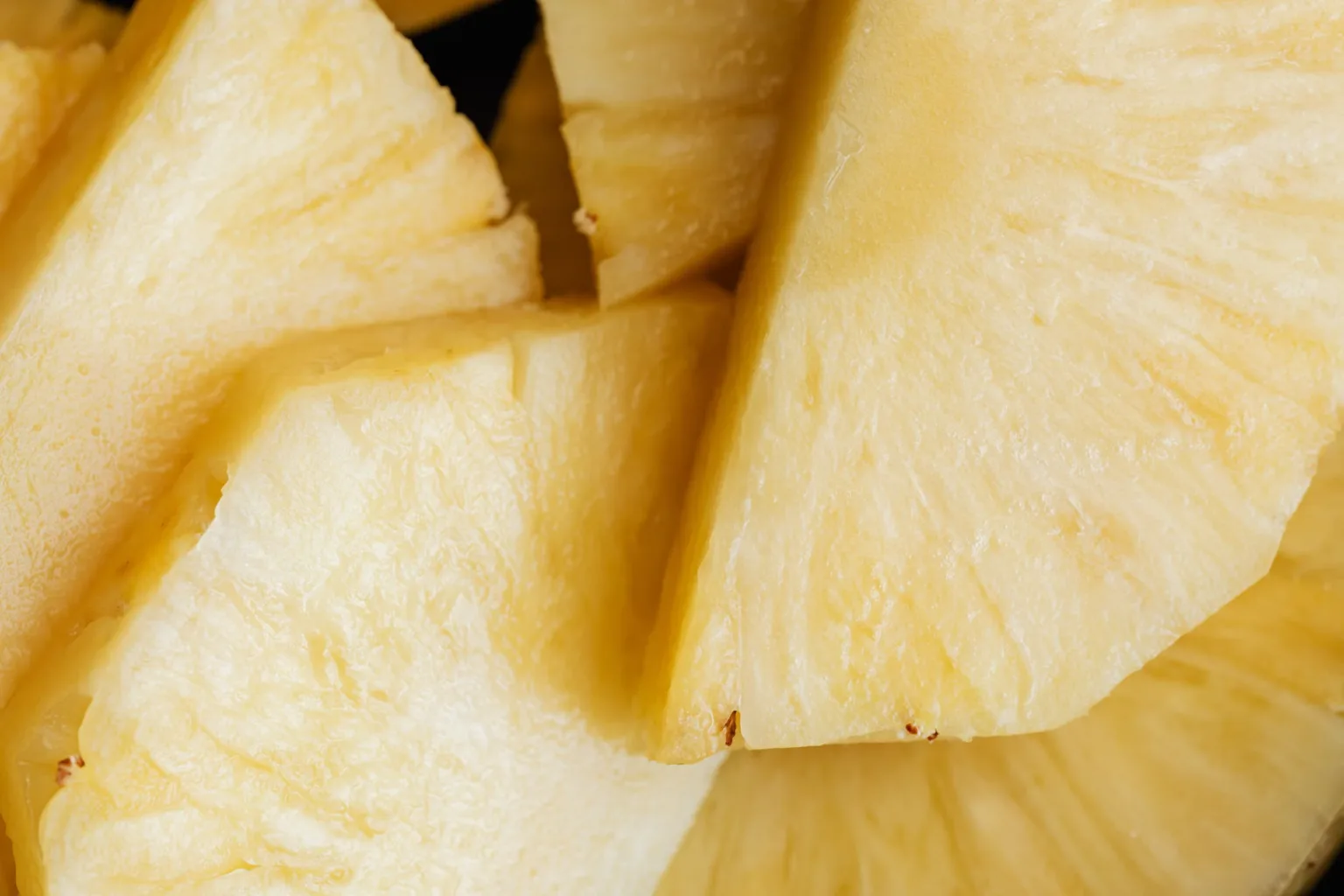
Fresh pineapple is the edible part of the fruit of Ananas comosus, a plant in the bromeliad family. The oval fruit has firm, scaly skin and is usually topped with a crown of leaves. Its flesh surrounds a firmer central core and can be juicy, with a flavor that combines sweet and tart notes. Pineapple is sold whole and is also available cut or canned, but this profile refers to the fresh fruit. Before eating it, remove the crown, skin, and any tough parts you do not wish to eat. Flesh color, size, and the balance of sweetness and acidity can vary between fruits and varieties; assess the individual fruit rather than assuming every pineapple will taste the same.
When to use it
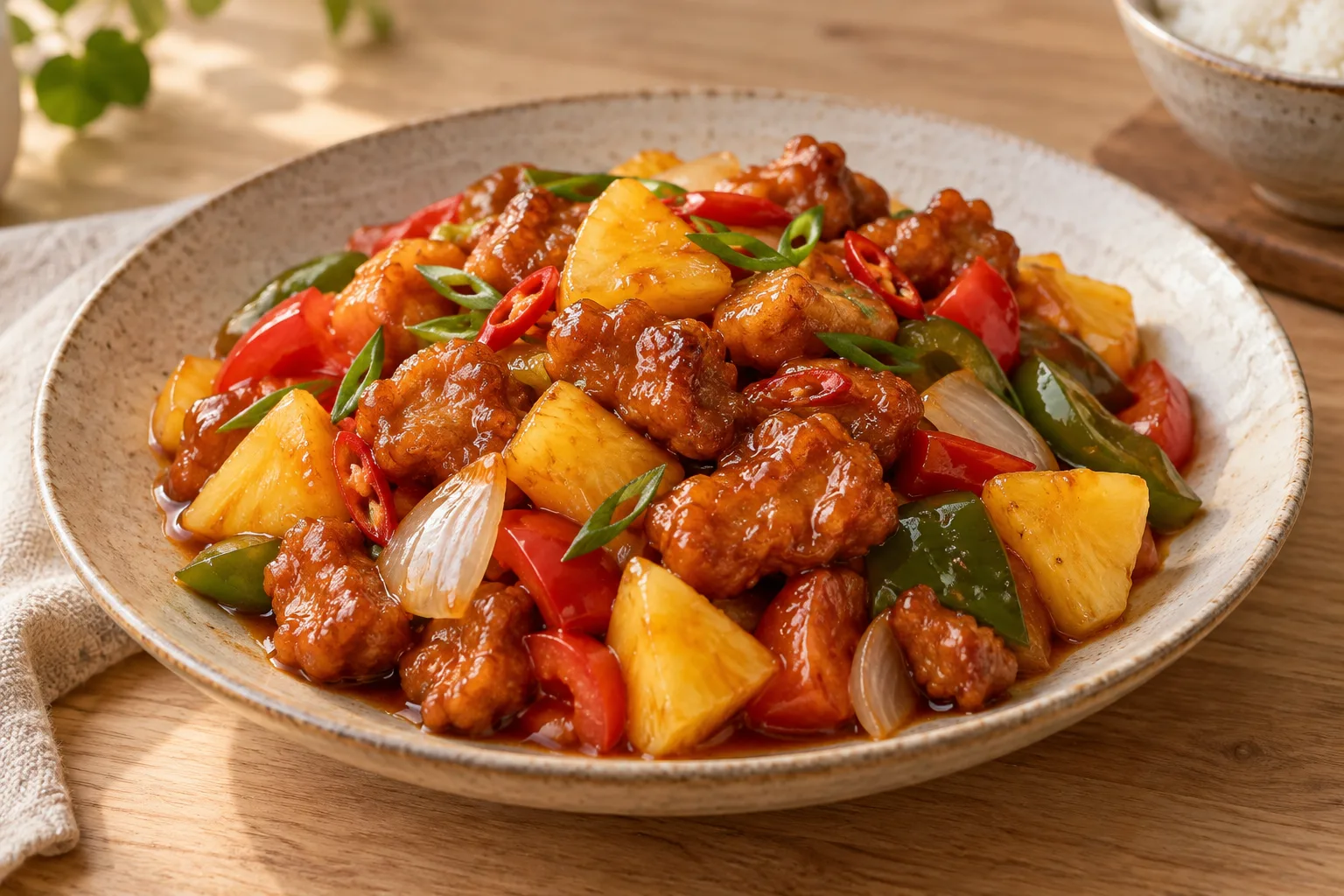
Choose fresh pineapple when you want a juicy fruit to serve on its own or to add sweetness and acidity to a dish. Chunks work in fruit salads, mixed fruit, and desserts; pineapple can also be used in cakes, drinks, and cocktails. Its flavor contrast suits savory dishes with seafood, pork, or duck. Use it fresh when you want to retain its characteristic texture; canned pineapple can be convenient in dishes where that texture is less important. Pineapple is available in markets at different times of year because it comes from several growing regions, so its use need not be limited to one particular season.
How to use it
Wash your hands and rinse the whole pineapple under running water before peeling, even if you will not eat the skin; this helps reduce the chance of transferring dirt from the surface to the flesh while cutting. Do not wash the fruit with soap or detergent. Dry it with a clean cloth or paper towel and place it on a clean cutting board. Using a clean knife, remove the crown and base, cut away the skin, and trim off the eyes or any tough parts you prefer not to eat. Cut the flesh away from the core if you find it too fibrous, then slice or dice it. Serve it plain, mix it with other fruit, use it in desserts or drinks, or add it to savory dishes. Refrigerate cut pineapple in a clean, covered container and keep it separate from raw meat and utensils that have touched it.
Flavour and texture
The flesh is usually juicy, with sweetness and refreshing acidity; the strength of each note varies by variety and individual fruit. The fleshy part is more tender than the core, which can be firmer and more fibrous. The tough outer skin is not normally served as edible flesh. These differences let fresh pineapple add contrast to milder fruit and a fruity note to savory preparations. Taste a piece before adjusting sugar, citrus, or other ingredients in a recipe.
How to choose it
Look for a pineapple without soft or sunken areas, mold, or significant damage. A wilted crown or mold on the stem are reasons to reject it. The base may smell fruity, sweet, and slightly tart, but appearance alone cannot guarantee a particular flavor. Skin color varies, so do not choose by color alone. If buying pineapple that has already been cut or packaged, choose a refrigerated product and follow the storage information on its packaging.
Storage
Keep a whole pineapple in a cool, dry place for a short period and avoid abrupt temperature changes. Available guidance on the ideal temperature for whole fruit is not consistent, so do not rely on a precise figure. Once peeled or cut, put the flesh in a clean, covered container and refrigerate it; aim to use it soon. Keep cut fruit away from raw meat, fish, and seafood, as well as their utensils and surfaces. Discard pineapple that looks spoiled or smells unpleasant, and do not taste it to decide whether it is safe.
Substitutions
Canned pineapple can replace fresh pineapple in some recipes, but its texture and flavor may differ. Drain it if you do not want its liquid in the dish. If pineapple is unavailable, choose another juicy, sweet, slightly tart fresh fruit that suits the preparation; the result will change and will not be identical. For a recipe where firm chunks matter, check the substitute's texture before adding it.
Common mistakes
Do not cut pineapple without first rinsing the outside, even if you plan to remove the skin: a knife can transfer dirt to the flesh. Do not use soap or detergent to wash it. Avoid choosing it by color alone, since color is not enough to determine flavor. Do not mistake the firmer core for tender flesh; remove it if you dislike its texture. After cutting, do not leave the fruit exposed or handle it with utensils used for raw meat or fish.
Safety and allergens
Wash your hands and rinse the whole pineapple under running water before cutting; do not use soap or detergent. Use a clean board and knife, and keep the fruit separate from raw meat, poultry, and seafood and from utensils used with them. Refrigerate cut pineapple. Discard fruit that is rotten or shows signs of spoilage, and do not taste it to judge whether it is safe.
Culinary uses
- Fruta para comer fresca y sola
- Ingrediente para ensaladas de frutas y postres
- Elemento dulce y ácido en platos salados y bebidas
Recommended techniques
- Pelar y cortar la pulpa con un cuchillo limpio
- Servir fresca en trozos, o incorporarla a preparaciones frías
- Usar en preparaciones cocinadas, como tartas o platos con carne
Pairs well with
- Otras frutas en macedonias y ensaladas
- Mariscos
- Cerdo y pato
- Uva y pera en zumos o bebidas
Frequently asked questions
Should I wash a pineapple before peeling it?
Yes. Rinse the whole fruit under running water before cutting, even if you will not eat the skin, to reduce the chance of transferring dirt to the flesh.
How should I store pineapple after cutting it?
Keep the flesh in a clean, covered container in the refrigerator, away from foods and utensils that could contaminate it, and aim to use it soon.
Can canned pineapple replace fresh pineapple?
It can in some dishes. Keep in mind that its texture and flavor may differ; drain it if you do not want to add the canning liquid.
Sources and review
Automatically researched, cross-checked and validated content. Sources consulted:
- ¿Por qué la muerte es origen de miedos y tabúes? doi.org
- Client Challenge doi.org
- Gastronomía del Perú - Wikipedia, la enciclopedia libre es.wikipedia.org
- Gastronomía de El Salvador - Wikipedia, la enciclopedia libre es.wikipedia.org
- Kitchen Companion: Your Safe Food Handbook ucanr.edu
- Comité Científico aesan.gob.es
- E-118: Storing Food Safely | New Mexico State University - BE BOLD. Shape the Future. pubs.nmsu.edu
- Para la ciudadanía aesan.gob.es
- Selecting and Serving Produce Safely | FDA go.unl.edu
- Piña: beneficios, propiedades y formas de disfrutarla mercadosantamariadelacabeza.es
- Piña. ¿Qué es? Beneficios y usos en la cocina abc.es
- Piña- Gastronomía - Región de Murcia Digital regmurcia.com
- Redescubre la piña, la reina de las frutas tropicales: propiedades, beneficios y cinco recetas para disfrutarla google.com
- - YouTube google.com