- Category
- Vegetables
- State
- Fresh
- Usual unit
- unit
What it is
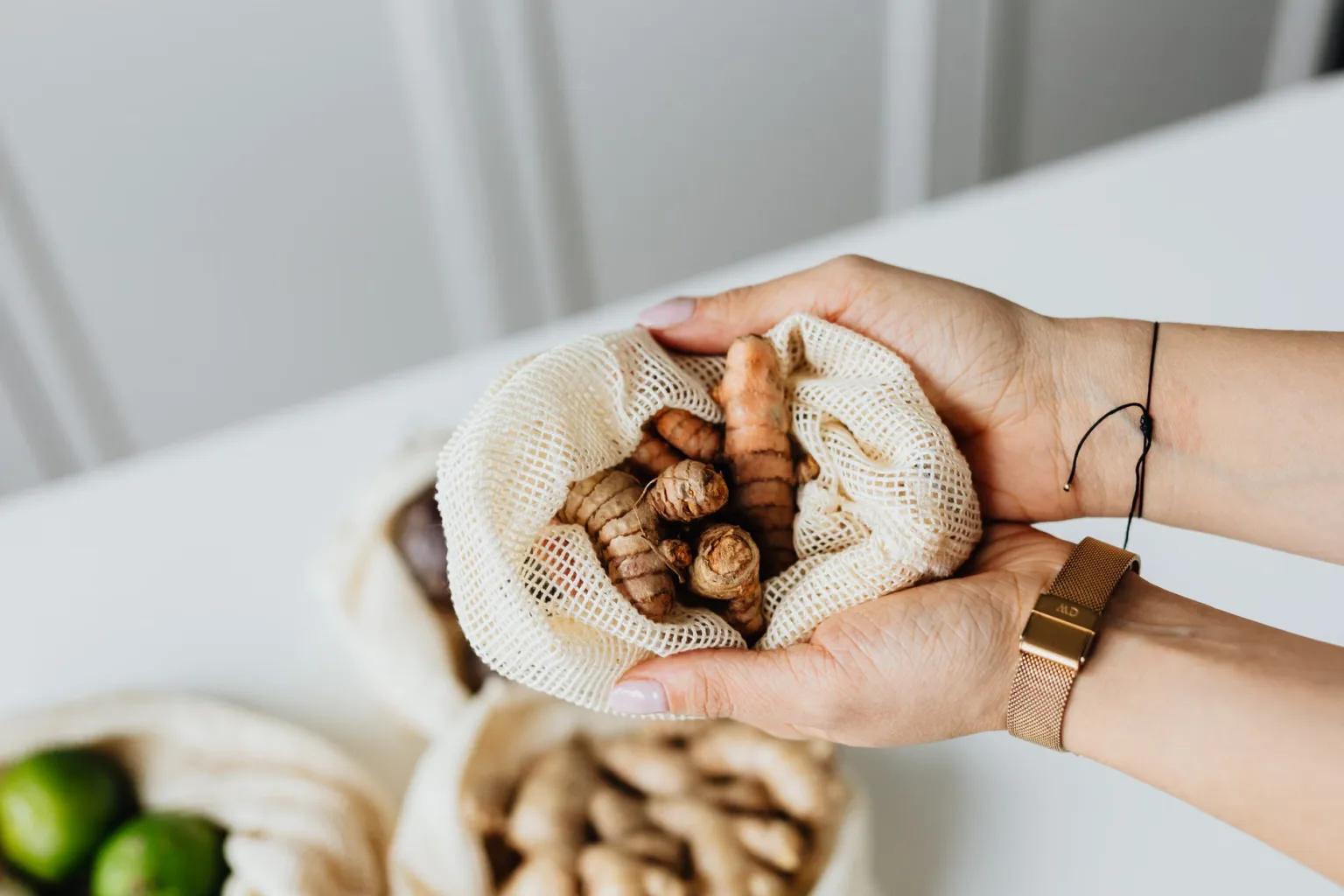
Fresh turmeric is the rhizome of Curcuma longa, a plant in the Zingiberaceae family, the same botanical family as ginger. The rhizome is usually knobbly and tuber-like, with thin skin and vivid orange flesh. In cooking, the inner rhizome is commonly grated, chopped or crushed. It is not the same product as ground turmeric: ground turmeric is made by drying and milling the rhizomes, which gives it a stronger, earthier character. Fresh turmeric is milder and fresher in flavor, and it also colors food yellow-orange. Its main role in the kitchen is as a seasoning and a source of color.
When to use it
Choose fresh turmeric when you want a gentler, fresher aromatic flavor than ground turmeric provides. It works well in soups, purées, sauces, rice and vegetable dishes, and can also be added to drinks or some sweet preparations. It is useful in recipes where you want the character of freshly grated rhizome, not just color. For a stronger flavor or a recipe built around an intense dry seasoning, ground turmeric may be a better fit. Keep in mind that the fresh and ground forms do not have exactly the same intensity or flavor profile.
How to use it
Wash the rhizome, then grate or finely chop the amount needed for your recipe. Add it to a sauté, soup, purée, sauce, rice dish or vegetable stew. You can also blend it into a dressing or marinade, or add it to a hot drink or sweet preparation when you want its aroma and color. Start with a small amount and adjust to taste, since it can color food strongly. If replacing fresh turmeric with ground turmeric, remember that the fresh form is milder, so a larger amount may be needed to achieve a similar presence. Do not treat the two forms as identical: ground turmeric has a stronger, earthier character.
Flavour and texture
Fresh turmeric has a mild, fresh and aromatic flavor, with notes that may seem citrusy. Its firm flesh is vividly orange; once grated or chopped, it blends into a dish and can turn it yellow-orange. Ground turmeric is generally stronger and earthier by comparison. The fresh rhizome looks similar to ginger, though its orange flesh helps distinguish it.
How to choose it
Look for the knobbly rhizome shape associated with ginger; when cut, turmeric has orange flesh. The available evidence does not establish specific firmness, size or origin standards for selecting it, so those features should not be treated as definitive quality tests. If choosing between fresh rhizome and ground turmeric, decide by the result you want: fresh is milder and fresher, while ground is stronger and earthier.
Storage
The available information does not provide a specific storage method or shelf life for fresh turmeric. Do not assume an exact keeping time without product guidance. Follow any storage instructions from the seller or packaging, and inspect the rhizome before use; do not use pieces with obvious signs of spoilage.
Substitutions
Ground turmeric is the closest alternative to fresh rhizome, but the two are not identical: ground turmeric is stronger and earthier, while fresh turmeric is milder. Adjust cautiously and taste as you go. Ginger belongs to the same plant family and looks similar, but it is not an equivalent substitute; use it only when a different flavor is acceptable.
Common mistakes
A common mistake is swapping fresh and ground turmeric as though they had the same strength. Fresh rhizome is milder and fresher, while ground turmeric is stronger and earthier. It is also easy to mistake fresh turmeric for ginger by appearance; the orange flesh helps tell them apart.
Safety and allergens
No specific safety warning for fresh turmeric is provided here. Handle it as a fresh ingredient and follow the product’s handling and storage instructions; avoid using pieces with clear signs of spoilage.
Culinary uses
- Fresh aromatic seasoning
- Adds yellow-orange color and flavor to dishes
Recommended techniques
- Grate or finely chop into a dish
- Blend into sauces, soups, dressings or marinades
Pairs well with
- Ginger
- Coconut milk
- Rice
- Vegetables
Frequently asked questions
Which part of fresh turmeric is used?
The rhizome, the plant’s thickened underground stem, is the part mainly used. Grate, chop or crush it for cooking.
Is fresh turmeric the same as ground turmeric?
No. Fresh turmeric is milder and fresher in flavor, while ground turmeric is stronger and earthier.
Can ginger replace fresh turmeric?
They are not equivalent. They belong to the same family and look similar, but ginger is suitable only when a different flavor works in the recipe.
Estimated nutrition
- Fat
- 3.25 g
- Saturates
- 1.84 g
- Carbohydrate
- 67.1 g
- Sugars
- 3.21 g
- Fibre
- 22.7 g
- Protein
- 9.68 g
- Salt
- 0.07 g
Sources and review
Automatically researched, cross-checked and validated content. Sources consulted:
- ¿Por qué la muerte es origen de miedos y tabúes? doi.org
- Client Challenge doi.org
- The Essential Glossary of Cooking Terms for the Culinary Arts - Escoffier escoffier.edu
- Curry - Wikipedia, la enciclopedia libre es.wikipedia.org
- Agencia Española de Seguridad Alimentaria y Nutrición aesan.gob.es
- Cúrcuma: qué es, para qué sirve, propiedades y beneficios bonviveur.com
- Descubre para qué sirve la cúrcuma | Recetas Nestlé recetasnestle.com.ec
- Publicaciones de Seguridad alimentaria aesan.gob.es
- Todo sobre la cúrcuma: qué es, cómo cocinar con ella, cómo conservarla y 11 recetas para utilizarla en dulces y salados directoalpaladar.com
- Todo sobre la cúrcuma: qué es, cómo cocinar con ella, cómo conservarla y 11 recetas para utilizarla en dulces y salados directoalpaladar.com
- Cúrcuma I (Curcuma longa L.) - Docta Complutense google.com
- - YouTube youtube.com
- Cómo usar la cúrcuma en la cocina y 6 recetas - La Cocina Alternativa google.com