- Category
- Vegetables
- State
- Fresh
- Usual unit
- unit
What it is
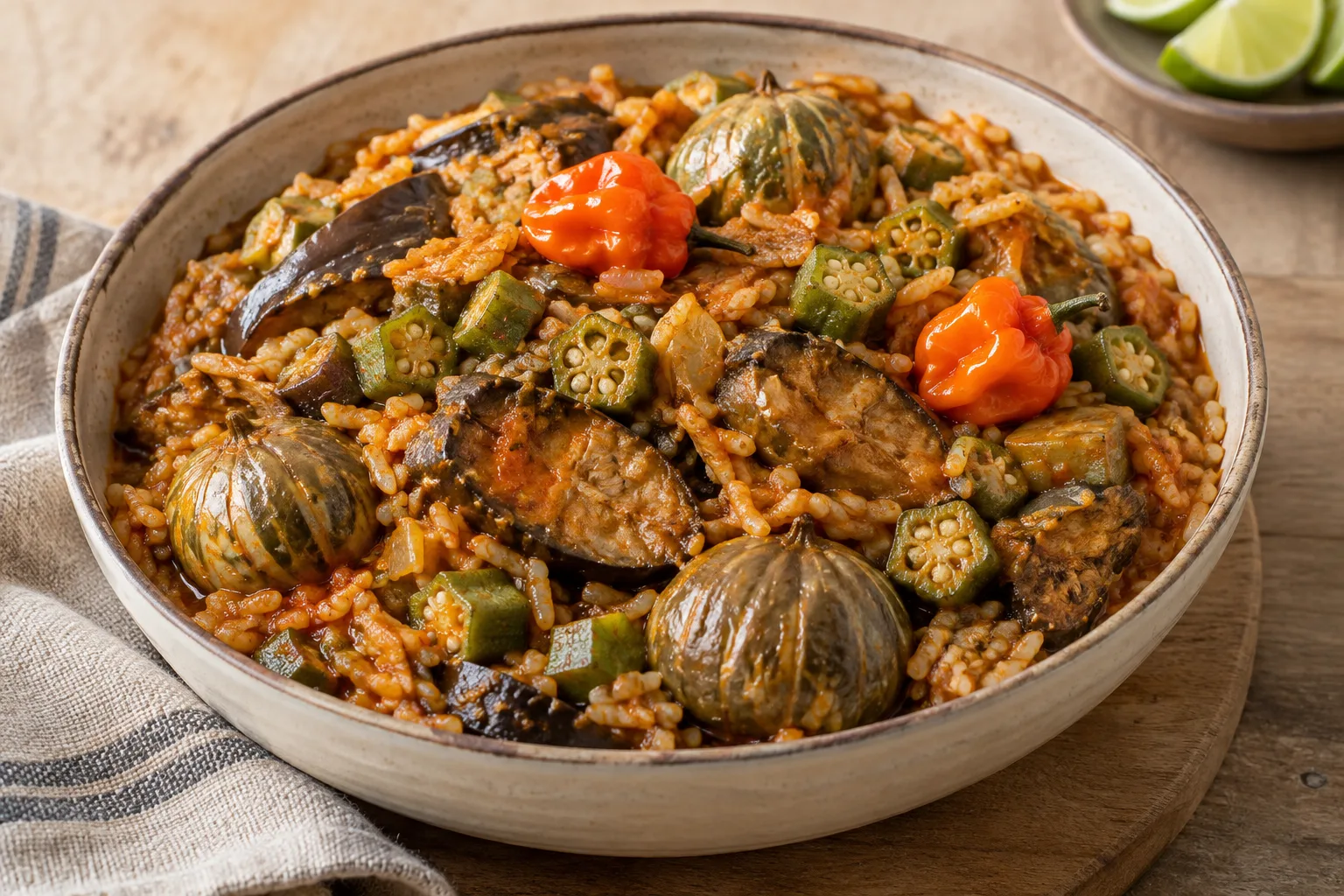
“African eggplants” and “garden eggs” are common names used for eggplant. “Garden egg” alone does not identify a particular variety, so size, shape, and flavor can differ. The eggplant known as Solanum melongena belongs to the nightshade family and comes in many shapes and colors: it may be elongated, oval, or round, and its skin is not always purple. In cooking, eggplant is treated as a vegetable, although botanically its fruit is a berry. Check the label or ask about the variety if that information matters for your recipe instead of assuming all African eggplants are the same.
When to use it
Use them when you want a cooked vegetable as a main ingredient or as part of a mixed vegetable dish. You can roast, grill, fry, stew, or stuff them. They are also used in preparations with squash, chickpeas, and spices. Choose a technique to suit the shape and size of the pieces and the result you want. Eggplants vary, so do not assume every piece will cook just like a large eggplant of another variety.
How to use it
Wash the eggplant before preparation and use a clean cutting board and utensils. Depending on the product and recipe, you can roast or grill it, fry it, add it to a stew, or prepare it stuffed. You can also combine it with squash, chickpeas, or spices in vegetable dishes. There is no single cooking time that suits every piece: size, shape, and variety can affect the result. Check its progress as it cooks and adapt the cut to the recipe. If you do not know the variety, avoid assuming that all pieces need identical treatment.
Flavour and texture
Flavor and texture differ among eggplant varieties. Shape, size, and color can vary, and some varieties are described as more bitter, sweet, or earthy than others. The flesh of common eggplant is described as white and spongy, but do not assume that this description applies to every product sold as a garden egg. Cooking also affects the final texture: roasting, frying, and stewing produce different results. Choose a method that suits the specific pieces and the dish you want to make.
How to choose it
Look for the variety on the label or ask the seller if its identity matters for your recipe. Eggplants differ in shape, size, and color, and the name “garden egg” does not confirm a particular variety. Choose pieces that appear intact and free of obvious damage. Do not infer species, bitterness, or ideal culinary use from the common name or color alone; check the product information if you need a more precise identification.
Storage
Keep eggplants unwashed until you are ready to prepare them, and wash them before use. This is general guidance for fresh vegetables; follow any specific directions that come with the product. No validated storage period for this variety is provided here, so do not assume an exact duration. Wash the eggplant before cutting it and use a clean board and utensils. If it is damaged or the seller provides specific storage instructions, take those into account.
Substitutions
No exact substitute for African eggplants is established. If you cannot find them, another edible eggplant variety may be the closest option. Differences in size, shape, and flavor can affect the result, so choose a piece similar to the one the preparation calls for and adjust the cut. Do not assume every variety is interchangeable in every recipe; for dishes where shape or size matters, look for a similar alternative.
Common mistakes
A common mistake is treating “garden egg” as if it always named one variety with the same shape and flavor. Eggplants can differ in size, color, and taste, so do not assume that all are purple or equally bitter. Do not apply one universal cooking time without considering the pieces you have. Wash the eggplant before use, not before refrigeration, and adapt the cut and method to the recipe.
Safety and allergens
Wash the eggplant before preparation and use a clean cutting board and utensils. No variety-specific safety warning is provided in the information consulted. If the product is damaged or comes with its own storage directions, follow them and do not use a piece that appears spoiled.
Culinary uses
- Main ingredient in cooked vegetable dishes
- Ingredient for roasted, fried, stewed, or stuffed preparations
Recommended techniques
- Roasting or grilling
- Frying
- Stewing
- Stuffing
Pairs well with
- Squash
- Chickpeas
- Spices
Frequently asked questions
Does garden egg identify one specific variety?
Not necessarily. “Garden egg” is used as another name for eggplant, but it does not identify a particular variety by itself. Check the label or ask the seller if you need to know which one it is.
How can African eggplants be cooked?
You can roast, grill, fry, stew, or stuff them. Choose according to the shape and size of the pieces, and check their progress during cooking.
Should I wash them before storing?
As general guidance for fresh vegetables, keep them unwashed and wash them before use. No validated storage period specific to African eggplants is provided here.
Estimated nutrition
- Fat
- 2.04 g
- Saturates
- 0.54 g
- Carbohydrate
- 2.77 g
- Sugars
- 1.25 g
- Fibre
- 0.8 g
- Protein
- 8.28 g
- Salt
- 0.72 g
Sources and review
Automatically researched, cross-checked and validated content. Sources consulted:
- Client Challenge doi.org
- The Essential Glossary of Cooking Terms for the Culinary Arts - Escoffier escoffier.edu
- La Berenjena: Historia, Expansión, Usos Gastronómicos Y Beneficios Nutricionales - Restaurante Romero restaurante-romero.es
- Solanum melongena - Wikipedia, la enciclopedia libre es.wikipedia.org
- Aplicaciones de la Biotecnología en Seguridad Alimentaria aesan.gob.es
- Su Propio Cultivo | Servicio de Extensión de OSU extension.oregonstate.edu
- La diabetes y la alimentación: Cómo planificar y cocinar comidas sabrosas y saludables | CAES Field Report fieldreport.caes.uga.edu
- Uses Selection Try It! fonddulac.extension.wisc.edu
- GastroWiki - Blog sobre Gastronomía gastroalianza.es
- The Power of Purple: Why Eggplant Deserves a Spot on Your Plate - Kendall Reagan Nutrition Center chhs.colostate.edu
- RFID Based Embedded System for Sustainable Food ... openaccess.uoc.edu
- Berenjena, la verdura atacada por el racismo que casi desaparece de nuestra herencia culinaria lavanguardia.com
- - YouTube youtube.com