- Category
- Vegetables
- State
- Fresh
- Usual unit
- unit
What it is
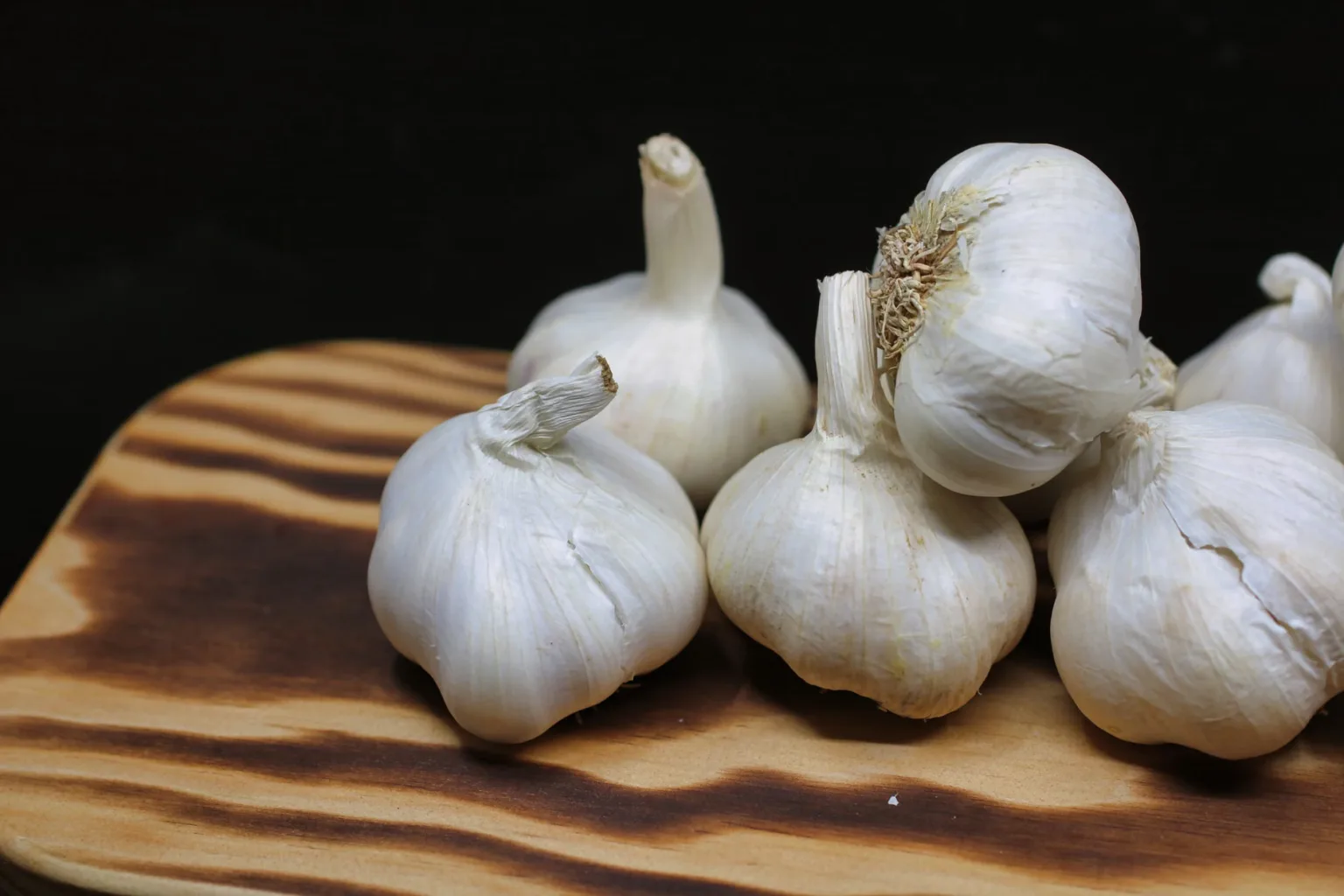
A garlic bulb is the edible underground bulb of Allium sativum, a plant in the same genus as onions, chives and leeks. It consists of individual cloves grouped together beneath papery outer layers. For broth, cooks generally separate the cloves, peel as many as needed and chop, crush or add them whole depending on the desired result. Bulbs vary in size and shape, and different kinds of garlic can differ in aroma and intensity. Fresh garlic is not the same product as black garlic: black garlic is transformed through processing and has a milder, sweeter flavor profile.
When to use it
Use garlic when you want broth, soup or a stew to have its characteristic savory aroma. It can be part of an aromatic base with onion or added to the cooking liquid; it appears in recipes for both vegetable soups and meat-based preparations. Choose the amount according to how prominent you want its flavor to be and the intensity of the garlic on hand, since varieties do not all taste alike. If you prefer a gentler result, begin with a smaller amount and adjust in later batches.
How to use it
Separate one or more cloves from the bulb and peel them. Chop or crush the cloves to distribute their flavor through the preparation, or add them whole and remove them before serving if you do not want pieces in the bowl. For an aromatic base, cook chopped garlic with onion in a little oil before adding the liquid. Another option is to add garlic directly to the broth as it cooks, as some soup preparations do. Do not assume that one bulb always represents a fixed quantity: bulb size and flavor strength vary. Taste the broth and adjust gradually rather than adding a large amount all at once.
Flavour and texture
Fresh garlic has a distinctive aroma and a flavor that can range from moderate to very strong, depending on the type and how it is used. Chopped and cooked with other aromatics, it blends into a broth base; a larger amount makes it more prominent. Fresh garlic has a sharper profile than processed black garlic, which is described as sweeter and milder. A compact bulb is made up of individual cloves beneath its outer layers.
How to choose it
Look for a compact, firm-looking bulb that is not excessively dry. Size, shape and skin color vary among garlic types, so appearance alone does not determine flavor or quality. Common white garlic can be mild but aromatic, while other kinds may have a stronger flavor. Check the bulb for obvious damage and choose an amount that suits the cooking you plan to do.
Storage
The available information does not establish a specific storage duration or detailed conditions for fresh garlic. Keep the bulb whole until you are ready to use it and follow any instructions on its packaging or from the place of purchase. Do not assume that every type keeps for the same length of time. Once cloves are separated or prepared, follow suitable fresh-food storage guidance and do not use garlic that shows clear signs of deterioration.
Substitutions
Tender garlic can stand in when you want a gentler garlic note, although it does not exactly reproduce the flavor of cloves from a mature bulb. Onion or leek can provide aroma in a broth base, but they are different Allium ingredients and the result will change. Black garlic is another way to shift the flavor toward softer, sweeter notes; it is not a flavor-identical replacement for fresh garlic.
Common mistakes
Do not assume every garlic type has the same intensity or that bulbs of different sizes provide a fixed amount. Another mistake is treating black garlic as a fresh-garlic variety: it is a transformed product with a different flavor. If you do not want garlic to dominate the broth, start with less and adjust. Onion, leek and garlic are related ingredients, but swapping them does change the result.
Safety and allergens
Use garlic as a culinary ingredient, not as a treatment for illness. Remove clearly deteriorated portions and follow product storage instructions; no specific storage duration is established here.
Culinary uses
- Aromatizante para caldos y sopas
- Base aromática para guisos y preparaciones saladas
Recommended techniques
- Pelar y picar o machacar los dientes
- Sofreír con otros aromáticos o incorporarlo al líquido de cocción
Pairs well with
- Cebolla
- Caldo, verduras y carnes para sopa
Frequently asked questions
Do I put the whole bulb in broth?
Usually, you separate the cloves and use the amount needed. They can be chopped, crushed or added whole, depending on your preference.
When should garlic go into broth?
You can cook it with onion as part of the aromatic base or add it directly to the cooking liquid. The timing and preparation affect how it blends into the dish.
Can black garlic be used just like fresh garlic?
It has a different profile: black garlic is sweeter and milder. It can provide a different result, but it does not reproduce fresh garlic's flavor exactly.
Sources and review
Automatically researched, cross-checked and validated content. Sources consulted:
- Client Challenge doi.org
- Ajo, tipos, beneficios y uso en la cocina - Mercado de Chamartín mercadodechamartin.es
- Todo sobre el ajo: qué es, cómo se cultiva, cómo utilizarlo en cocina y qué propiedades tiene directoalpaladar.com
- El secreto de tus platos: las variedades del ajo. gastroystyle.com
- Pollo en Nogada 1969 (Chicken in Walnut Sauce) - lacocina.utsa.edu
- Creando cultura a través de la comida digitalcommons.calpoly.edu
- Caldo de Verduras Estilo Guadalupe ihpr.uthscsa.edu
- Julio gavilan.edu
- Lesson 4B – Semillas: Elementary Spanish I pressbooks.uiowa.edu
- Soup Joumou (Haitian-Inspired Beef and Squash Soup – Community Nutrition Security Research Group web.uri.edu
- Otros usos del ajo más allá de la cocina – Imperio Garlic imperiogarlic.com
- Aspectos culinarios y farmacéuticos del ajo revistas.ucm.es