- Category
- Herbs and spices
- State
- Fresh
- Usual unit
- g
What it is
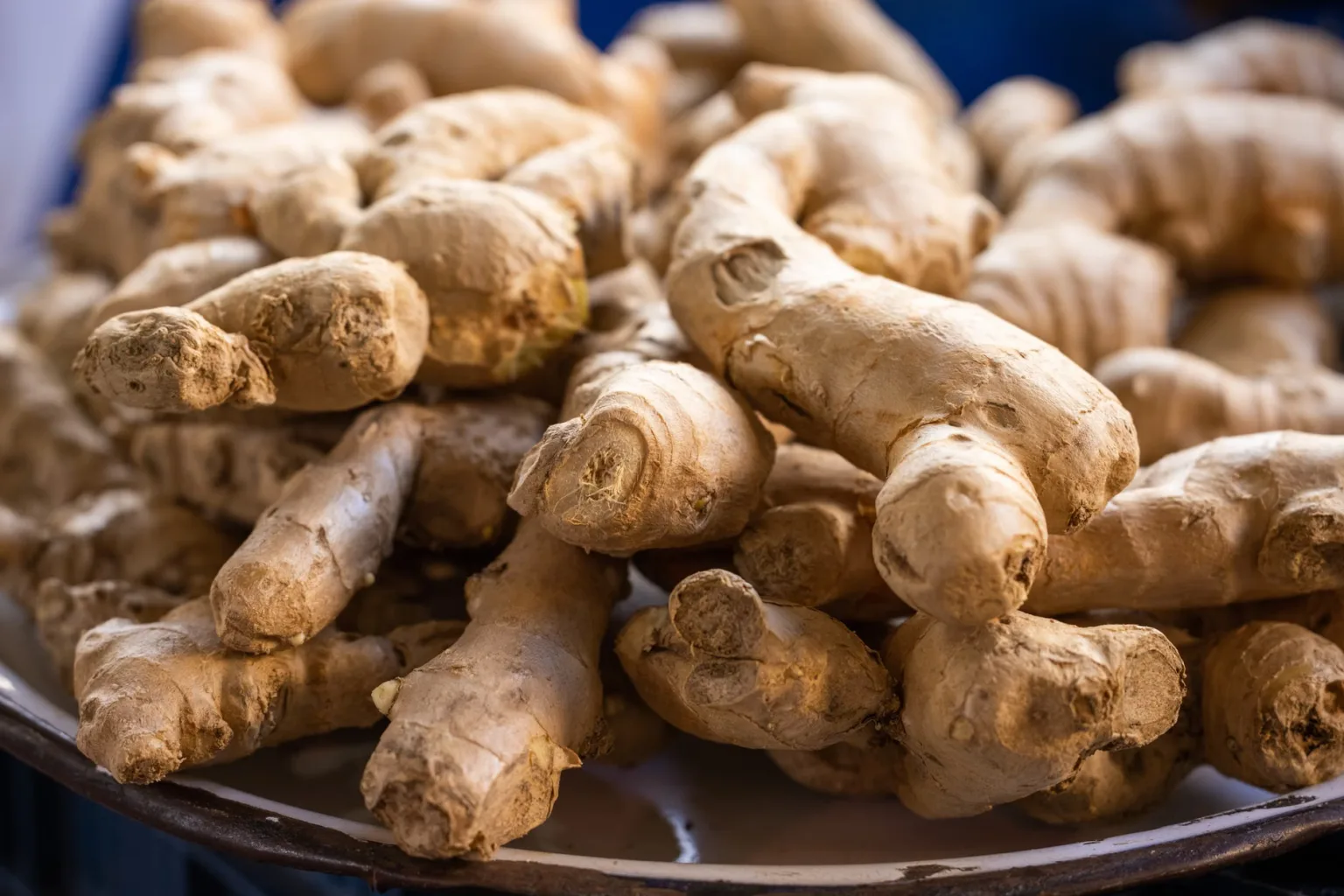
The ginger used in broth is the fresh rhizome of the Zingiber officinale plant. In cooking, it works as an aromatic seasoning: its fragrance is distinctive and its flavor has a noticeable pungency, so a small amount can affect the whole pot. Slices can simmer with the broth and other ingredients to perfume the liquid; ginger can also be grated or finely chopped when you want its flavor distributed more directly. Fresh ginger is used in soups, stir-fries, marinades, and sweet dishes as well. It does not taste exactly like ground ginger, so choose the form that suits the result you want. This ingredient profile is about fresh ginger for cooking, not a ginger drink or a preserved product.
When to use it
Use ginger when you want broth to have a warm, lightly peppery, recognizable aromatic note rather than a completely neutral flavor. It works well in broth and soup with chicken, rice, or vegetables, and can also complement fish preparations. Slices are convenient when you want to scent the liquid without leaving pieces in every spoonful; grated or minced ginger gives a more integrated flavor. Because ginger is assertive, begin with a small amount, taste the broth, and add more only if needed. You can also briefly cook it with aromatics before adding the liquid, though adding it during the simmer is an easy option for a simple broth.
How to use it
Choose a firm, solid piece. Rinse and dry it, then cut only what you need. For a gentler aroma, slice the ginger and add the slices to the broth as it cooks; taste before serving and remove them if you do not want pieces in the bowl. For a more evenly distributed flavor, grate or finely mince the rhizome and add it to the broth, starting with a little because its intensity can dominate other flavors. You can also briefly warm it with onion or garlic before adding the broth. If you only have ground ginger, use it sparingly: its profile differs from fresh ginger. Dried ginger may need soaking before use.
Flavour and texture
Fresh ginger has a strong aroma and a warm, pungent, peppery flavor. In broth, the result depends on the cut: slices infuse the liquid as they cook, while grated or minced ginger gives a more direct, distributed flavor. The rhizome is fibrous, so pieces may be noticeable if left in the soup.
How to choose it
Look for ginger that feels firm and solid, without visibly damaged areas. A firm rhizome is easier to slice and grate than one that has dried out or become very hard. Choose a piece suited to the amount you need, and avoid buying more than you can reasonably use. Ginger is also sold ground, dried, and preserved; for the fresh, aromatic profile described here, choose the fresh rhizome.
Storage
Keep fresh ginger clean and dry, and avoid storing it with moisture on the outside. Wrap any remaining piece and keep it in the refrigerator; it can also be frozen for longer storage. Cut only what you need and protect the rest again after use. If a cut piece is left exposed to air, it can dry out and become harder, making it more difficult to incorporate into food.
Substitutions
Ground ginger can stand in for fresh if that is what you have, but the flavor will not be identical; add it gradually and taste the broth. Dried ginger may also work, though soaking it before use is advised. These forms change the flavor and texture of the broth, so do not automatically substitute them in the same quantity as fresh ginger.
Common mistakes
Adding too much ginger at once can let its pungency and aroma overwhelm the other ingredients. Start with a little and taste before adding more. Another common mistake is expecting ground ginger to taste just like fresh ginger: they are different forms. If you grate or mince the ginger, remember that it will remain distributed through the soup; use slices if you would rather remove it easily.
Safety and allergens
Rinse fresh ginger before preparing it and use clean utensils. Do not use ginger that shows visible signs of spoilage.
Culinary uses
- aromatic seasoning for broth and soup
- fresh, gently pungent flavor accent
Recommended techniques
- slice and simmer in broth to infuse it
- grate or finely chop and add to soups and stir-fries
Pairs well with
- chicken and rice
- onion and garlic
- vegetables and fish
Frequently asked questions
Is it better to slice or grate ginger for broth?
Slices are useful for scenting the broth and can be removed afterward. Grated or minced ginger distributes its flavor more directly and remains in the dish.
When should I add ginger to broth?
Add it while the broth cooks so it can infuse the liquid. You can also briefly cook it with onion or garlic before adding the broth.
Can I use ground ginger instead of fresh?
Yes, but its flavor is different. Start with a small amount, taste the broth, and adjust carefully.
Sources and review
Automatically researched, cross-checked and validated content. Sources consulted:
- Client Challenge doi.org
- The Essential Glossary of Cooking Terms for the Culinary Arts - Escoffier escoffier.edu
- Recipe: Filipino "Arroz Caldo" | Institute of Culinary Education ice.edu
- Los alimentos como medicina: la dieta antiinflamatoria | Children's Hospital of Philadelphia chop.edu
- Jengibre: qué es, propiedades, beneficios y cómo se toma bonviveur.com
- Jengibre, más que una especia: usos, formatos y qué puede aportar a tu bienestar margavilan.substack.com
- Soups - National Center for Home Food Preservation nchfp.uga.edu
- Todo lo que debes saber sobre el jengibre | Recetas Nestlé recetasnestle.com.ec
- Jengibre, raíz nutritiva y curativa que no puede faltar en tu cocina lagarbancitaecologica.org
- Tanzania Food Composition Tables | The Nutrition Source nutritionsource.hsph.harvard.edu
- Eat Your Heart Out | News Detail - Sidwell Friends sidwell.edu
- Residential Dining Menus | California State University Long Beach csulb.edu
- El jengibre como alimento. Principales usos del jengibre en la cocina: – Botanical-online botanical-online.com