- Category
- Herbs and spices
- State
- Fresh
- Usual unit
- unit
What it is
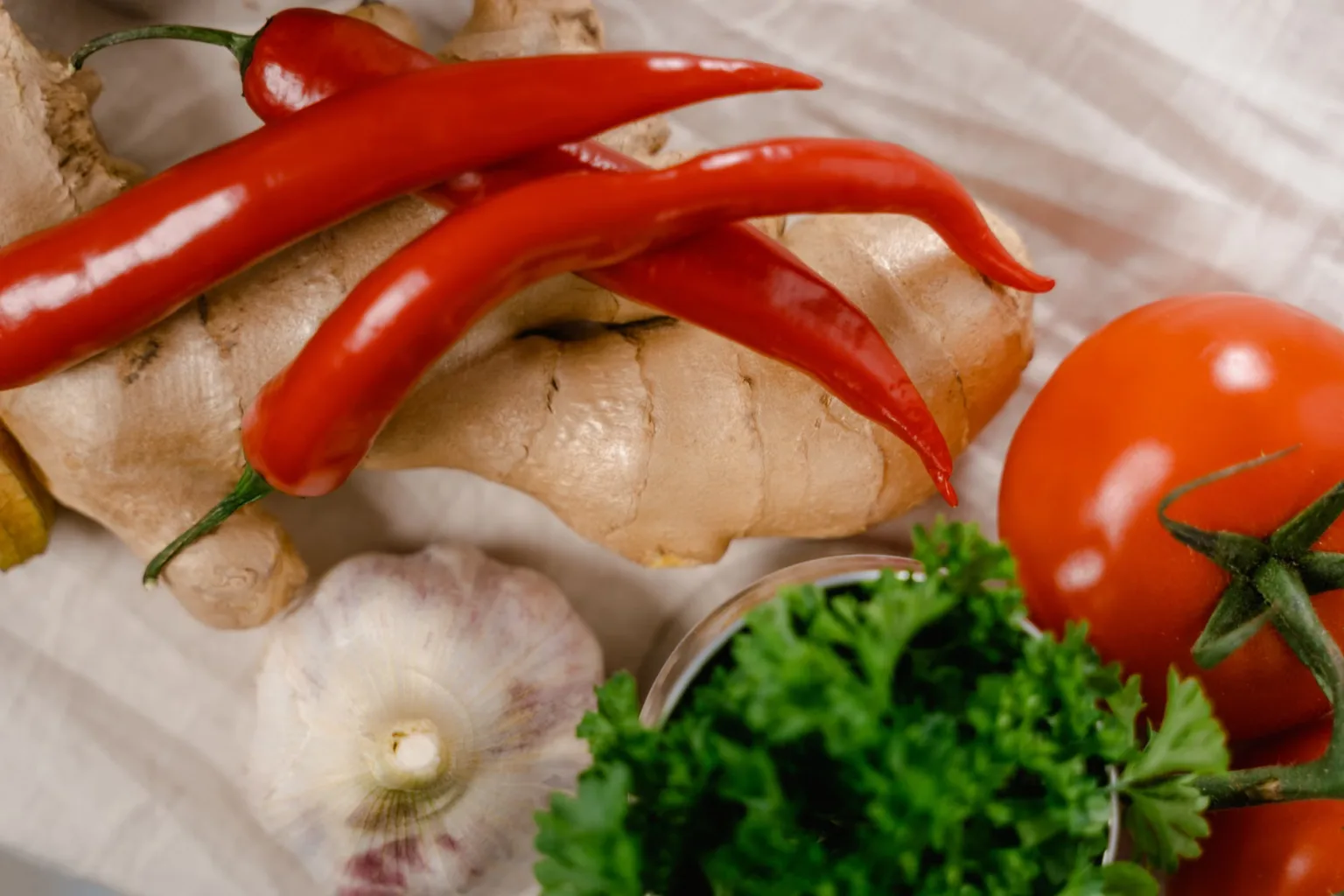
The ginger used in cooking is the fresh rhizome of a plant in the Zingiberaceae family. It is often called a root, but botanically it is a thickened underground stem. Its flesh can be fibrous, and its aroma is pronounced, with warm heat and fresh notes. In chili sauce, ginger works as an aromatic seasoning: it can complement chili heat with its own character rather than simply adding more intensity. It can be grated, minced, or sliced; the cut changes how it blends into the sauce and how noticeable it is when eaten.
When to use it
Use ginger when you want a chili sauce to have a warm, fresh aromatic note alongside the heat of the chili. It can suit sauces and salsa-style mixtures with fruit, such as a mango preparation, and combinations with garlic or onion. Ginger has a strong flavor, so start with a small amount, taste the mixture, and add more only if needed. Fresh ginger is especially convenient when you can grate or mince it just before adding it.
How to use it
Peel the ginger if you like, then finely grate or mince it so it distributes more evenly through the sauce. Add a small amount, mix, and taste before adding more: its aroma and heat can stand out even in a modest quantity. For a more integrated flavor, briefly warm thin slices before adding the other ingredients; avoid letting ginger become the only flavor you notice. You can also pair it with garlic, onion, or mango, depending on the style of sauce. If using ground ginger instead of fresh, add it gradually because the format changes both intensity and texture.
Flavour and texture
Fresh ginger is strongly aromatic, warm, and mildly hot, with a fresh impression that can suggest citrus notes. Its interior is juicy and fibrous; the fibers are more noticeable when it is cut into large pieces. Finely grated ginger disperses easily and leaves fewer noticeable pieces than a coarse mince. Intensity and texture can vary with the rhizome's maturity, so taste the sauce as you adjust it.
How to choose it
Choose rhizomes that feel firm, solid, and relatively thick, without obvious soft spots. A fresh piece should feel consistent to the touch; a hardened texture can make it harder to incorporate and more fibrous. Buy an amount you expect to use and check that the outside is not excessively damp. If you plan to grate it into sauce, choose a piece that is easy to hold and is not dried out.
Storage
Keep fresh ginger dry on the outside and wrap it before refrigerating. You can also freeze it for longer keeping and grate or cut it as needed. Once cut, ginger can dry out and harden if left exposed to air, so wrap and refrigerate any remainder. No single storage time is established here; check its condition before using it.
Substitutions
Ground ginger can replace fresh ginger, but it does not provide exactly the same texture or aromatic profile. Add it gradually and taste the sauce rather than assuming a fixed equivalence. Preserved ginger may also work depending on the preparation, though its flavor can differ. Adjust the chili and other seasonings after tasting, since changing the ginger format can shift the sauce's balance.
Common mistakes
Adding too much ginger at once can let its heat and aroma overpower the chili and the rest of the sauce. Start with a little, mix, and taste before adjusting. Large pieces can leave fibers and distribute unevenly; fine grating or mincing helps the ginger blend in. Do not leave cut ginger unwrapped if you are keeping the remainder, as it can dry out and harden.
Safety and allergens
Rinse ginger under running water before preparing it, and use a clean cutting board and utensils. Keep the preparation and utensils separate from raw foods that could contaminate it, and follow ordinary food-hygiene practices while cooking.
Culinary uses
- Aromatic seasoning for chili sauces and salsas
- Fresh, peppery accent in savory dishes
Recommended techniques
- Finely grate or mince and add gradually
- Slice thinly and briefly warm to release aroma
Pairs well with
- Chiles and other aromatics
- Mango, garlic, and onion
Frequently asked questions
How much ginger should I add to chili sauce?
Start with a small amount, mix, and taste. Ginger has a strong flavor, and the right amount depends on the chili and the other ingredients.
Should I grate or mince ginger?
Fine grating helps it spread through the sauce; mincing leaves more noticeable pieces. Choose the cut to suit the texture you want.
Can I use ground ginger instead of fresh?
Yes. Add it gradually because ground ginger has a different texture and flavor profile. Taste the sauce before adding more.
Sources and review
Automatically researched, cross-checked and validated content. Sources consulted:
- Qué es eso llamado epistemología, para qué sirve, por qué es inexcusable para la universidad y para la paz | Reencuentro. Análisis de problemas universitarios doi.org
- Jengibre, más que una especia: usos, formatos y qué puede aportar a tu bienestar margavilan.substack.com
- El jengibre desde una perspectiva profesional | Alveus alveus.eu
- Salsa de Mango (Spanish) - National Center for Home Food Preservation nchfp.uga.edu
- La diabetes y la alimentación: Cómo planificar y cocinar comidas sabrosas y saludables | CAES Field Report fieldreport.caes.uga.edu
- Additional file 1: The Antioxidant Food Table. vtechworks.lib.vt.edu
- Todo lo que debes saber sobre el jengibre | Recetas Nestlé recetasnestle.com.ec
- Jengibre, raíz nutritiva y curativa que no puede faltar en tu cocina lagarbancitaecologica.org
- El Jengibre en la cocina, usos y propiedades eladerezo.com
- A Month of Cal-Fresh Meals | UC Cooperative Extension ucanr.edu
- Yum! – The Yale Globalist globalist.yale.edu
- Yu, Talia - Thesis Final - Emory Theses and Dissertations etd.library.emory.edu
- Recetas para comer fuera de casa: Ensalada de bulgur, aguacate y soja cordonbleu.edu