- Category
- Herbs and spices
- State
- Fresh
- Usual unit
- piece
What it is
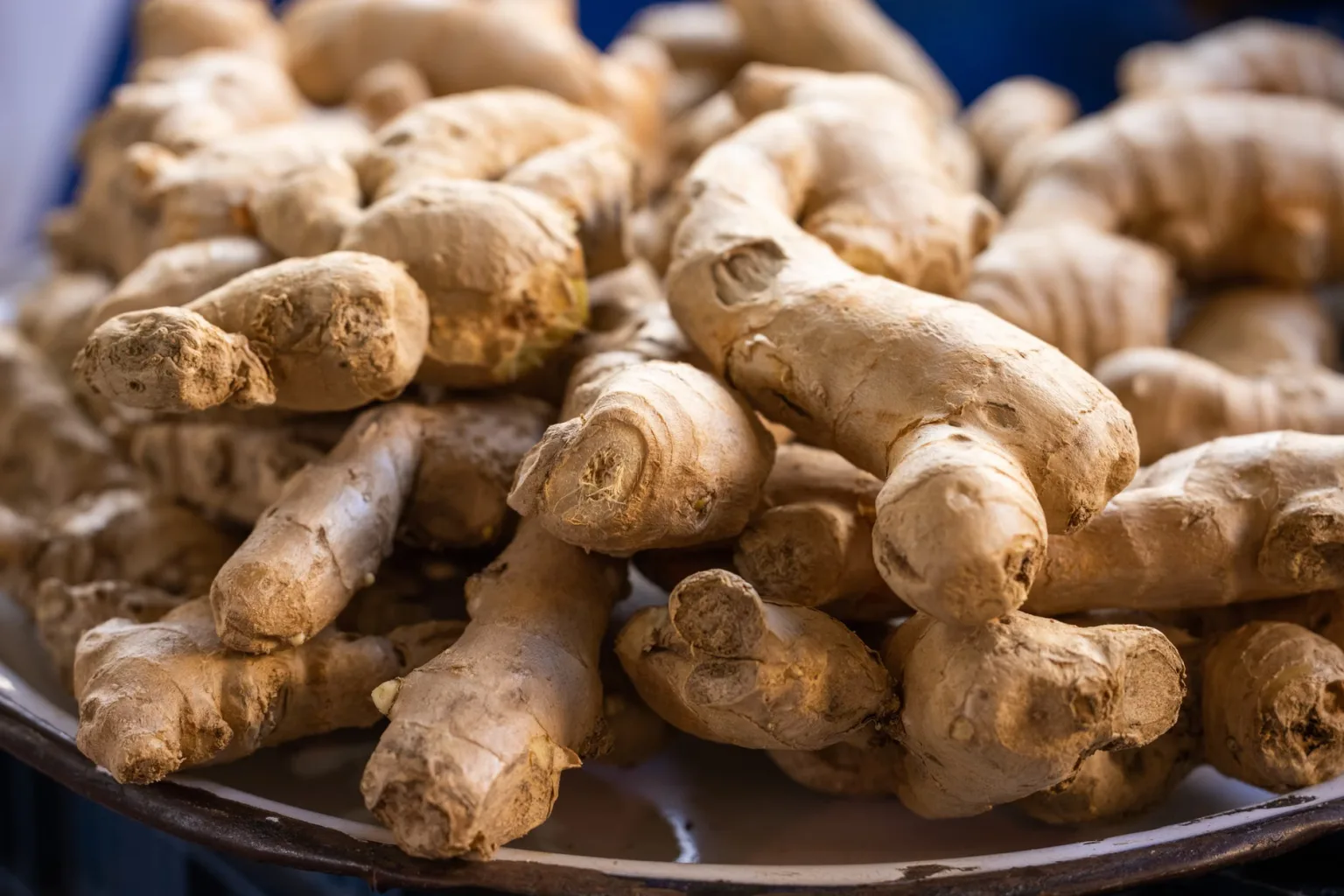
The ginger used in cooking is the fresh rhizome of a plant in the Zingiberaceae family. Although it is often called a root, the culinary part is an underground stem. It is used as an aromatic seasoning in both savory and sweet dishes. For rice, ginger can be grated, minced, or sliced and added during preparation so its fragrance blends with the other ingredients. Fresh ginger is not identical to ground, preserved, or syrup-packed ginger: each form has a different texture and effect. Its flavor can be intense, so begin with a small amount and adjust to taste.
When to use it
Add ginger to rice when you want a fragrant, spicy note and warm heat, particularly in a dish that also includes vegetables, fish, meat, or poultry. You can briefly warm thin slices with the other aromatics before adding the remaining ingredients. Ginger also works in soups, broths, marinades, salads, and sweet recipes. Because its flavor can easily dominate, use a little at first and taste before adding more. Ground ginger is convenient for baking and spice blends, although it does not provide the same texture as fresh ginger.
How to use it
Rinse the ginger and peel it if you prefer; then grate, finely mince, or slice it. To flavor rice, briefly warm the slices with the recipe’s aromatics, then add the rice and the liquid called for in your preparation. If you grate or mince the ginger, add it gradually and taste before adding more, since its flavor is pronounced. You can also add it to soups, stews, marinades, and dressings. For sweet dishes, ground ginger can be combined with other spices; preserved or syrup-packed ginger brings a different texture and sweetness. The different forms do not necessarily call for the same amount.
Flavour and texture
Fresh ginger has a very fragrant aroma and a warm, spicy, peppery flavor, sometimes with a citrus-like note. Its flesh is fibrous, and its texture changes depending on whether it is grated, minced, or sliced. Grated ginger blends in readily; slices remain more noticeable and can perfume a dish as it cooks. Ground, preserved, or syrup-packed ginger does not exactly reproduce the texture or flavor of fresh ginger.
How to choose it
Choose pieces that feel firm and solid, with skin and flesh that look fresh. Do not judge only by size: look for a piece that is not shriveled or soft and whose surface does not seem damp. Ginger may be sold fresh, ground, or preserved, and these forms behave differently in cooking. For rice, fresh ginger can be grated, minced, or sliced to control its texture. Buy an amount you can use and store any remainder appropriately.
Storage
Keep fresh ginger clean and dry on the outside, wrap it, and store it in the refrigerator. It can also be frozen for longer storage. Once cut, the exposed surface may dry out and become hard if left in the open; wrap and store the remainder, and use it according to its condition. Keep fresh ginger distinct from ground or preserved forms, which may have different storage instructions. Follow the package directions for prepared products.
Substitutions
Ground ginger can replace fresh ginger when the fresh texture is not needed, but its flavor comes across differently; add it gradually and adjust to taste. Preserved or syrup-packed ginger can work in compatible dishes, though it may add sweetness and moisture. Neither is an exact replacement in a savory rice dish. If you want ginger to remain a supporting note rather than the main flavor, use less and taste before adding more.
Common mistakes
Adding too much ginger at once can let its heat and aroma overwhelm the rest of the dish. Start with a small amount and adjust after tasting. Another mistake is treating fresh, ground, and preserved ginger as identical in texture and flavor. Do not leave a cut piece exposed to air, as it can dry out and become hard. When adding ginger to rice, distribute it evenly so some portions do not taste much stronger than others.
Safety and allergens
Wash the ginger before preparing it, and use clean utensils and surfaces. Handle it as a fresh ingredient and follow package directions for processed forms. The available information does not identify a specific culinary safety warning for ginger.
Culinary uses
- Aromatic seasoning for rice and savory dishes
- Flavoring for sweet preparations and drinks
Recommended techniques
- Finely grate or mince and stir into the dish
- Slice thinly and briefly warm to release its aroma
- Use powdered ginger in baking or spice blends
Pairs well with
- Rice, vegetables, soups and broths
- Fish, meat and poultry
- Citrus, cinnamon, cloves and nutmeg
Frequently asked questions
How do I add fresh ginger to rice?
Grate, mince, or thinly slice it and add it during preparation. Start with a small amount and taste before adding more.
Can I use ground ginger instead of fresh?
Yes, when the recipe can do without the texture of fresh ginger. The flavor differs, so add it gradually and adjust to taste.
How should I store leftover fresh ginger?
Wrap it and keep it in the refrigerator, making sure the outside is not damp. You can also freeze it.
Sources and review
Automatically researched, cross-checked and validated content. Sources consulted:
- Client Challenge doi.org
- Los alimentos como medicina: la dieta antiinflamatoria | Children's Hospital of Philadelphia chop.edu
- Jengibre, más que una especia: usos, formatos y qué puede aportar a tu bienestar margavilan.substack.com
- La diabetes y la alimentación: Cómo planificar y cocinar comidas sabrosas y saludables | CAES Field Report fieldreport.caes.uga.edu
- Recetas en 1 minuto cordonbleu.edu
- Todo lo que debes saber sobre el jengibre | Recetas Nestlé recetasnestle.com.ec
- Jengibre, raíz nutritiva y curativa que no puede faltar en tu cocina lagarbancitaecologica.org
- El Jengibre en la cocina, usos y propiedades eladerezo.com
- Analyzing Food Sources and Food Insecurity of Kichwa ... scholarworks.uark.edu