- Category
- Sugar and sweeteners
- State
- Dry
- Usual unit
- teaspoon
What it is
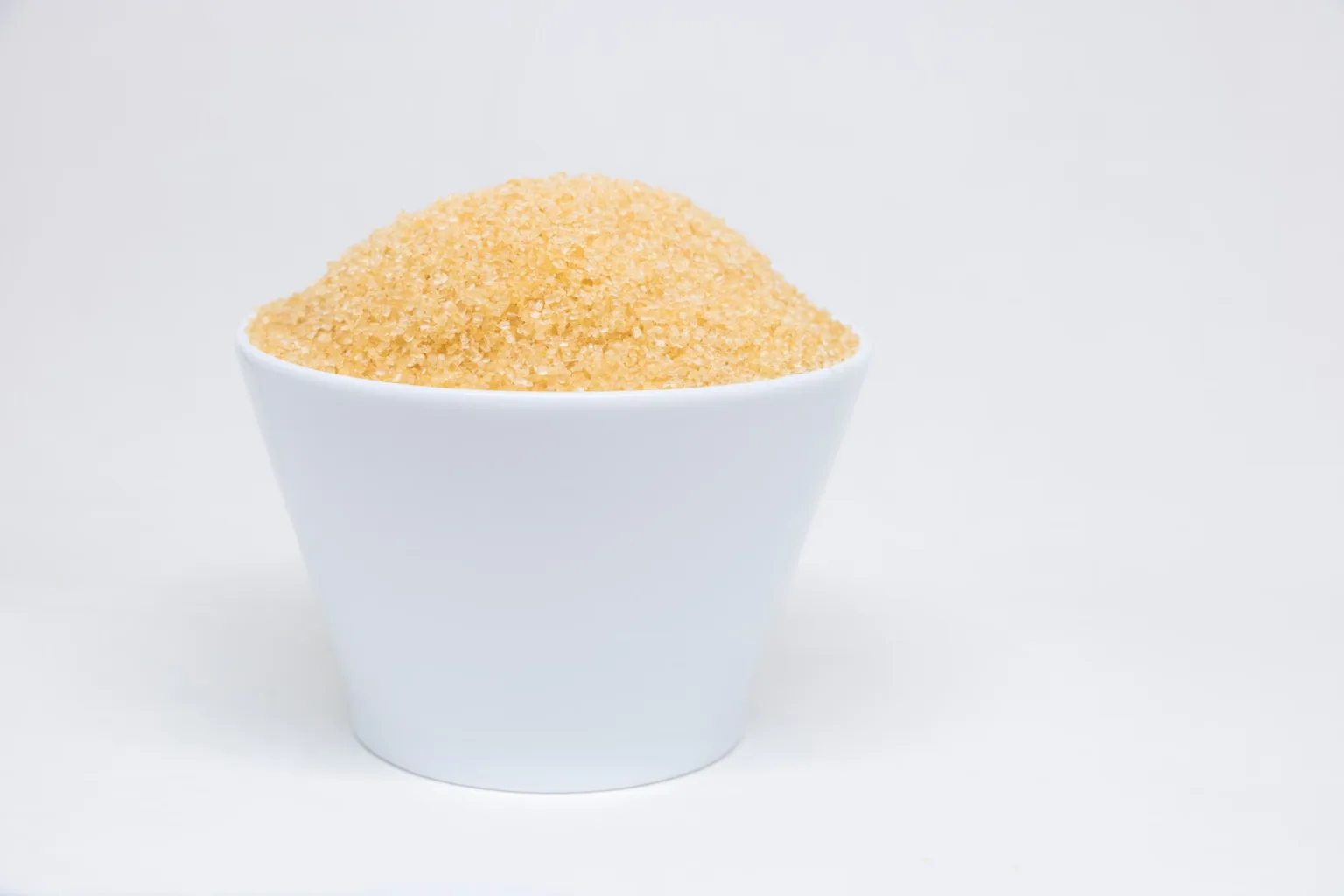
Granulated sugar, also called ordinary white or table sugar, is made mostly of sucrose and consists of visible, dry crystals. Crystal size can vary slightly from one product to another. It is produced from sugar cane or sugar beet, and a recipe that simply calls for “sugar” often means this common type. It differs from powdered sugar, which is milled to a fine powder, and superfine sugar, whose crystals are smaller. These differences in particle size affect how quickly sugar dissolves and can influence the texture of a preparation.
When to use it
Use it when a recipe calls for granulated or ordinary sugar and you want straightforward sweetness in drinks, desserts or doughs. It is a versatile choice for preparations where the crystals can dissolve during mixing or cooking, and for methods that cream sugar with butter and eggs. It can also be sprinkled over some foods before baking to create a crisp surface. In savory dishes, a small amount may help balance acidity, but it does not replace seasoning and should be added gradually, with tasting.
How to use it
Measure the amount specified in the recipe and add it directly to hot or cold liquids, stirring until dissolved; crystals may take longer to disappear in cold drinks. For some batters and doughs, beat the sugar with butter and eggs as directed by the method. You can sprinkle it over a preparation before baking when a crisp crust is desired. To make caramel, heat the sugar until it melts and changes color, using a suitable recipe and controlling the heat for the intended result. Do not automatically replace granulated sugar with powdered sugar, which has a different texture and may contain starch.
Flavour and texture
It has a clean, fairly neutral sweetness, without the molasses notes associated with some brown sugars. The crystals are noticeable to the touch and can feel crunchy; their precise size varies by product. They dissolve in liquids and melt and may caramelize when heated. In batters and toppings, the way the sugar is incorporated and the size of its crystals can affect the finished texture.
How to choose it
Look for a product labeled granulated sugar, white sugar or table sugar when that is what the recipe specifies. Choose an intact, closed package, and check that the crystals are loose, with no visible moisture or unusual clumping. Do not confuse granulated sugar with superfine sugar or powdered sugar: granulated sugar has visible crystals, superfine sugar has smaller crystals, and powdered sugar is milled into a fine powder. Follow the recipe when it specifies a particular form.
Storage
Keep granulated sugar in a clean, tightly closed container in a dry place at room temperature. Protect it from moisture and strong odors, and use a dry spoon when serving. It can keep for a long time when stored dry; if it has clumped from moisture, check the product and follow its package directions. Refrigeration is not needed.
Substitutions
Superfine sugar can work in preparations where faster dissolving is useful, although its smaller crystals may change the texture. Powdered sugar is not a universal substitute: it is a powder and may contain starch. Honey and maple syrup add moisture and their own flavors, so they can change consistency and results; use them only with a suitable recipe or adjustment.
Common mistakes
Do not assume granulated, superfine and powdered sugars are interchangeable in every recipe. Different crystal sizes can affect dissolving and texture, and powdered sugar may contain starch. Avoid keeping sugar in a damp container or serving it with a wet utensil, since moisture encourages clumping. In savory preparations, add it a little at a time and taste before adding more.
Safety and allergens
Keep the product in a clean, dry package and follow its label directions. No specific handling warning for granulated sugar is identified here.
Culinary uses
- Sweetener for drinks, desserts and baked goods
- Ingredient that helps balance acidity in some savory preparations
- Contributor to browning, crispness and texture in selected recipes
Recommended techniques
- Dissolving in hot or cold liquids
- Creaming with butter and eggs
- Melting and caramelizing
- Sprinkling over food before baking
Pairs well with
- Coffee, tea and other drinks
- Butter-and-egg baking mixtures
- Fruit desserts and syrups
- Tomato-based sauces where a little sweetness is desired
Frequently asked questions
Is granulated sugar the same as table sugar?
In common use, yes. Granulated sugar, ordinary sugar and table sugar refer to sugar with visible crystals.
Can I use granulated sugar in cold drinks?
Yes. It can dissolve in cold drinks, although the crystals may take longer to disappear than they do in a hot liquid.
Is granulated sugar the same as powdered sugar?
No. Powdered sugar is milled into a fine powder and may contain starch, so it is not a direct substitute in every recipe.
How do I stop it from clumping?
Store it tightly closed in a dry place and use a dry spoon when serving.
Estimated nutrition
- Fat
- 0 g
- Saturates
- 0 g
- Carbohydrate
- 100 g
- Sugars
- 100 g
- Protein
- 0 g
- Salt
- 0 g
Sources and review
Automatically researched, cross-checked and validated content. Sources consulted:
- The Essential Glossary of Cooking Terms for the Culinary Arts - Escoffier escoffier.edu
- Del blanco a la panela: los 19 tipos de azúcar más comunes, en qué se diferencian y cómo usarlos en cocina directoalpaladar.com
- Tipos de azúcar: cuáles son y cómo usarlos | Fine Dining Lovers finedininglovers.es
- Tipos y variedades de Azúcar que encontrarás en el mercado, apuntes. - Cocina y Aficiones cocinayaficiones.com
- How do I tell if there’s added sugar in my drink? ¿Cómo puedo saber si mi bebida contiene azúcar agregado? | University of Nevada, Reno unr.edu
- ¿Qué es el azúcar? Tipos, sacarosa y edulcorantes | Zschimmer & Schwarz, Inc. zschimmer-schwarz.es
- Healthy Eating Plan for Weight Management med.uc.edu
- Home - Department of Food Science and Technology foodscience.tamu.edu
- melons - Extension St. Croix County stcroix.extension.wisc.edu
- Azúcar: El ingrediente mágico que -con moderación- transforma tus recetas hola.com
- ¡Asegurándonos de que no eres un robot! doi.org
- Vamos a Conservar Alimentos: Fresas extension.psu.edu
- - YouTube youtube.com
- Nutrición después de su trasplante - Health Online healthonline.washington.edu
- El azúcar: Origen, transformación y papel en la repostería | ecoledepatisserie-boutique® ecoledepatisserie-boutique.com