- Category
- Vegetables
- State
- Fresh
- Usual unit
- cup
What it is
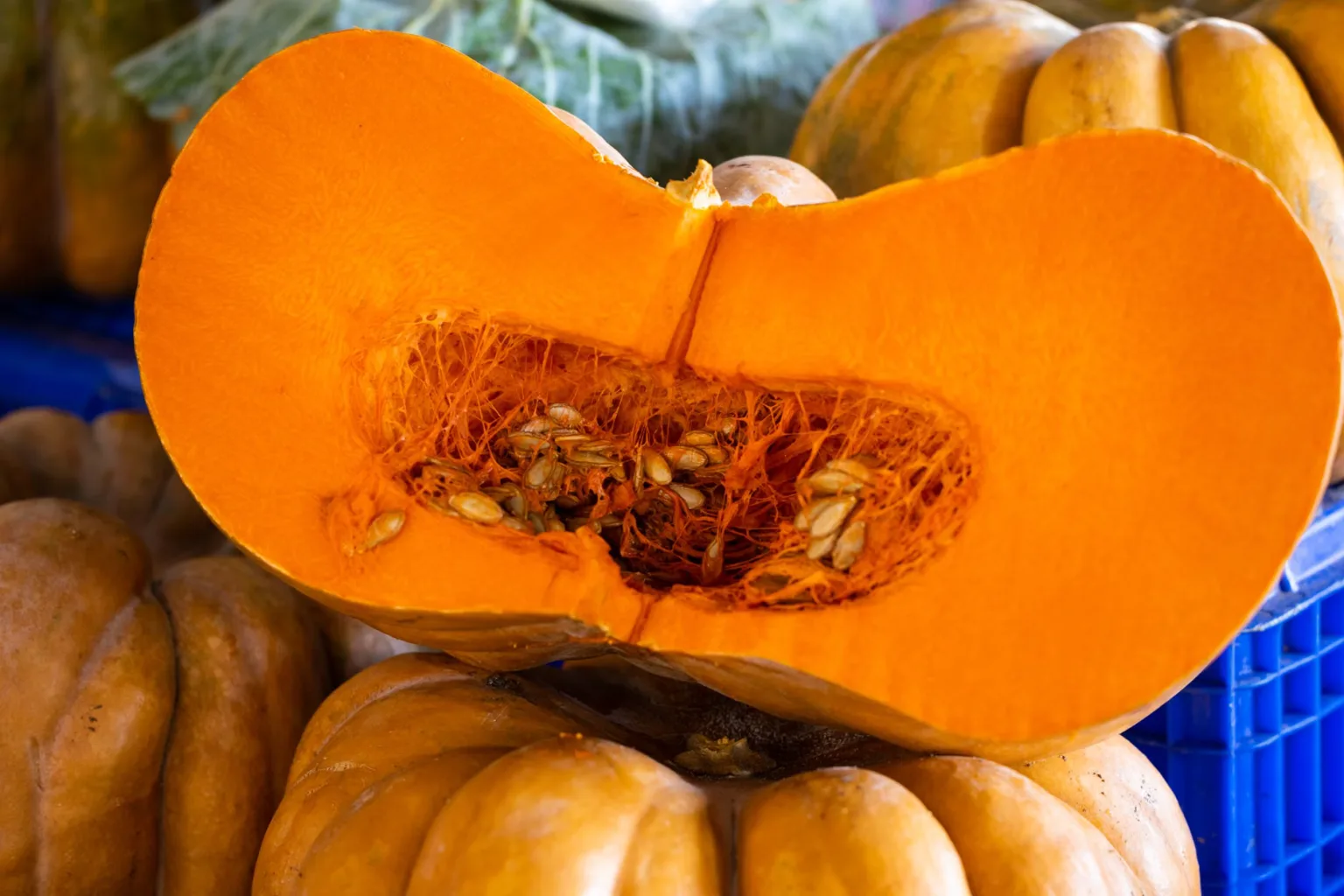
Grated pumpkin is the flesh of a fresh squash or pumpkin that has been washed and shredded with a grater. The name does not identify one particular variety: “pumpkin” is used for several kinds of cucurbit, and their characteristics vary. Some have tender, juicy flesh; others are firmer, drier or sweeter. As a result, a cup of grated pumpkin will not behave identically in every preparation. It can be folded into baking mixtures and cooked dishes, or used as a starting point for soups and purées. The result depends on the variety, the size of the shreds and how much liquid the flesh releases during preparation. The term describes a cut, not a preserved product or a single cultivar.
When to use it
Use it when you want pumpkin flesh in small pieces distributed through a mixture, especially in baked recipes that call for grated pumpkin or zucchini. It can also be added to cooked dishes, soups or savory preparations, although moisture and firmness vary by variety. Before measuring, check which type the recipe calls for and whether it says to drain or cook the shreds first. Do not assume all grated pumpkins can replace one another in the same proportion. Warm spices can complement it in sweet dishes; herbs or cheese can suit savory ones. If a recipe depends on a particular texture, follow its directions before changing the type of squash.
How to use it
Wash the squash and prepare a clean work surface and grater. Remove the skin and seeds if the variety and recipe call for it; cut the flesh into manageable pieces and grate it to the specified size, or one suited to the dish. Add it to the mixture at the point stated in the recipe. For baking, follow any direction to drain the shreds or account for their moisture: different varieties do not always release the same amount of water. In savory recipes, combine them with herbs, cheese or spices, or add them to soups and purées. A preservation guide gives a specific method for grated zucchini intended for baking; do not assume that method applies unchanged to every pumpkin or squash. If freezing, use directions appropriate to the specific variety.
Flavour and texture
Flavor and texture depend on the variety: pumpkin can taste mild or sweet, and its flesh may be tender and juicy or firmer and drier. Grating turns it into small shreds or pieces that mix into batters and cooked dishes; shred size affects how noticeable it is. Released moisture can also affect a mixture, so do not assume every variety will produce the same result.
How to choose it
Choose a squash that feels firm and has no obvious damage, and consider the dish before buying: summer squash generally has thinner skin and tender flesh, while winter squash tends to have thicker skin and firmer flesh. For a pre-grated product, check that the package is intact and that the product has been kept according to its label. Variety matters; the generic name does not guarantee a particular level of moisture or sweetness.
Storage
The available information does not establish a safe storage duration for freshly grated pumpkin or one storage method for every variety. For a packaged product, follow the storage directions on its label. When freezing, do not automatically apply a method described for grated zucchini to every squash: preparation guidance depends on the product and its intended use. Handle it with clean hands, utensils and surfaces.
Substitutions
Grated zucchini can be an option in some baking recipes, but it is not a universal replacement: its moisture and texture may change the result. Another grated squash may also work if the recipe can accommodate differences in the flesh. Check the recipe’s directions and adjust only where they allow it; do not assume an exact one-for-one equivalent.
Common mistakes
A common mistake is treating every variety as though it had the same moisture, sweetness and firmness. Using a different shred size from the one specified can also affect the result, as can replacing pumpkin with zucchini without considering its moisture. Do not automatically apply a freezing method described for grated zucchini to every pumpkin or squash.
Safety and allergens
Wash the squash before preparation and use clean hands, surfaces and utensils. No specific storage limit for grated pumpkin is established here; follow applicable food-safety guidance and package directions, if present.
Culinary uses
- Ingredient for baking and other cooked dishes
- Base or addition for soups, purées and savory preparations
Recommended techniques
- Wash and grate shortly before using
- Cook in a recipe, or freeze only using a method appropriate to the specific squash
Pairs well with
- Warm spices such as cinnamon, ginger, cardamom or curry
- Herbs and cheese in savory dishes
Frequently asked questions
Can grated pumpkin be used in baking?
Yes. It can be added to baked recipes that call for grated pumpkin or zucchini. Follow the recipe’s directions for quantity and moisture, since varieties behave differently.
Are all types of grated pumpkin interchangeable?
Not necessarily. Varieties can differ in firmness, sweetness and moisture, so a substitution may change the texture of the recipe.
Can I freeze any pumpkin after grating it?
Do not assume one method suits every type. The available guide describes a process for grated zucchini intended for baking; look for directions appropriate to the squash you have.
Sources and review
Automatically researched, cross-checked and validated content. Sources consulted:
- Client Challenge doi.org
- Calabaza - Wikipedia, la enciclopedia libre es.wikipedia.org
- Calabaza: Propiedades, beneficios y usos en la cocina mercadosantamariadelacabeza.es
- Cómo Utilizar la Mantequilla de Maní | CSU Extension extension.colostate.edu
- EFECTO DE LA APLICACIÓN DE ULTRASONIDOS EN ... upcommons.upc.edu
- Para la ciudadanía aesan.gob.es
- Vamos a Conservar Alimentos: Calabazas y Calabacines extension.psu.edu
- Gastromimix: La calabaza gastromimix.blogspot.com
- Calabaza: el ingrediente de otoño que cabe en casi cualquier receta | UEStudio elmundo.es