- Category
- Herbs and spices
- State
- Dry
- Usual unit
- pod
What it is
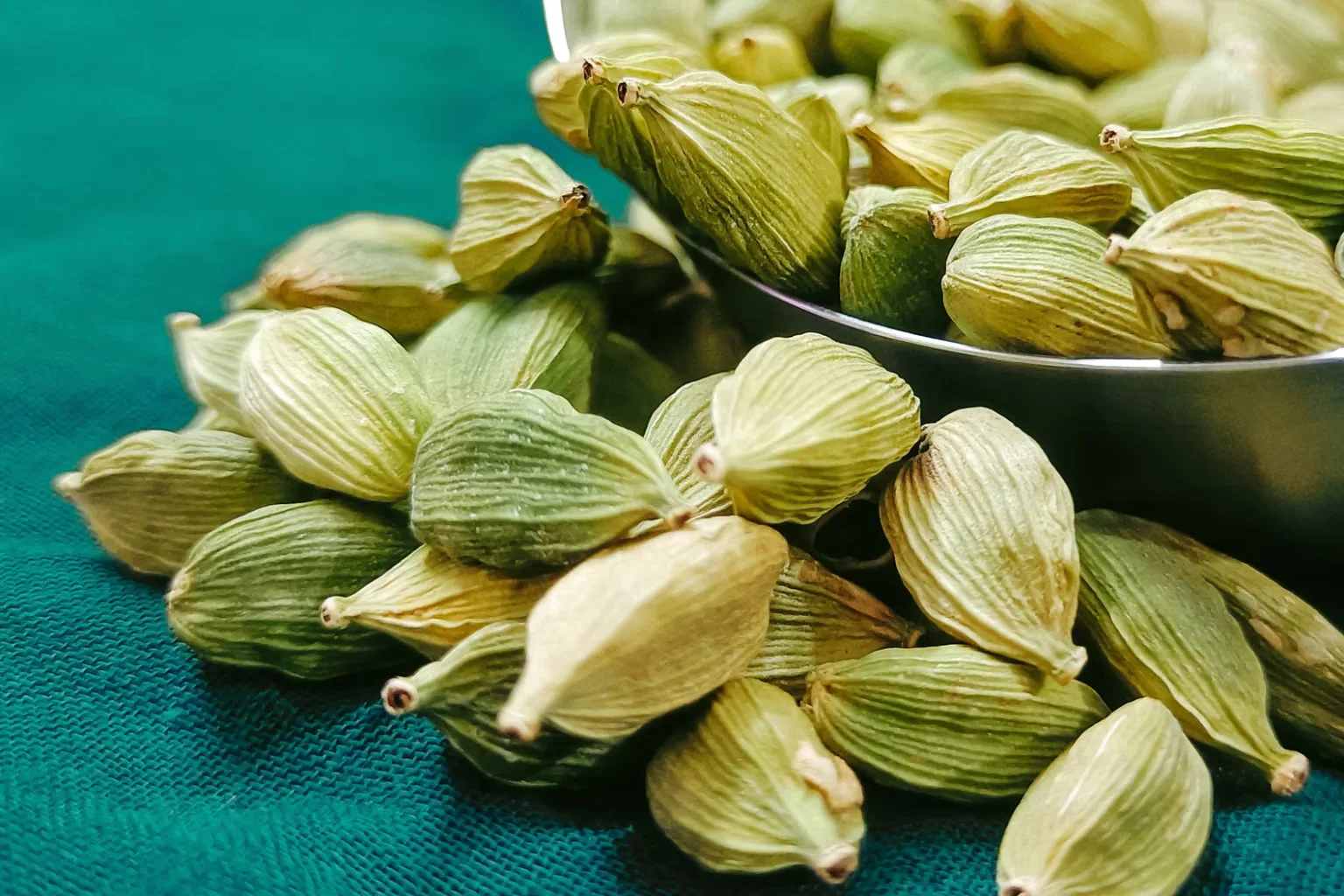
Green cardamom is an aromatic spice in the ginger family. Each pod is a capsule containing small dark seeds, which carry much of the spice’s aroma and flavor. Green cardamom is commonly sold as whole, dried pods. Use the pods whole, lightly crushed, or opened so you can remove the seeds. The pod can flavor food as it cooks, but its fibrous texture and concentrated taste can make it unpleasant to chew. Green cardamom is not the same as black cardamom, which has a different, smokier profile. Green pods are used in both sweet and savory cooking and can also flavor tea and other drinks.
When to use it
Choose green cardamom when you want a noticeable, fragrant spice in a sweet or savory recipe. Whole pods are useful in rice, stews, and liquids that can be strained or from which the pods can be removed before serving. For baking and other dishes where whole pieces would be unwelcome, open the pods and grind the seeds. You can also steep the pods in tea or another hot drink and take them out before serving. Green and black cardamom have different flavor profiles, so do not assume they can be exchanged without changing the dish.
How to use it
For a stew, rice dish, or drink, add whole pods and remove them before serving. To help release their aroma, press the pods gently until they crack, rather than crushing them completely. To use only the seeds, open the pods, take out the seeds, and grind them shortly before adding them to dough, a spice blend, or a sweet dish. Another option is to steep whole pods or seeds in a liquid and strain it before serving. Start with a modest amount because the aroma is potent and can overwhelm other flavors. Whole pods are fibrous and are generally not pleasant to eat.
Flavour and texture
Green cardamom has a strong, complex aroma, often described as fresh, fruity, floral, and lightly citrusy or minty. Its flavor is warm and spicy, with a hint of sweetness and a lively edge. The seeds carry much of the aromatic character; a whole pod releases it gradually and has a fibrous texture. Products and batches can vary, so add the spice gradually and adjust to taste.
How to choose it
Look for intact whole pods with seeds inside, and check that the package is sealed and dry. A distinct aroma when the package is opened is a practical sign that the spice still has character; where possible, avoid pods that smell flat or are mostly broken. Color alone does not reveal the full aroma or quality. Check that the product is green cardamom rather than black cardamom, as their flavor profiles differ.
Storage
Keep whole pods in a tightly closed container in a cool, dry place, away from moisture and direct light. Leaving them whole until needed helps retain their aroma better than storing ground seeds. Open or crush only the amount required for your recipe. If the package shows signs of moisture or damage, or the spice has an unusual smell, do not use it until you have checked that it is in good condition.
Substitutions
No spice exactly reproduces green cardamom’s distinctive profile. For sweet dishes, nutmeg can provide a warm note; for savory cooking, cinnamon with a little clove can offer a different but warming direction. These substitutions will change the flavor rather than duplicate it. Start with a small amount and adjust to the dish, especially when the fresh, fragrant note of cardamom is central to the recipe.
Common mistakes
A common mistake is adding too much cardamom: its aroma can dominate, so begin with a small amount. Another is leaving whole pods in the finished dish; remove them before serving because they are fibrous and can be unpleasant to chew. Do not confuse green cardamom with black cardamom or assume ground spice will behave exactly like whole pods: their intensity and way of releasing aroma differ.
Safety and allergens
Remove whole pods before serving if you do not want diners to chew them: they are fibrous and their concentrated flavor can be too intense. Do not use pods that show moisture or damage, or have an unusual smell.
Culinary uses
- Aromatic spice for sweet and savory dishes
- Flavoring for tea, chai, and other hot drinks
- Whole-pod seasoning for rice, curries, and stews
Recommended techniques
- Use whole pods to infuse a dish, then remove them before serving
- Lightly crush the pods to release their aroma
- Open the pods and grind the seeds shortly before use
- Steep the pods or seeds in a liquid, then strain
Pairs well with
- Cinnamon
- Cloves
- Ginger
- Nutmeg
- Rice and tea
Frequently asked questions
Can you eat green cardamom pods?
They are mainly used to flavor food. Their texture is fibrous and their taste concentrated, so they are usually removed before serving. The seeds can be taken out and ground or added to a dish.
Should I use whole pods or ground seeds?
Whole pods work well for infusing rice, stews, and drinks when you can remove them afterward. Ground seeds are more convenient for dough and recipes where whole pieces would be unwelcome.
What can I use instead of green cardamom?
There is no exact substitute. Nutmeg can work in sweet dishes, while cinnamon and a little clove can give some savory recipes a different, warm flavor.
Sources and review
Automatically researched, cross-checked and validated content. Sources consulted:
- ¿Por qué la muerte es origen de miedos y tabúes? doi.org
- Usos culinarios apropiados de las variedades de plátano verde barraganete, dominico y maqueño, en la gastronomía ecuatoriana. | Revista de Gastronomía y Cocina doi.org
- Cardamomo: Propiedades y Recetas | Enciclopedia Cocinista cocinista.es
- El ingrediente del mes: el cardamomo – Kitchen Community kitchencommunity.wordpress.com
- Cardamomo verde vs seco: diferencias, calidad y usos cardamomocolombia.com
- CALENDARIO DE ADVIENTO DÍA 8 "CARDAMOMO" cordonbleu.edu
- Cardamomo: La especia que eleva las mezclas de té | Alveus alveus.eu
- Cardamomo: qué es, origen y beneficios bonviveur.com
- Cardamomo Verde: Usos, Recetas e Infusiones | Puerto de Oriente puertodeoriente.es
- Tipos de cardamomo: ¿Qué variedades existen? - La Parada de las Especias comprarespecias.net
- ¿Hay sustitutos para el cardamomo? - Slofoodgroup slofoodgroup.com