- Category
- Herbs and spices
- State
- Powdered
- Usual unit
- teaspoon
What it is
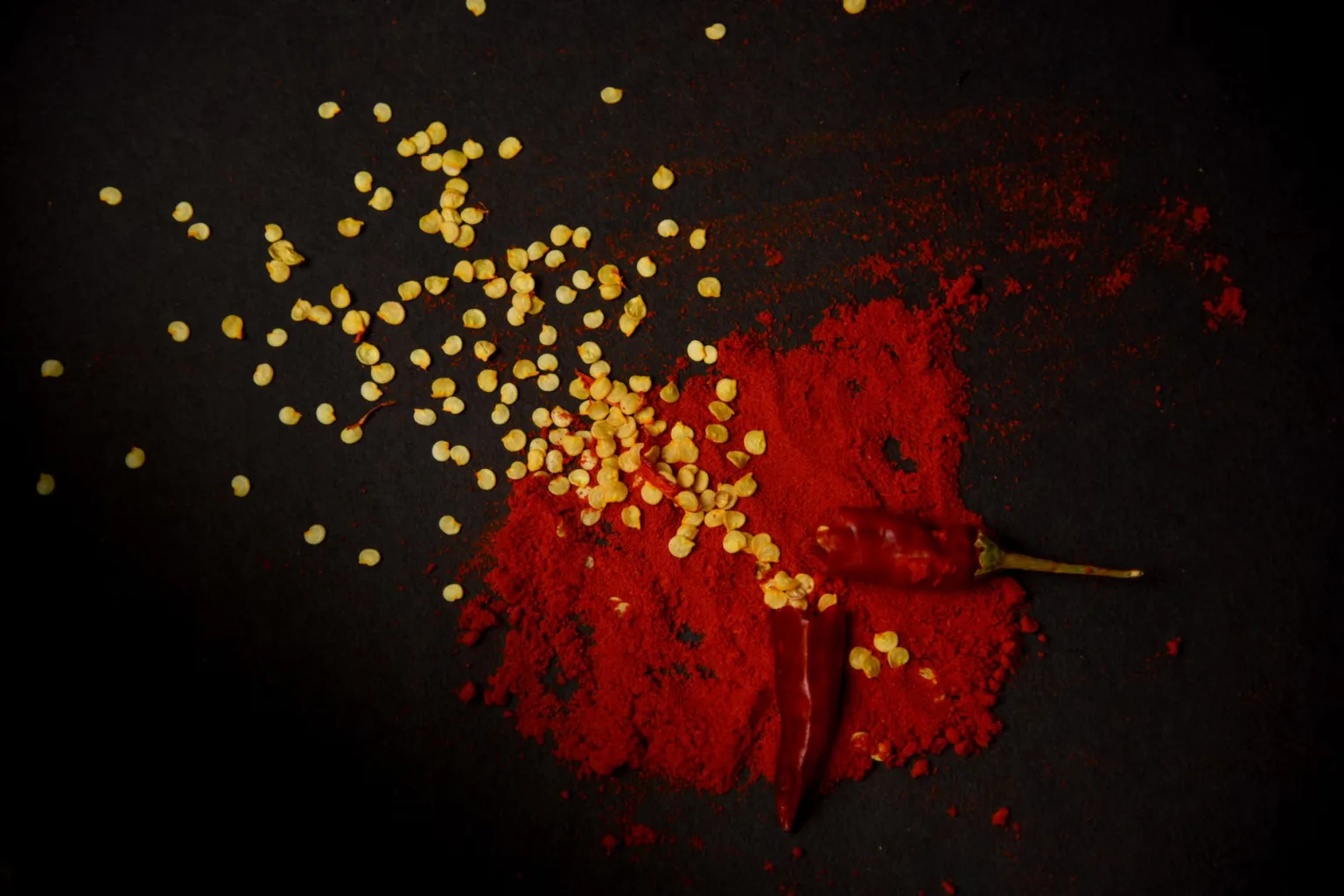
Ground chili is dried chili crushed into a powder and used as a seasoning. The name “chili” can refer to different Capsicum varieties, so it does not by itself tell you exactly how hot a particular product will be. The powder blends readily into broths, purées, soups, creams and sauces; it can also season stews, pasta, meat, fish and vegetables. Color and heat may differ from one chili and product to another. Ground chili is not black pepper: despite names such as cayenne pepper, cayenne is a chili.
When to use it
Use it when you want to bring warm heat to a dish, from a sauce or soup to a stew, pasta, or a meat, fish or vegetable preparation. Since strength depends on the variety and product, it is especially useful to add a little at a time and taste before adjusting. For heat spread throughout a dish, stir the powder into its liquid or sauce; for a subtler result, start with a small amount and let it blend in before deciding whether to add more.
How to use it
Add a small amount of ground chili to the dish, stir well and taste before adding more. The powder blends readily into soups, broths, purées, creams and sauces; it can also season stews, pasta, meat, fish, seafood and vegetables. For a balanced result, avoid adding a large amount at once: varieties and products differ in heat. It pairs well with sweet paprika or pepper and can be included in marinades and sauces. If you want the heat to be less evenly distributed, use chili flakes or a whole chili instead; remove the whole chili before serving if the recipe calls for it.
Flavour and texture
It brings warm heat and a chili note that may be mild or intense depending on the variety and product. The fine powder mixes easily into liquids and sauces, so its heat tends to spread throughout the dish. Its color may be reddish, but appearance varies between products; do not judge strength by color alone.
How to choose it
Look for a product clearly labelled ground chili and check whether the package identifies a variety, blend or heat level. Because the name can cover different chilies and strength varies, choosing from the information on the label helps you adjust the amount to your taste. If the package does not state a heat level, begin with a small amount when cooking.
Storage
The available information does not establish a specific storage method or shelf life for ground chili. Follow the package directions and close the container between uses to protect the product from handling and accidental moisture. Check the label before using it; a specific storage life cannot be inferred simply because it is a powdered spice.
Substitutions
You can substitute chili flakes or finely chopped fresh chili, but the texture and distribution of heat will change. Ground cayenne may also work when you want a hot seasoning, although “ground chili” can refer to different varieties. Start with a small amount and taste before adjusting rather than assuming that the same measure of one form equals another.
Common mistakes
The easiest mistake is adding too much before you know how hot the product is. Another is treating all ground chilies as interchangeable: heat varies between varieties and products. Add gradually, stir and taste before adjusting. Also, do not confuse the name “cayenne pepper” with black pepper: cayenne is a chili.
Safety and allergens
Use a moderate amount and taste before adding more, especially if you do not know the product’s heat. Avoid touching your eyes after handling the spice and wash your hands afterwards. The available evidence does not specify a product-specific official warning for ground chili.
Culinary uses
- Aportar picor y calidez
- Sazonar sopas, guisos, salsas, carnes, pescados y verduras
Recommended techniques
- Incorporar poco a poco y probar para controlar el picor
- Mezclar en sopas, purés, cremas o salsas para que el polvo se integre
Pairs well with
- Sopas, potajes y guisos
- Carnes, pescados y mariscos
- Pastas, salsas y verduras
- Pimentón dulce y pimienta
Frequently asked questions
Is ground chili the same as cayenne?
Ground cayenne is one kind of ground chili, but “chili” can refer to different varieties. Check the product name and label information.
When should I add ground chili?
Stir it into soups, purées, creams and sauces, or use it to season stews and other dishes. Add it gradually and taste.
What can I use instead of ground chili?
Try chili flakes or finely chopped fresh chili; the texture and perceived heat may change. Adjust gradually.
Sources and review
Automatically researched, cross-checked and validated content. Sources consulted:
- Client Challenge doi.org
- The Essential Glossary of Cooking Terms for the Culinary Arts - Escoffier escoffier.edu
- Guindilla: Botánica, cultura y sabor en una Especia | Alveus alveus.eu
- Cayena: qué es, cómo se usa y recetas | JUST SPICES ® justspices.es
- Guindilla: qué es, beneficios y usos en la cocina de este pimiento picante bonviveur.com
- Guindilla: qué es, beneficios, usos en la cocina y variedades de este pimiento picante directoalpaladar.com
- Técnicas para potenciar el sabor de las especias en platos especiaselexplorador.com
- Cómo usar especias y condimentos para mejorar tus platos munozypujante.com
- Guindilla | HerbaZest herbazest.com
- Gastromimix: La guindilla gastromimix.blogspot.com
- Propiedades de la guindilla: ¡más allá del picante! expogourmetmagazine.com
- Guindilla - Delicooks delicooks.com
- Capsicum annuum - Wikipedia, la enciclopedia libre es.wikipedia.org
- Tipos de plantas de guindillas: guía de maridaje y análisis comparativo de quesos y embutidos picantes laovejaquebala.es
- Especia Tikka Masala: Comparativa y Análisis de las Mejores Opciones para Cocinar Comida Asiática thaibistro.es