- Category
- Nuts and seeds
- State
- Dry
- Usual unit
- g
What it is
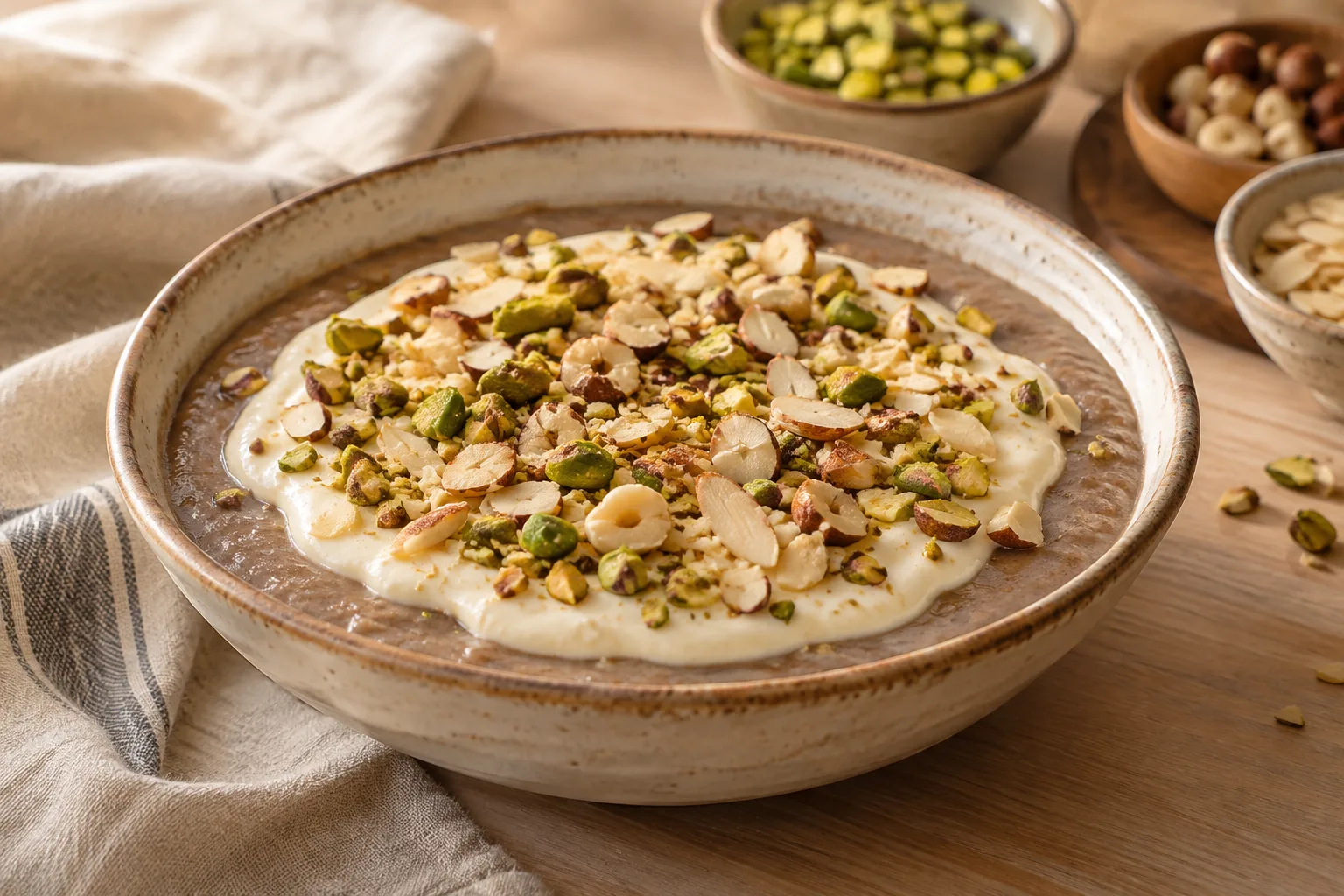
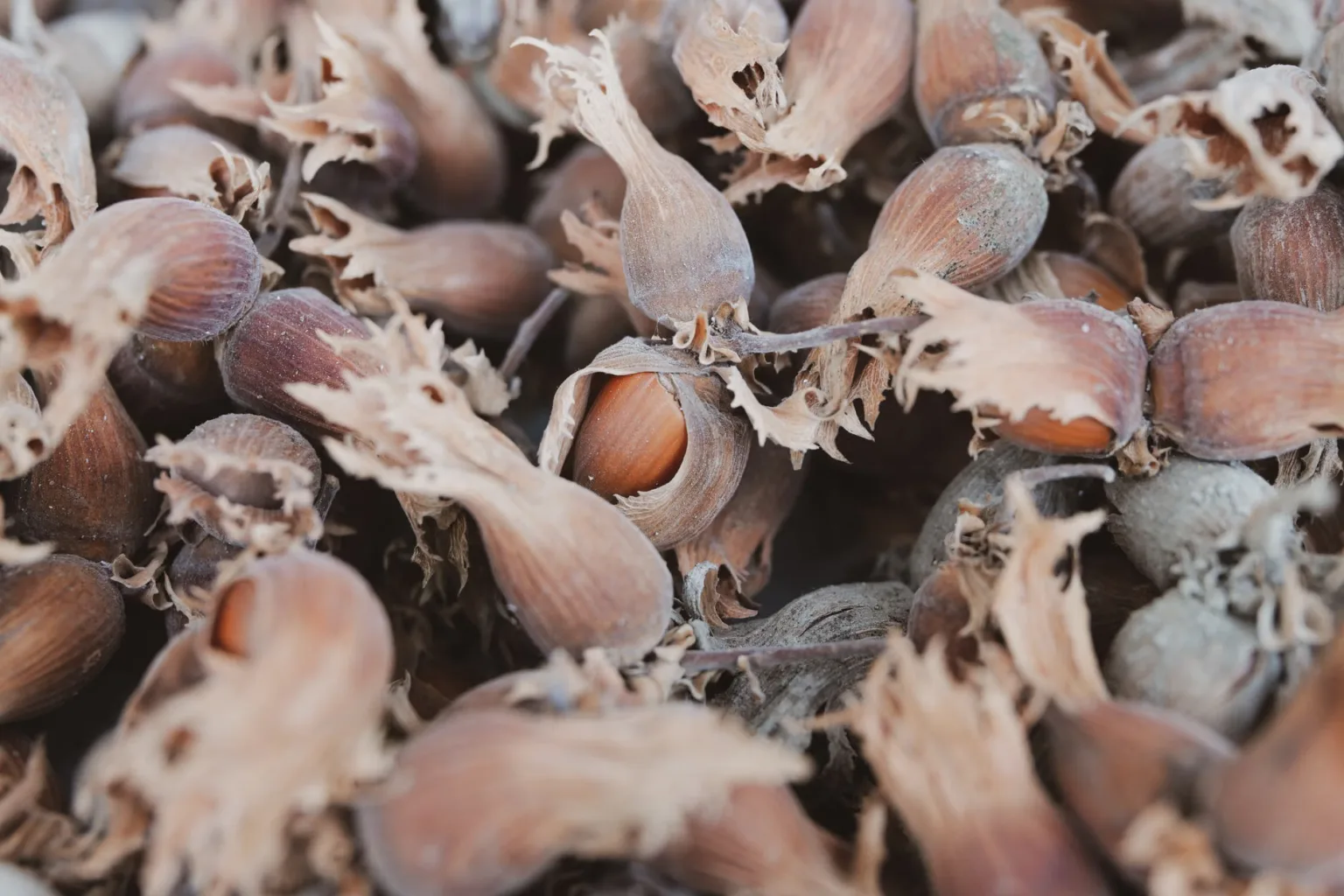
The hazelnut is the fruit of the hazel, identified in the supplied sources as Corylus avellana. In shops it may be sold in the shell or shelled, and raw or roasted. Its shape and size can vary by type. In the kitchen, hazelnuts can be eaten whole, chopped for texture, ground into mixtures, or blended into a paste. Their toasted aroma and affinity with sweet ingredients make them familiar in chocolate, praline, spreads, biscuits and cakes. They can also be used in savoury preparations, including sauces. Choose the form according to whether you want distinct pieces, an ingredient that blends into a mixture, or a smooth, creamy texture.
When to use it
Use hazelnuts when a dish needs a crunchy contrast, a toasted flavour, or a creamier texture after blending. They are used in chocolate, praline, spreads, fillings, biscuits, cakes and tarts. They can also appear in savoury dishes and sauces. Choose the format for the result you want: whole or chopped nuts for noticeable pieces, ground nuts to incorporate into a mixture, and paste for a more uniform texture. The supplied culinary sources also name chocolate, coffee, vanilla and citrus as flavour partners.
How to use it
Serve hazelnuts whole as a snack, or chop them and add them to sweet or savoury dishes for texture. One culinary source describes roasted hazelnuts as having a more intense flavour. Grind them to incorporate them into a mixture, or blend them into a paste. In baking, ground hazelnut can replace part of the wheat flour, although this changes the flavour and texture of the result. Pair hazelnuts with chocolate, coffee, vanilla or citrus in desserts, spreads and fillings. For savoury cooking, add chopped or ground hazelnuts to a sauce or to a preparation that would benefit from a toasted note.
Flavour and texture
Hazelnuts are described as having a distinctive, mildly sweet flavour that becomes more intense when roasted. Whole or chopped, they add crunch; ground, they blend into mixtures; made into a paste, they give a creamy consistency. The fruit’s profile and shape can vary by type.
How to choose it
The supplied sources describe hazelnuts in the shell or shelled, raw or roasted, as well as ground and paste forms. Choose the format that suits the recipe: in-shell for a whole nut to prepare yourself, shelled for direct use, and ground or paste for mixtures and spreads. Check the label for the product’s form and any instructions from its manufacturer.
Storage
The supplied sources do not give a specific storage period or conditions for hazelnuts, so a precise duration cannot be recommended here. Follow the product label and manufacturer’s instructions. If buying loose hazelnuts, ask the seller how to store that particular product and form; do not assume that instructions for raw, roasted and paste products are interchangeable.
Substitutions
The sources do not identify a direct, universal substitute for hazelnuts. They do describe using ground hazelnut to replace part of the wheat flour in baking, which changes flavour and texture. Hazelnut paste can stand in for pieces only when a creamy consistency suits the recipe; it is not an identical replacement.
Common mistakes
Do not treat whole, ground and paste forms as interchangeable: they give a dish different textures. Nor should you assume raw and roasted hazelnuts taste the same; the supplied culinary source describes roasted nuts as more intense. If a recipe calls for flour, note that the available reference supports replacing only part of the wheat flour with ground hazelnut.
Safety and allergens
The supplied evidence contains no specific official safety warning or official storage instructions for hazelnuts. Check the product label and follow the manufacturer’s directions; no storage duration can be established here.
Culinary uses
- Ingrediente de repostería y confitería
- Aporte de textura y sabor en platos dulces y salados
Recommended techniques
- Consumir crudas o tostadas
- Picar, moler o triturar hasta obtener pasta
Pairs well with
- Chocolate
- Café, vainilla y cítricos
- Salsas y preparaciones saladas
Frequently asked questions
Can hazelnuts be eaten raw?
Yes. The supplied sources describe hazelnuts as eaten both raw and roasted.
How can I use hazelnuts in baking?
Use them whole, chopped, ground or as a paste in biscuits, cakes, tarts, praline, fillings and spreads.
Which flavours pair well with hazelnuts?
The supplied sources highlight chocolate, coffee, vanilla and citrus.
Estimated nutrition
- Fat
- 63.3 g
- Saturates
- 5 g
- Carbohydrate
- 16.7 g
- Sugars
- 3.33 g
- Fibre
- 10 g
- Protein
- 16.7 g
- Salt
- 0 g
Sources and review
Automatically researched, cross-checked and validated content. Sources consulted:
- Client Challenge doi.org
- The Essential Glossary of Cooking Terms for the Culinary Arts - Escoffier escoffier.edu
- Avellanas. Propiedades, beneficios y usos en la cocina tradicional y actual abc.es
- ¿Qué son las avellanas? Variedades, historia y orígenes | BDI ferrerohazelnutcompany.com
- Nutrition After Your Transplant - Health Online healthonline.washington.edu
- Informe de resultados del estudio prospectivo para la ... aesan.gob.es
- Project MUSE -- Verification required! muse.jhu.edu
- FOODWAYS ANALYSIS OF COOKING SPACES FROM ... trace.tennessee.edu
- Publications « Sustainable Food Processing and Packaging agsci-labs.oregonstate.edu
- Food allergen extracts to diagnose ... cdr.lib.unc.edu
- urban Kenya: Insights from the Global Diet Qu - AgEcon Search ageconsearch.umn.edu
- Cuatro tipos de avellanas, variedades y beneficios en 2025 frutossecosauro.es
- Avellana: qué es, tipos y beneficios bonviveur.com
- Las avellanas | Gastronomía & Cía gastronomiaycia.com