- Category
- Sugar and sweeteners
- State
- Dry
- Usual unit
- tablespoon
What it is
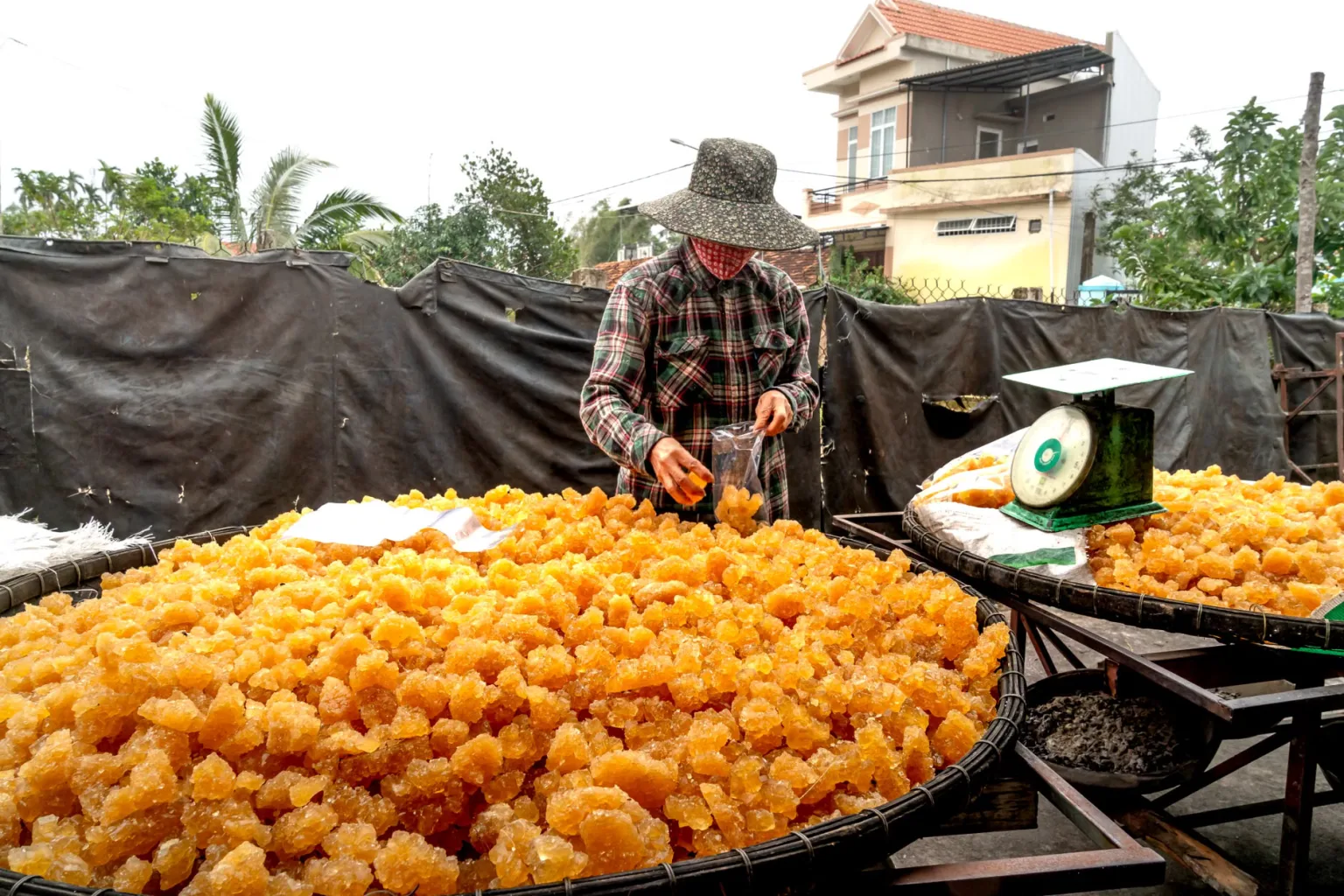
Jaggery, also known as gur, is a traditional unrefined sweetener. The available evidence describes products made by concentrating sugarcane juice or palm sap, so not every variety has the same raw material. Depending on the product and its processing, jaggery may be sold as a solid block or in a softer, granular form. Its color can also vary, from golden shades to dark brown. It is used in different cuisines to sweeten drinks, desserts, confectionery, and savory or sweet-sour preparations. The name therefore does not guarantee that every product will have the same texture, color, or flavor profile.
When to use it
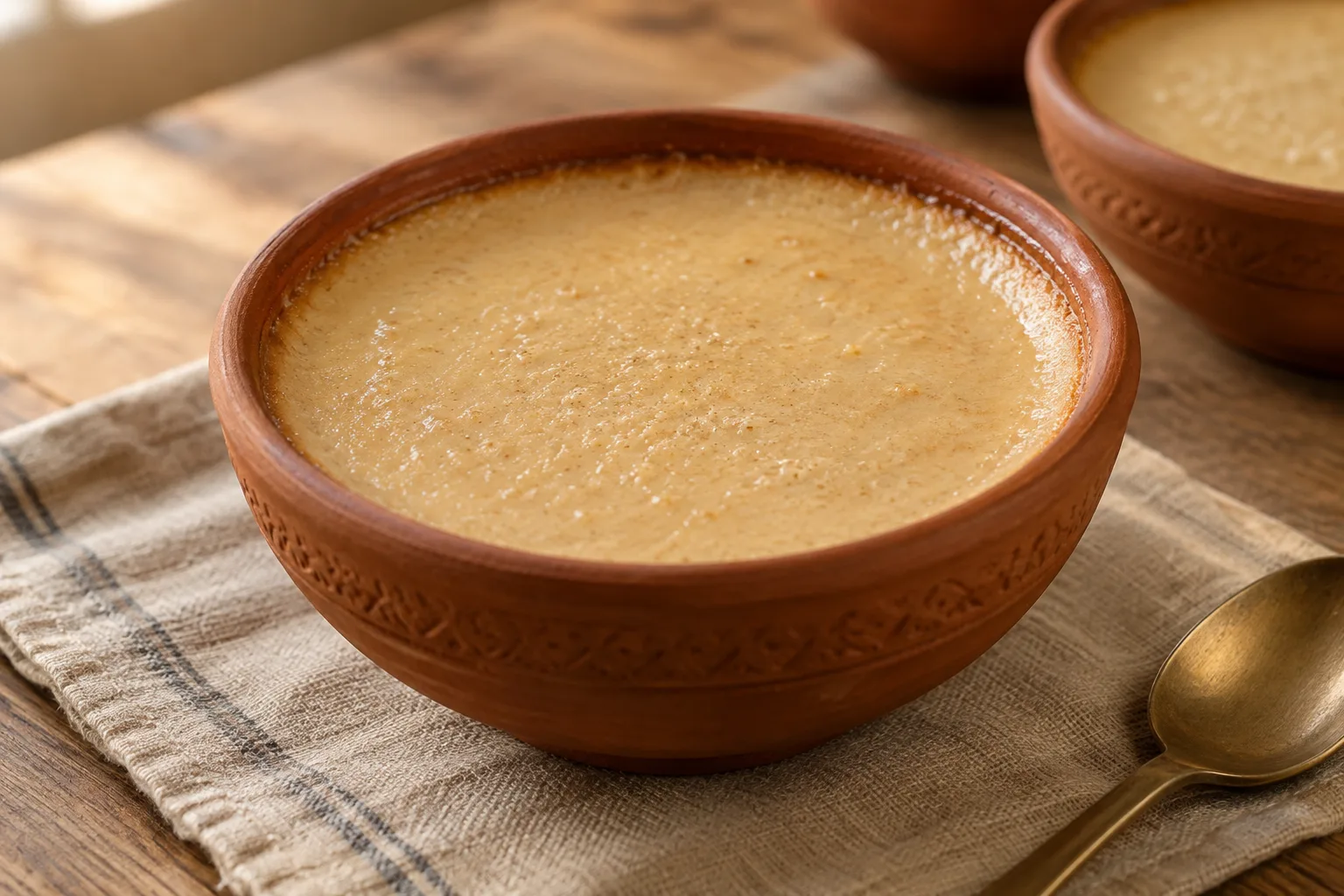
Use jaggery when you want to add sweetness to a drink, dessert, syrup, or confectionery. It can also be used in savory and sweet-sour dishes: its documented uses include curries and preparations with tamarind. In Indian cooking, it appears in foods such as masala chai and laddoo, and it is also used in dairy desserts such as rice pudding. Choose it when its traditional character and variation in color and texture suit the recipe. If substituting it for another sweetener, remember that the flavor and consistency of the finished dish may change.
How to use it
If you have a block, grate or chop it to make it easier to incorporate; granular jaggery can be added directly, with a check that it dissolves in the preparation. Use it to sweeten drinks, desserts, and confectionery, or add it to curries and sweet-sour dishes. It can also be paired with tamarind in preparations that call for a sweet and tart contrast. Culinary evidence describes reducing jaggery with liquid to make a syrup, but does not establish universal proportions, times, or temperatures. Follow the particular recipe and product rather than assuming a fixed method. Taste as you go and add it gradually, especially when a substitution may affect the balance of the dish.
Flavour and texture
Jaggery can range in color from golden to dark brown, and its consistency may be solid, soft, or granular depending on its raw material and processing. Its flavor is described as deep and earthy, particularly in some palm varieties; differences between products are normal. Do not assume every jaggery has the same sweetness, aroma, or ability to dissolve. Assess the product you have and adjust its use to the recipe.
How to choose it
Check the label or ask the seller whether the jaggery is made from sugarcane or palm sap, since both raw materials are documented and can produce different products. Jaggery may be sold as a block or in softer, granular forms, and its color can range from golden to dark brown. Choose a form that suits the recipe: granules incorporate differently from a block that needs grating or chopping. Do not treat color alone as a universal measure of quality or flavor.
Storage
The available evidence does not establish a universal shelf life, temperature, or storage method for jaggery. Follow the package directions and keep the label information, especially if the product has a particular form or composition. Since jaggery is sold as blocks as well as softer or granular products, do not assume that every form requires exactly the same handling. If the package gives no instructions, do not invent a storage period based only on the ingredient name.
Substitutions
Panela can be a close alternative because it is also a traditional, unrefined cane sweetener, but it will not necessarily have the same flavor or texture. White sugar can provide sweetness, but it does not reproduce jaggery’s flavor profile. The best choice depends on the recipe and on whether its earthy character, color, or consistency matters. Add a substitute gradually and taste the result; the available evidence does not provide a precise conversion between these products.
Common mistakes
Do not assume all jaggery comes from sugarcane: palm sap is also described as a source. Nor should you expect every form to have the same color, texture, or flavor. Another common mistake is treating panela or white sugar as an identical replacement. Either may add sweetness, but neither is guaranteed to reproduce jaggery’s flavor or consistency. Do not rely on health claims to decide how to use it; this profile treats jaggery as a culinary ingredient.
Safety and allergens
The supplied evidence identifies no jaggery-specific safety warning and does not establish universal storage conditions. Follow the package instructions and do not consume the product if there are obvious signs of spoilage or contamination.
Culinary uses
- Edulcorante para preparaciones dulces
- Componente dulce en preparaciones agridulces y saladas
- Ingrediente para jarabes y confitería
Recommended techniques
- Rallar o picar el bloque para dosificarlo e incorporarlo
- Disolverlo en líquidos o preparaciones húmedas
- Reducirlo con líquido para preparar un jarabe
Pairs well with
- Tamarindo en preparaciones agridulces
- Curris y otros platos salados
- Postres lácteos como arroz con leche
- Masala chai y dulces como laddoo
Frequently asked questions
What is jaggery made from?
It can be made by concentrating sugarcane juice or palm sap. The raw material is not the same in every product.
Does jaggery always come in a block?
No. It is described in blocks and in softer or granular forms; the presentation depends on the product and its processing.
Can I substitute panela for jaggery?
Panela can be a close alternative, but its flavor and texture may differ. No universal conversion is documented.
Estimated nutrition
- Fat
- 0 g
- Saturates
- 0 g
- Carbohydrate
- 95.1 g
- Sugars
- 45.1 g
- Fibre
- 0 g
- Protein
- 0 g
- Salt
- 0.1 g
Sources and review
Automatically researched, cross-checked and validated content. Sources consulted:
- Client Challenge doi.org
- The Essential Glossary of Cooking Terms for the Culinary Arts - Escoffier escoffier.edu
- Maridaje de sabores 101: cómo descubrir combinaciones perfectas - Aromatech aromatechgroup.com
- I Found Bugs in My Cereal, Pasta or Cake Mix. What Do I Do? | Rutgers Cooperative Extension extension.rutgers.edu
- Panela - Wikipedia, la enciclopedia libre es.wikipedia.org
- Beneficios para la salud del jaggery: un edulcorante natural medicoverhospitals.in
- Diferencias y similitudes entre panela y jaggery, dos end... sportlife.es
- At LA’s Pijja Palace, Avish Naran Serves Slices of Indian-Spiced Heaven | Institute of Culinary Education ice.edu
- Punjab Agricultural University - PAU - Ludhiana, Punjab - INDIA - pau.edu - College of Agricultural Engineering & Technology pau.edu
- Heat Pump for Energy Efficient Sugarcane Juice Freeze Pre ... docs.lib.purdue.edu
- Jaggery (azúcar) es.gastronomiac.com
- Jaggery (Gur): Calorías, Nutrición y Beneficios para la Salud nutriscan.app
- Antes de ir a YouTube youtube.com