- Category
- Dairy and eggs
- State
- Fresh
- Usual unit
- g
What it is
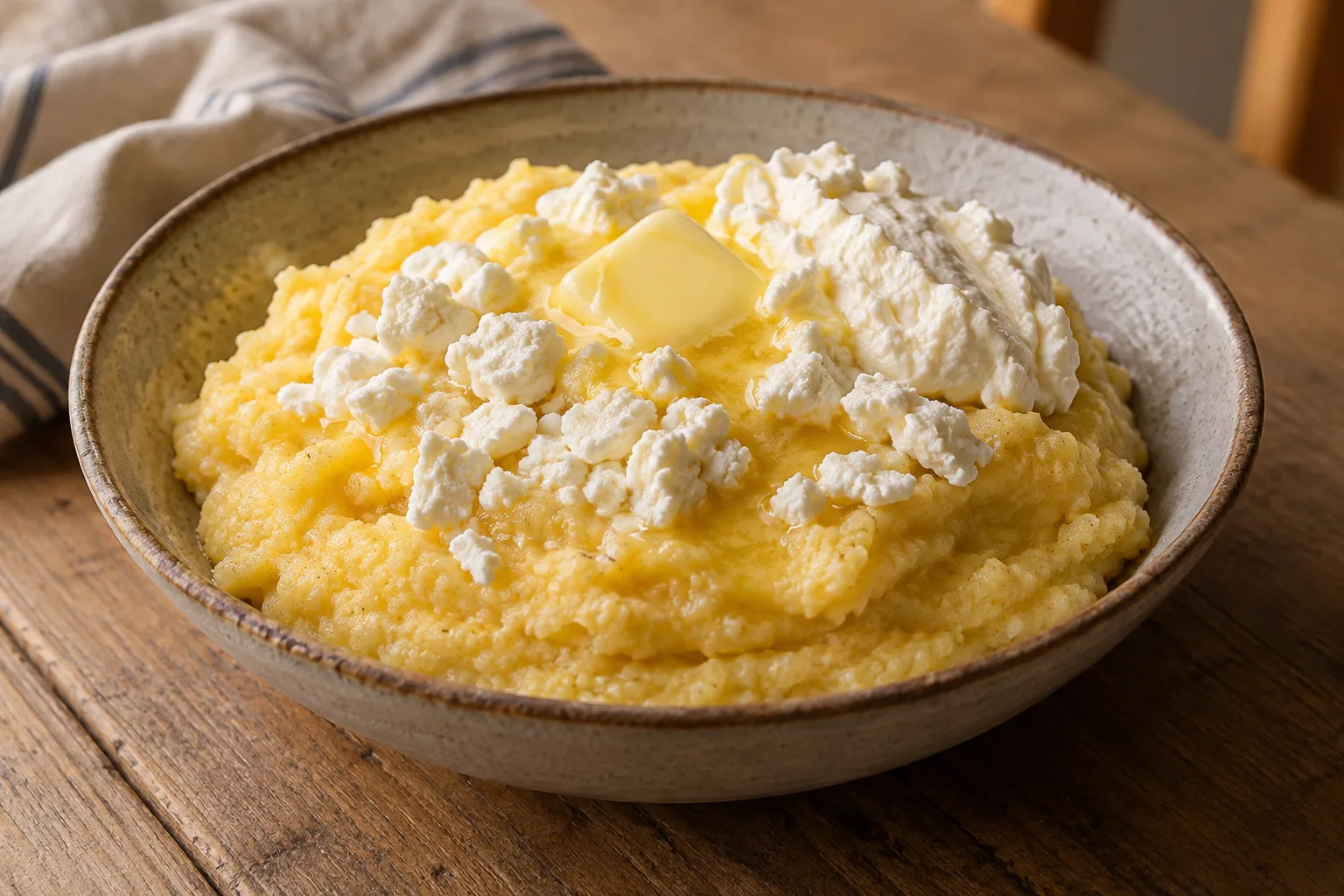
Kajmak, also spelled kaymak, is a creamy dairy product associated with Balkan cuisines and also found in other regions. It is traditionally made from the layer that forms on the surface of heated milk and is then collected. The milk may come from cows, sheep, goats, or buffalo. Kajmak does not have one fixed texture or intensity: fresh versions are often softer and creamier, while some matured versions are firmer and more pronounced in flavor. It is therefore not always interchangeable with cream, butter, or a spreadable cheese. Kajmak is commonly eaten in small portions with bread or served alongside savory dishes. The particular product’s texture, saltiness, and intensity are useful guides to how much to serve and what to pair it with.
When to use it
Use kajmak when you want a rich, creamy dairy accompaniment for a savory meal. In Balkan-style serving, it can appear at breakfast with bread or alongside grilled meats; it also complements potatoes and roasted vegetables. Its rich taste can lend contrast to plain flatbread or add a creamy element to a hot dish. Products differ in saltiness, maturity, and consistency, so taste yours before adding extra salt to the meal. Serve a modest amount and let diners add more if they like. Kajmak is best treated as a finishing accompaniment rather than assumed to be a cooking cream with a standard behavior.
How to use it
Keep kajmak refrigerated until shortly before serving and offer it in small portions. Spread it on lepinja or another flatbread, set it out in a bowl beside ćevapi or pljeskavica, or serve a spoonful alongside potatoes and roasted vegetables. You can also place it on hot bread or hot food just before serving; the heat may soften it and make it creamier without requiring separate cooking. If adding it to a dish, stir or spoon it in at the end to preserve its distinct dairy character. Taste the product before seasoning, because some varieties are saltier or more intense than others. Keep the remaining portion chilled after serving.
Flavour and texture
Kajmak has a rich dairy flavor and a creamy, spreadable texture. Depending on the product, it may be mild and soft or firmer, saltier, and more assertive after longer maturation. These are normal variations and influence how much to serve and which foods to pair it with.
How to choose it
Choose a refrigerated product and check the label for the type of milk, date information, and storage instructions. For a mild flavor and easy-to-spread consistency, look for a fresh variety; matured versions may be firmer and more intense. Check whether salt has been added, particularly if you plan to serve it with already-seasoned food.
Storage
Store kajmak refrigerated and follow the storage directions on its package. Keep the container closed between uses and serve it with a clean utensil. Take out only the amount you plan to eat and return the rest to the refrigerator promptly; do not leave this dairy product at room temperature longer than needed.
Substitutions
Crème fraîche or thick cream can stand in for kajmak in some accompaniments, while clotted cream can approximate its richness. None will necessarily match its flavor, saltiness, or maturation. Adjust the amount and taste before adding salt.
Common mistakes
Do not assume every variety is equally mild, salty, or firm. Taste kajmak before seasoning the dish, avoid leaving it unrefrigerated unnecessarily, and do not heat it for a long time. For a hot meal, adding it at the end is often enough.
Safety and allergens
Kajmak is a milk product; do not serve it to anyone with a milk allergy. Keep it refrigerated as directed on the package, use clean utensils, and promptly return any uneaten portion to the refrigerator.
Culinary uses
- Untable cremoso para pan y panes planos
- Acompañamiento para carnes a la parrilla, patatas y verduras
Recommended techniques
- Servir frío o a temperatura de servicio, en pequeñas porciones
- Añadir sobre pan o comida caliente justo antes de servir
Pairs well with
- Lepinja y otros panes planos
- Ćevapi, pljeskavica y otras carnes a la parrilla
- Patatas y verduras asadas
- Cebolla
Frequently asked questions
Is kajmak cheese or cream?
It is a creamy dairy product traditionally made from the layer that forms on heated milk. Depending on the variety, it may resemble cream or a spreadable cheese, but it is not always identical to either.
How is kajmak usually served?
It is served in small portions with bread or flatbread and as an accompaniment to grilled meats, potatoes, or vegetables.
Does kajmak need refrigeration?
Yes. Keep it refrigerated and follow the package directions. Take out only what you need and promptly return the rest to the refrigerator.
Sources and review
Automatically researched, cross-checked and validated content. Sources consulted:
- Client Challenge doi.org
- Konjac: Historia, ciencia y usos gastronómicos de un ingrediente milenario (aunque parezca nuevo) margavilan.substack.com
- Zumaque o sumac, la especia imprescindible de Oriente Medio: qué es, a qué sabe y cómo usarla en la cocina directoalpaladar.com
- AGRI-FOOD SECTOR IN SERBIA - AgEcon Search ageconsearch.umn.edu
- Essays that Worked - Class of 2018 - Hamilton College hamilton.edu
- LeaderShip cronkitehhh.jmc.asu.edu
- Nenad Belic reminiscences cns.gatech.edu
- Kajmak (cocina balcánica) es.gastronomiac.com
- Kajmak: un tesoro lácteo de la gastronomía montenegrina. | Itera Montenegro iteramontenegro.com
- → Kajmak ← Queso Tradicional (Receta Original y Fácil) comidaarmenia.com
- Kajmak: receta y origen | Guide Cuisine guide-cuisine.ch