- Category
- Herbs and spices
- State
- Paste
- Usual unit
- g
What it is
Kroeung is the name for a herb-and-spice paste used as an aromatic base in many Cambodian, or Khmer, dishes. It does not have one fixed formula: ingredients are adapted to the dish, and versions can differ in color and composition. Common components include lemongrass, galangal, turmeric, garlic, and shallot; some versions also use kaffir lime peel or leaves and chile. The ingredients are commonly pounded or ground into a paste. Individual recipes may add other components, so it is more accurate to think of kroeung as a family of pastes than as one standardized blend.
When to use it
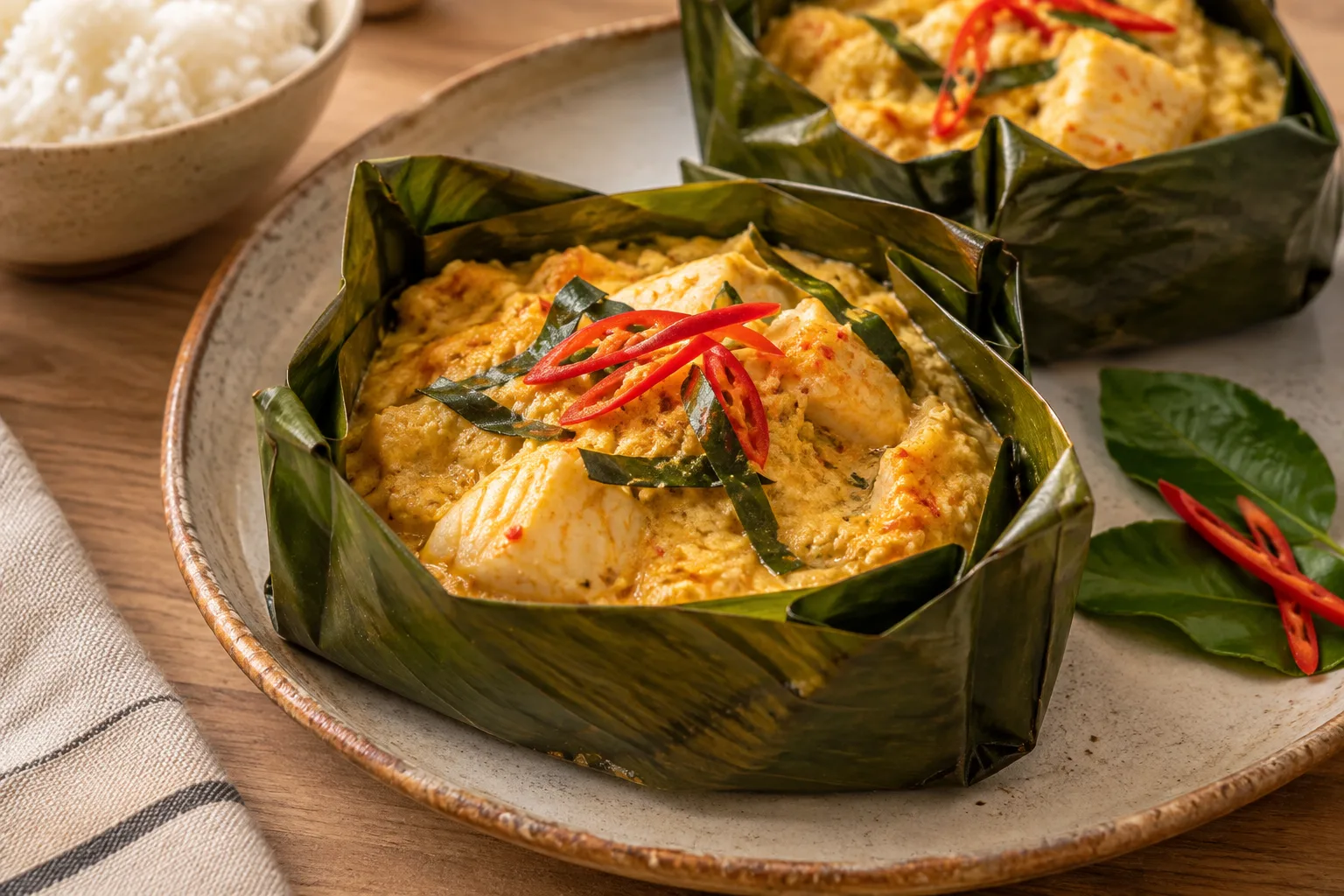
Use kroeung when you want to build a Cambodian-style aromatic base for a curry, soup, stew, or stir-fry. It is also used in marinades and in fish dishes such as amok, often with coconut milk. Choose the composition to suit the recipe: ingredients can vary, and some dishes call for a particular version. For a specific traditional dish, do not assume that every paste labelled kroeung has the same ingredients or will give the same result.
How to use it
Kroeung is used as an aromatic paste. To make a version at home, pound or grind the ingredients specified for that recipe; blends may include lemongrass, galangal, turmeric, garlic, shallot, and other ingredients. Add it to the dish that calls for it, such as a curry, soup, stew, stir-fry, or marinade. In fish amok, it can be combined with fish and coconut milk. There is no single proportion for every version, so follow the recipe for the dish and taste as you cook rather than treating all kroeung pastes as interchangeable.
Flavour and texture
Its flavor depends on the particular blend. Common ingredients bring herbal, citrus-like notes from lemongrass, an earthy character from turmeric, and aromatic depth from galangal, garlic, and shallot. Chile may add heat, but versions do not all have the same level of spice. Once pounded or ground, kroeung is a paste that brings its aromas into soups, curries, and other cooked dishes.
How to choose it
Look for kroeung sold as a paste and check its ingredient list, since recipes and versions differ. Check whether it contains chile and whether it includes the aromatics your recipe calls for, such as lemongrass, galangal, or turmeric. The name alone does not guarantee a standard formula. For a prepared product, follow the package directions and consider any ingredients you need to avoid.
Storage
The ingredients and commercial formats can vary, so follow the storage directions on the package or from the seller. If you make the paste at home from fresh ingredients, keep it covered and refrigerated and use it promptly; there is no single storage period that applies to every recipe and preparation. Avoid leaving it uncovered or using unclean utensils to scoop it out. Do not store it at room temperature unless the product label specifically says that this is appropriate.
Substitutions
Thai curry paste can serve a similar aromatic function, but it will not necessarily reproduce kroeung’s particular profile. Another option is to use a different kroeung version and accept a change in flavor; these pastes are adapted to their dishes and their ingredients are not always the same. Check the substitute’s label and do not assume that different blends can be exchanged in identical quantities.
Common mistakes
A common mistake is treating every kroeung as the same recipe: its ingredients vary with the dish and version. Choosing a paste without checking for chile or for the aromatics required by the recipe can also change the result. Do not automatically replace one blend with another in the same amount; follow the dish’s directions and adjust the flavor thoughtfully.
Safety and allergens
Check the ingredient list, particularly if you need to avoid a specific component: recipes and prepared products can vary. Follow the package’s storage directions and use clean utensils when serving. No kroeung-specific safety warning is stated here.
Culinary uses
- Base aromática para curris y sopas
- Condimento para marinados, guisos y salteados
Recommended techniques
- Machacar o triturar los ingredientes hasta formar una pasta
- Incorporar a platos cocinados, como sopas, curris y salteados
Pairs well with
- Pescado y leche de coco, como en el amok
- Verduras, carnes y sopas de estilo jemer
Frequently asked questions
Does kroeung have one standard recipe?
No. Its ingredients vary by dish and version. Lemongrass, galangal, turmeric, garlic, and shallot are common, but they are not universal.
What dishes use kroeung?
It can form the aromatic base for curries, soups, stews, stir-fries, and marinades. It is also used in fish dishes such as amok.
Is Thai curry paste the same as kroeung?
No. It can serve a similar purpose, but its ingredients and flavor are not necessarily the same. Check the label and adjust the recipe.
Sources and review
Automatically researched, cross-checked and validated content. Sources consulted:
- Client Challenge doi.org
- Cocina de Camboya | Gastronomía Camboyana o Cocina Jemmer yummybarcelona.com
- Khmer Cuisine- Ingredients & Popular Dishes | CNI Master Class in Siem Reap blogs.cornell.edu
- Khmer Restaurant Near Me Discovering Authentic Cambodian Flavors ~ cms.ncwc.edu cms.ncwc.edu
- Pittsburgh Restaurant Reviews cs.cmu.edu
- In the Context of Khmer Krom in Soc Trang and Can Tho ... commons.clarku.edu
- wilfred project.pdf repository.uniben.edu
- Kroeung - Wikipedia, la enciclopedia libre es.wikipedia.org
- kroeung — Observatorio Lázaro observatoriolazaro.es
- Historia de la gastronomía coreana III: Corea y la cultura de la fermentación | CocinaSinReceta.com cocinasinreceta.com
- Sens Gourmet : l'essence du goût toufood.com
- Que comer en Camboya - Juntosxelmundo juntosxelmundo.es
- Camboya, historia y gastronomía, apuntes sobre la cocina camboyana cocinayaficiones.com