- Category
- Vegetables
- State
- Fresh
- Usual unit
- unit
What it is
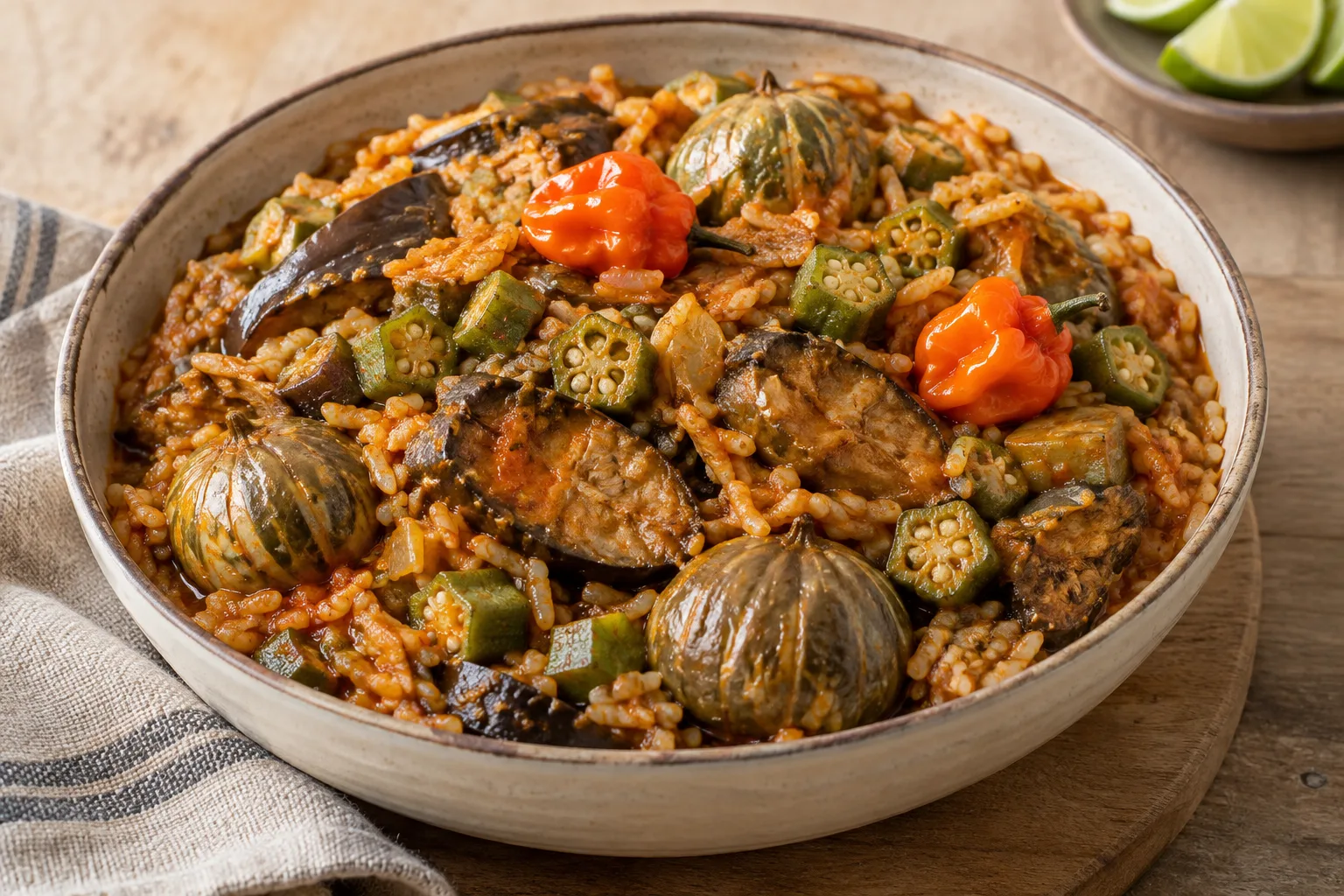
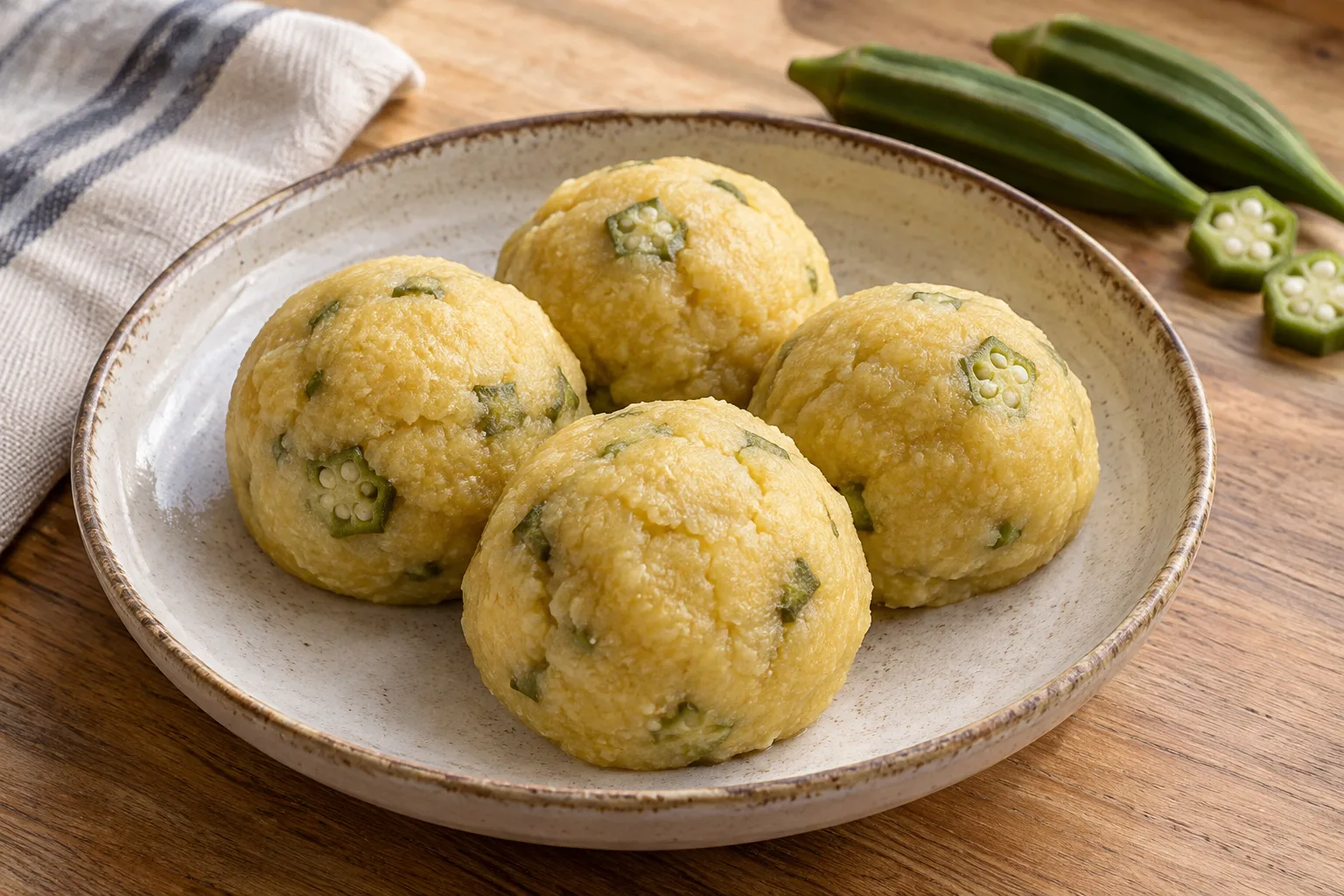
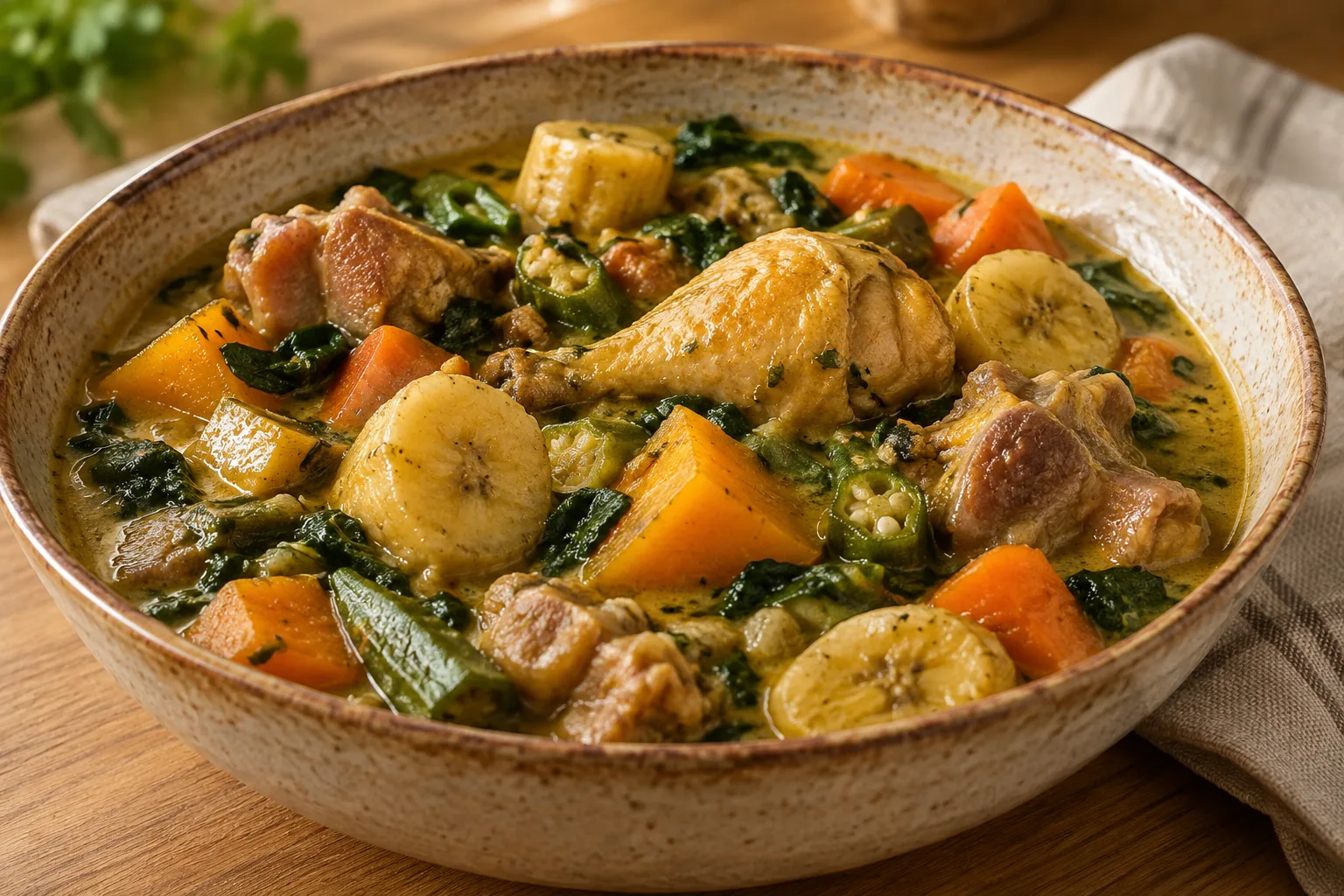
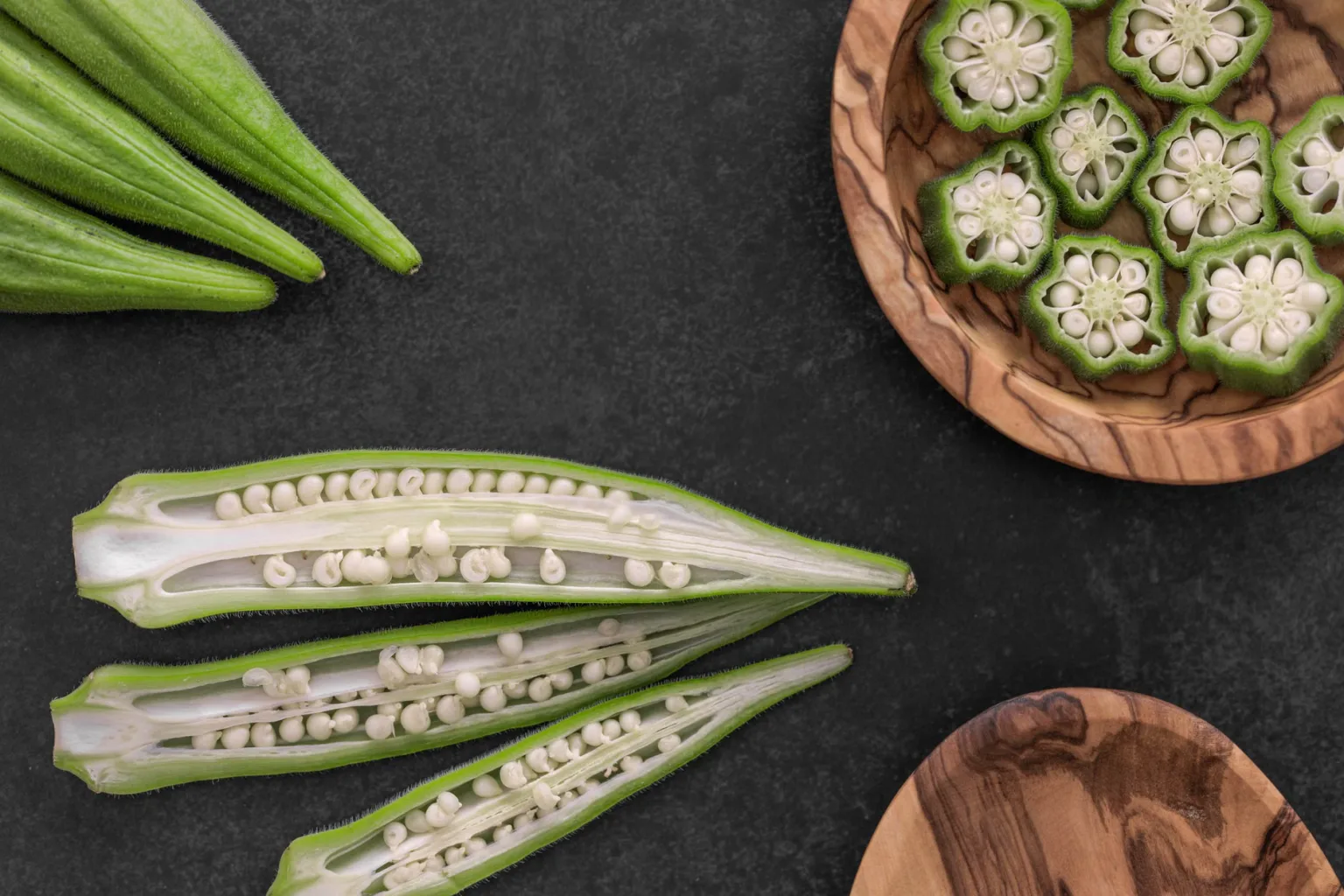
Okra is the edible pod of a plant in the mallow family. It is also known as gombo and by other regional names. The usually green, elongated pod contains edible seeds. When cut and cooked, okra can release mucilage, which thickens soups and stews; some cooks welcome this quality, while others prefer a less viscous texture. Its flavor is mild and is sometimes compared with eggplant. Okra can be cooked whole or cut into pieces, and used on its own or alongside other vegetables. The cooking method affects both the texture and the role it plays in a dish.
When to use it
Use okra when you want a mild vegetable in a soup, stew, or mixed-vegetable dish. Its mucilaginous juices can help give a preparation body. If you want to limit that effect, roasting is one option described as releasing less of the liquid than boiling. Okra can also be fried, steamed, or served raw in a salad. Choose the preparation according to the texture you want and whether you want the pod to help thicken the dish or simply contribute a vegetable element.
How to use it
Rinse the pods under running water and drain them. If the surface has a light fuzz, gently rub it with a vegetable brush. Trim the stem end, then cook the pods whole or cut them for soup or stew. To make use of okra’s thickening quality, add cut pieces to a moist dish. To limit the mucilaginous texture, try roasting rather than boiling. Other options include frying, sautéing, steaming, or serving it raw in a salad. Okra pairs well with onion, pepper, tomato, eggplant, egg, potato, or lemon. Adjust the cut and cooking method to suit the dish.
Flavour and texture
Okra has a mild flavor often compared with eggplant. The pods may be smooth or lightly fuzzy, and their seeds are edible. Once cut and cooked, okra releases mucilage that can make soups and stews thick or gelatinous. Roasting may limit this effect compared with boiling, although the finished texture also depends on the preparation.
How to choose it
Choose fresh pods that look evenly colored, firm, and free of obvious damage. Smaller pods are described as more tender, so they may suit a delicate texture, but size alone cannot establish quality. Check that the pods are not wilted or soft. Okra is commonly used fresh and whole; inspect the pods before storing them and set aside any that appear spoiled or damaged.
Storage
Keep fresh okra refrigerated. To help manage moisture around the pods, wrap them in a paper towel and place them in a perforated plastic bag. Handle them gently to avoid bruising and check their condition before cooking. Refrigeration is not a substitute for a validated home-canning process: okra is a low-acid vegetable, and shelf-stable home canning requires an appropriate pressure-canning method.
Substitutions
Eggplant can stand in when the main goal is a mild vegetable flavor, which has been compared with okra’s. It will not reproduce okra’s texture or thickening effect. In a mixed stew, another vegetable can replace the vegetable component, but the result will differ and will not provide the same mucilage. There is no single like-for-like substitute for every dish; decide whether you are replacing flavor, a vegetable element, or thickening ability.
Common mistakes
Do not assume okra will always have a low-mucilage texture: cutting and cooking it can release a thickening juice. Use that quality in soups and stews, or try roasting instead of boiling if you want to limit it. Do not judge the pods by size alone; check firmness and condition too. For home canning, do not use a boiling-water bath for okra unless following a validated acidified recipe specifically designed for that process.
Safety and allergens
Rinse pods under running water before preparation, and use clean utensils and surfaces. For home canning, do not improvise processing times or methods: okra is a low-acid vegetable, so use a validated pressure-canning recipe. A boiling-water bath alone is not a safe method for preserving low-acid vegetables at room temperature.
Culinary uses
- Vegetable in soups and stews
- Thickener through its mucilaginous juices
Recommended techniques
- Roasting
- Boiling
- Frying
- Stewing
- Steaming
- Serving raw
Pairs well with
- Onions
- Peppers
- Eggplant
- Tomatoes
- Eggs
- Potatoes
- Lemon
Frequently asked questions
Why does okra become slimy?
When cut and cooked, okra releases mucilage that thickens liquids. This quality can be useful in soups and stews.
How can I limit okra’s mucilaginous texture?
Roasting may release less of the liquid than boiling. The final texture also depends on how the pods are cut and prepared.
Can okra be eaten raw?
Yes. It can be served raw in a salad. Rinse it well under running water and drain it before use.
Estimated nutrition
- Fat
- 0 g
- Saturates
- 0 g
- Carbohydrate
- 8 g
- Sugars
- 0 g
- Fibre
- 1 g
- Protein
- 3 g
- Salt
- 0.01 g
Sources and review
Automatically researched, cross-checked and validated content. Sources consulted:
- Client Challenge doi.org
- Elaboración de Conservas a Presión (Pressure Canning) | VCE Publications | Virginia Tech pubs.ext.vt.edu
- Vamos a Conservar Alimentos: Aspectos Básicos de la Preparación de Conservas en Casa extension.psu.edu
- Uses Selection Try It! fonddulac.extension.wisc.edu
- veggie bite okra handout.pub polk.extension.wisc.edu
- “DESDE ABAJO, COMO SEMILLA”: PUERTO RICAN ... scholarsbank.uoregon.edu
- Quimbombó - EcuRed ecured.cu
- Okra o Quimbombó | Gastronomía & Cía gastronomiaycia.com
- El Okra, Gombo o Quimbombó | La Vida en Bio ecoilogic.wordpress.com
- Qué es el quimbombó y cómo cocinarlo finedininglovers.es
- - YouTube youtube.com
- Okra o Quimbombó: Beneficios, Propiedades y Recetas para Disfrutarla | Hurom hurom.es
- Los secretos del quimbombó - Revista Más Cuba revistamascuba.com