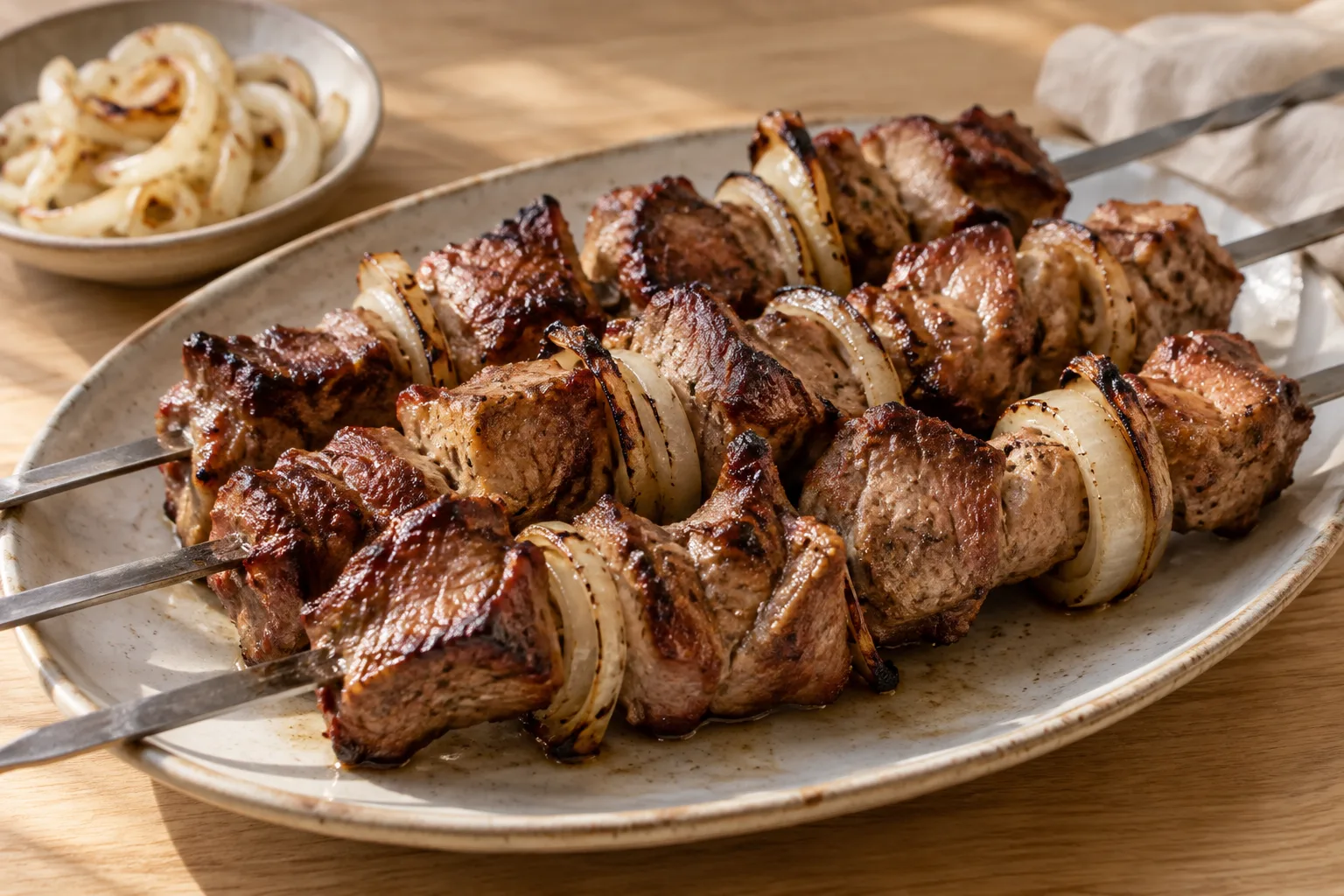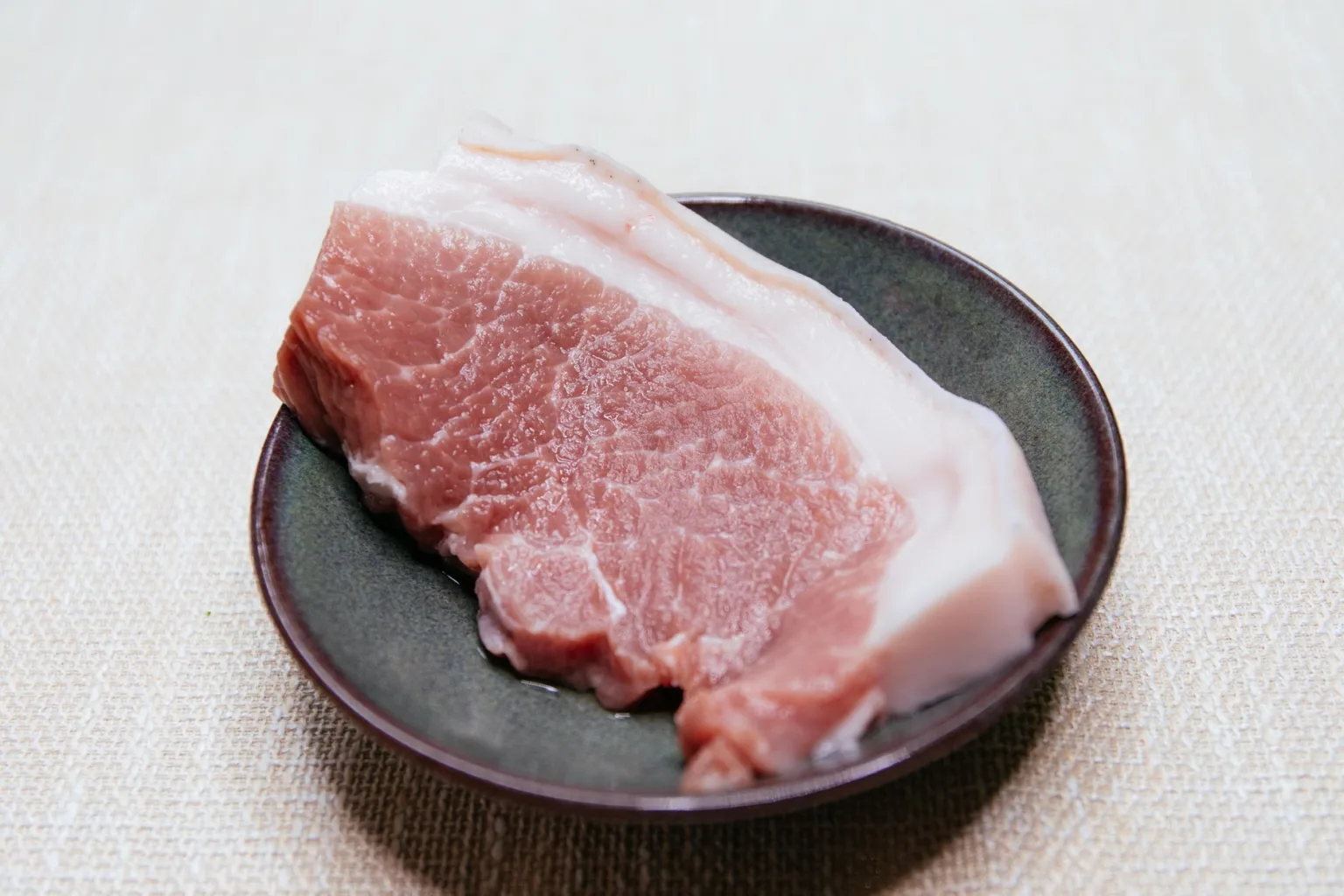
- Category
- Meat
- State
- Fresh
- Usual unit
- kg
What it is
Pork neck is a fresh cut of pork, also named cuello de cerdo, échine de porc, collo di maiale, cachaço de porco and Schweinenacken. The available information does not provide a complete anatomical description or state how much fat or connective tissue this cut contains. One source places jowl beneath the neck and describes it as tender and juicy, but jowl should not automatically be treated as the same cut as the neck. Another source says that cured guanciale can include cheek and part of the neck; this is not equivalent to fresh pork neck either. For those reasons, confirm the exact cut with the butcher and follow the product label. This profile classifies it as fresh pork and avoids assigning the cut specific qualities that the sources do not establish.
When to use it
Use it when a recipe specifically calls for pork neck or when the butcher confirms that the piece being sold matches that cut. General sources on pork describe oven cooking, stewing, boiling, grilling and pan cooking, but do not establish which method is best for every neck cut. If a recipe specifies a particular method, check that the cut and thickness are suitable before substituting. For a stew, other evidence does list shoulder among cuts used that way; this is a possible alternative, not proof of an exact match.
How to use it
First check the label or ask the butcher which piece is being sold as pork neck, since the available information distinguishes the neck from jowl even though they are nearby. Then choose a recipe that specifies a suitable cut and technique. Sources on pork describe oven cooking, stewing, boiling, grilling and pan cooking for different cuts; they do not give times, temperatures or instructions specific to pork neck. If using it in a wok, one source mentions pork with vegetables as a preparation format, without specifying the neck cut. Match the piece to the recipe, do not assume all cuts cook alike, and follow the handling and cooking directions on the package and from local food-safety authorities.
Flavour and texture
The available sources do not provide a reliable sensory description of fresh pork neck. Jowl, a distinct cut located beneath the neck, is described as tender and juicy, with a relatively high fat content; those qualities should not automatically be attributed to the neck. Guanciale is also described as a cured product made from cheek and part of the neck, but its flavor and texture belong to a processed product and may not represent fresh meat. Ask the seller about the specific piece and check the product description.
How to choose it
Look for a label that clearly identifies the product as fresh pork neck and check the package information. If the retail name is unclear, ask whether it is neck or jowl: the sources describe these as nearby but distinct parts. Ask for advice based on the method in your recipe, because the available evidence neither confirms a single best preparation for the neck nor establishes its fat content. Choose a size and format that suit the recipe and follow the seller’s instructions.
Storage
The supplied evidence does not specify household refrigeration, freezing or storage times and conditions for fresh pork neck. Keep it in its packaging and follow the storage instructions and use-by information provided by the seller or manufacturer. If those instructions are missing or unclear, consult a local official food-safety source before storing or using it. Do not apply curing or storage directions for cured pork products to fresh neck; they are different products.
Substitutions
An exact substitute for pork neck is not established in the evidence. For a stew, pork shoulder is a possible option because one source includes it among cuts used in stews, but this does not show that it can be swapped in the same quantity or with the same result. Another fresh pork cut may also work if the recipe allows changes; ask a butcher and adapt the method to the actual cut. Do not use guanciale as a direct replacement: it is a cured product, not fresh meat.
Common mistakes
A common mistake is treating pork neck, jowl and guanciale as interchangeable names. The source consulted places jowl beneath the neck, while describing guanciale as a cured product that may include cheek and part of the neck; these details do not make the three products synonymous. It is also unwise to assume a particular fat level, texture, cooking time or temperature for the neck without confirmation. Check the cut, choose a suitable recipe and do not invent cooking instructions.
Safety and allergens
The available evidence does not provide safety instructions specific to cooking or storing fresh pork neck. Follow the package directions and current recommendations from your local food-safety authority; this profile is not a guide to cooking times or temperatures.
Culinary uses
- Corte fresco de cerdo para recetas que indiquen expresamente cuello
- Ingrediente para preparaciones con cerdo en las que el corte se elige según la receta
Recommended techniques
- Asado al horno, si la receta y el vendedor confirman que el corte es adecuado
- Guisado, a la plancha o a la parrilla, según la receta y el corte concreto
Pairs well with
- Verduras en una preparación de cerdo al wok
- Otros ingredientes indicados por una receta de cerdo al horno o en guiso
Frequently asked questions
Is pork neck the same as jowl?
Do not assume they are the same cut. The source consulted places jowl beneath the neck and describes it as a distinct piece.
What is the best way to cook pork neck?
Sources describe several methods for different pork cuts, but do not identify a best method specifically for the neck. Use a recipe that names the cut and ask your butcher.
Can I substitute pork shoulder?
Shoulder is listed among cuts used in stews, so it may be an option in a stew recipe. It is not documented as an identical substitute; adapt the preparation to the cut.
Sources and review
Automatically researched, cross-checked and validated content. Sources consulted:
- ¿Por qué la muerte es origen de miedos y tabúes? doi.org
- Dictionary of Health Related Terms: English – Spanish hia.berkeley.edu
- La carne de cerdo, pilar de la cocina tradicional – Ibéricos Alhandiga ibericosalhandiga.com
- \r\n \n El Cerdo y su Deliciosa Versatilidad en la Gastronomía\n \r\n recetasexplicadas.com
- alergias Alimentarias aesan.gob.es
- Qué es el Guanciale | Historia, Elaboración y usos valcoiberia.com
- Formas Sencillas de Reducir el Riesgo de Cáncer extension.psu.edu
- Qué hacer si tu planta empacadora de carne de cerdo está cerrada | Extensión de la UMN es.extension.umn.edu
- Preserving garlic | Servicio de Extensión de OSU extension.oregonstate.edu
- View of Cuando los chanchos vuelan: el giro porcino y ... ejournals.library.vanderbilt.edu
- At-Home Hog Slaughter extension.sdstate.edu
- SOP: Blood Collection in Swine ouv.vt.edu
- Los cortes de cerdo: qué aporta cada tipo y cómo utilizarlos en cocinaConsumidora revistaalimentaria.es
- Carne de cerdo: cortes, zonas y mejores usos culinarios ifema.es