- Category
- Grains, flour and pasta
- State
- Powdered
- Usual unit
- g
What it is
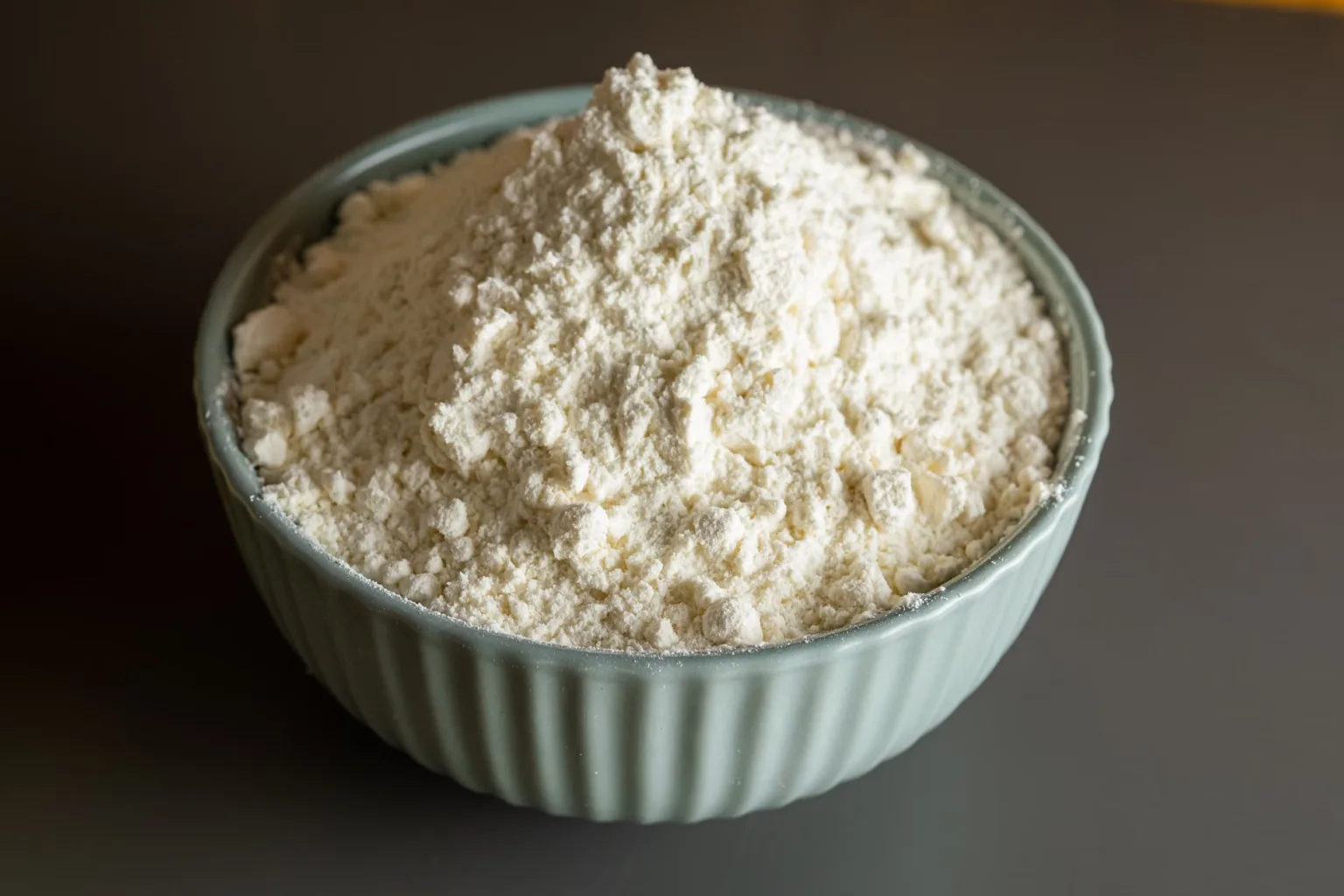
Potato flour for coating is the name of a powdered product intended to cover foods before cooking. The name alone does not confirm its exact composition or establish that every similarly labelled product behaves in the same way. Check the package to see what it contains and what use it is intended for, and follow its directions. A description of one particular product mentions a smooth texture and absorbency, but these qualities are not guaranteed for every brand. Nor should potato flour, potato starch, and other potato powders automatically be treated as interchangeable products.
When to use it
Use it for a flour coating before cooking when the package says the product is suitable for coating. You can try a simple layer or use it in a sequence of flour, liquid, and a final flour layer. General coating methods are used with foods such as vegetables, fish, seafood, and meat. If the product is unfamiliar, start with a small portion: the finish can depend on the food, surface moisture, the layers used, and the package directions.
How to use it
Read the package and prepare the food according to the recipe. For a simple coating, put a small amount of flour on a plate, coat the food evenly, and shake off excess before cooking. For a coating applied in stages, dip the food in flour, then in a liquid such as beaten egg or milk, and finally in another layer of flour. Remove excess surface moisture, as it can make a crisp coating harder to achieve. Cook without crowding the pieces and make sure the main food is cooked appropriately. Since a consistent result has not been established for every product called potato flour, test a small portion first and adjust the method to the package directions.
Flavour and texture
There is no reliable, universal description of the flavor or texture of every product sold as potato flour for coating. A description of one particular product calls it smooth and mild-tasting, but that does not guarantee the same result from other brands or formulations. The finished texture also depends on the food, its surface moisture, coating thickness, and cooking method. Check the product directions and assess the finish with a small test portion.
How to choose it
Check that the package clearly identifies the product and indicates that it is intended for coating. Read the ingredient list, preparation directions, and manufacturer-provided allergen information; do not infer the composition from the name alone. If you want a particular coating, choose a product whose label supports that use and test a small amount before cooking for a group. One brand’s description does not guarantee that another product has the same properties.
Storage
Store the product according to its package directions and protect it from moisture. Reseal the package after use and use dry utensils to scoop the flour. Follow any storage conditions or date information on the label. A universal storage life cannot be established for products that may differ in formulation and packaging.
Substitutions
Wheat flour can work for a basic coating if it suits the recipe and the dietary needs of the people eating it. Breadcrumbs provide a different texture and are not an identical substitute. Check the ingredients and allergen information for any alternative, and follow the directions for the product you choose. The finish may change when you substitute an ingredient.
Common mistakes
Do not assume potato flour, potato starch, and other potato powders are interchangeable. Avoid applying a thick or uneven layer, and shake off excess before cooking. Surface moisture can make a crisp coating harder to achieve, so dry the food and test a small amount first. Do not assume that different brands will produce the same finish.
Safety and allergens
Follow the package and recipe directions, and handle food with clean utensils. Cook the main food appropriately; a flour coating does not show that the inside is ready. Check the label if you need ingredient or allergen information.
Culinary uses
- Dry coating for foods intended to be breaded or fried
- Flour ingredient in some baking mixtures, when the product label supports that use
Recommended techniques
- Dusting or dredging
- Layered coating with flour, a liquid binder, and a final flour layer
Pairs well with
- Vegetables, fish, seafood, or meat prepared with a flour coating
- Egg or milk as a liquid binder in a layered coating
Frequently asked questions
Is potato flour the same as potato starch?
Do not assume they are the same. Check the package name and ingredients; the available information does not establish that all such products are equivalent.
How can I use it for coating?
If the package says it is suitable, try a simple layer or a sequence of flour, liquid, and flour. Shake off excess and follow the recipe and product directions.
Can I replace it with wheat flour?
It may work for a basic coating if suitable for the recipe and the people eating it, though the texture and result may change.
Sources and review
Automatically researched, cross-checked and validated content. Sources consulted:
- Gastronomía mediterránea - Wikipedia, la enciclopedia libre es.wikipedia.org
- The Essential Glossary of Cooking Terms for the Culinary Arts - Escoffier escoffier.edu
- Evaluación de harina de amaranto como ingrediente antioxidante para la preparación de matrices alimentarias funcionales doi.org
- Guia_RGSEAA.pdf aesan.gob.es
- Plátano verde - Wikipedia, la enciclopedia libre es.wikipedia.org
- Instagram google.com
- - YouTube youtube.com
- Cómo conseguir un rebozado crujiente - Pastas Gallo : Pastas Gallo pastasgallo.es
- Selección de parentales para obtención acelerada de variedades de patata (Solanum tuberosum L.) con aptitud para procesamiento industrial mediante la aplicación de un modelo genético dialélico | Archivo Digital UPM doi.org