- Category
- Vegetables
- State
- Fresh
- Usual unit
- g
What it is
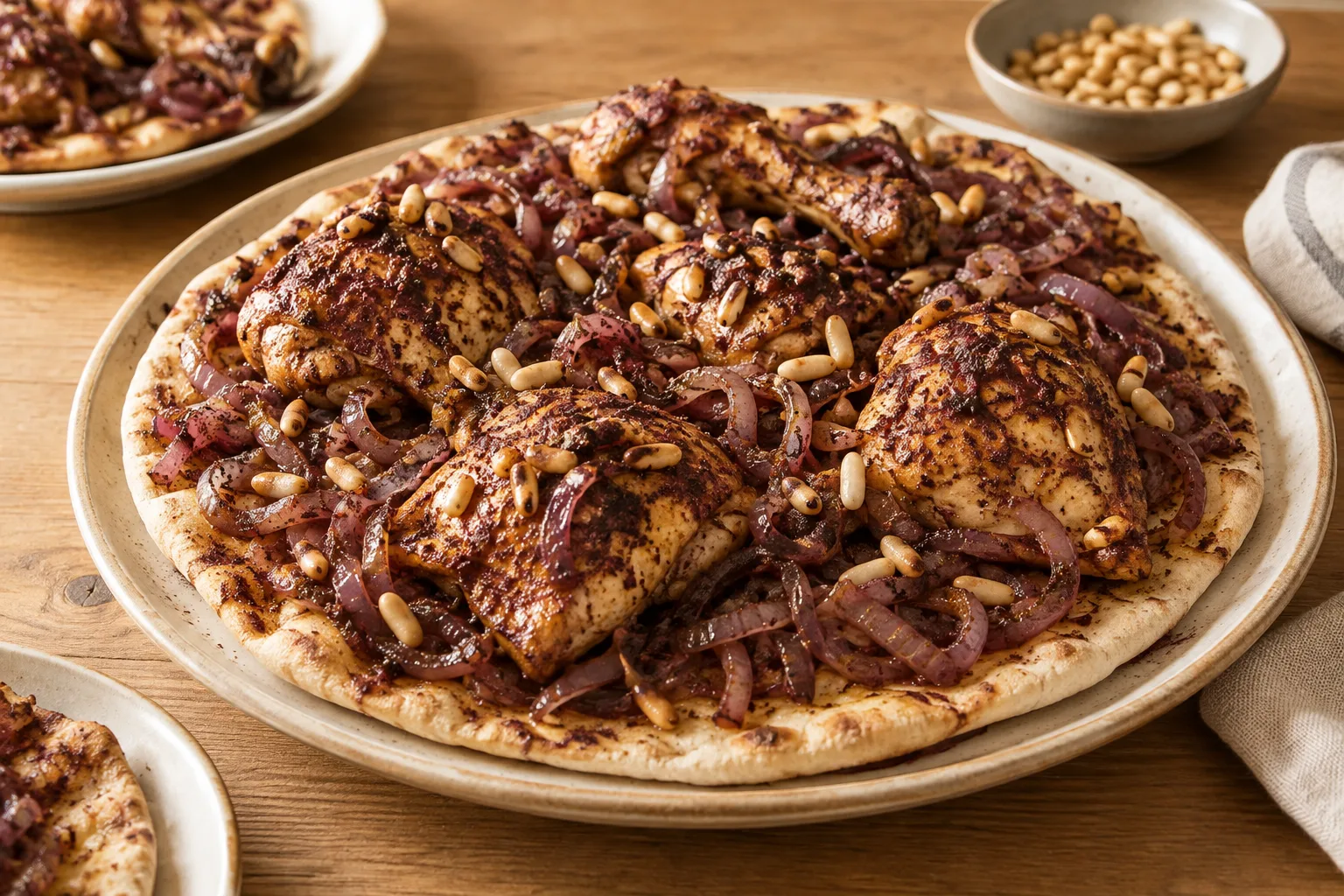
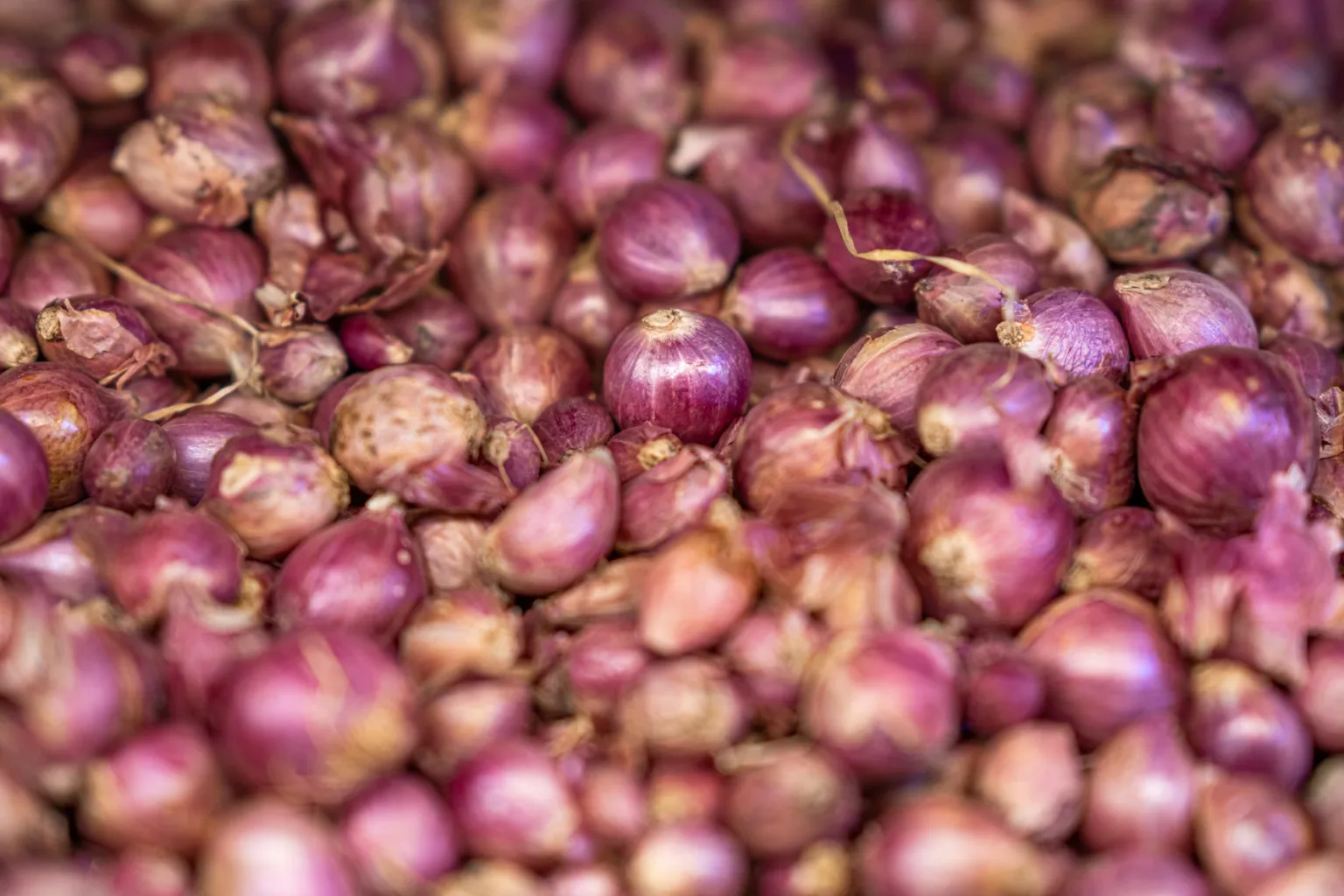
A red onion is a variety of common onion, Allium cepa, recognized by its red or purple-toned skin and, in some varieties, reddish coloring in parts of its inner layers. Like other bulb onions, it is peeled and cut before being cooked or served. Its intensity is not identical from one bulb to another: the flavor can be mildly pungent and also somewhat sweet. Red onions are used both raw and cooked. Raw, they add color and texture to salads, bowls and sauces; cooking softens their pungency and makes them useful in soups and sauces. They should not be confused with shallots: although their colors can look similar, they are different ingredients.
When to use it
Choose red onion when you want a splash of color and a noticeable onion flavor in a raw preparation such as a salad, bowl or fresh salsa. It also works as an accompaniment to grilled vegetables and can be added to cooked sauces or soups. If a gentler onion flavor is needed, use less or choose another variety, bearing in mind that onion types differ in flavor. Red onions are not limited to cold dishes: they can be cooked, and heat tends to soften their pungency and can make their flavor seem sweeter.
How to use it
Remove the outer skin and cut the onion into slices, rings or pieces to suit the dish. For salads, bowls and fresh salsas, add it raw in thin slices or chopped; this shows off its color and gently pungent, sweet flavor. To cook it, add it to soups and sauces, or cook it in a pan or with other vegetables. It can also be pickled in vinegar and served as a condiment. Adjust the cut and amount to the result you want. Color, sweetness and pungency can vary between bulbs, so taste and adjust the seasoning before serving. There is no universal substitution ratio that overrides the quantities given in a particular recipe.
Flavour and texture
Red onion has moderate pungency and a somewhat sweet note, though intensity changes with the variety and individual bulb. When fresh, it is firm and crisp raw, and its layers bring visible color to salads and sauces. Cooking softens the pungency and can make the flavor seem sweeter. Appearance varies too: the skin can range from red to deep purple, and the inside may have reddish areas.
How to choose it
Choose firm, whole bulbs with intact outer skin and no visibly damaged areas or obvious signs of spoilage. If you have a choice, select bulbs that suit the intended use: firm onions are easy to slice for salads, while those intended for cooking can be chopped or cut into pieces. Color and flavor intensity are not identical across varieties, so appearance alone cannot guarantee a particular degree of sweetness or pungency.
Storage
Keep whole bulbs in a dry, well-ventilated place and avoid leaving them damp or allowing them to become damaged. Once cut, keep the remainder in a closed container in the refrigerator and use it soon. There is no single storage duration that applies to every onion; it depends on the bulb’s condition and storage conditions. Discard any piece that shows visible spoilage.
Substitutions
White onion can replace red onion when losing the color and changing the flavor profile are acceptable. Yellow onion is another option, especially in cooked dishes, although it can taste more intense. The best swap depends on the dish; begin with a similar amount, taste and adjust rather than assuming all varieties have the same pungency or sweetness.
Common mistakes
Do not assume every red onion is equally mild or sweet: intensity varies. Thick slices can dominate a salad, so cut the onion more finely when you want its flavor spread throughout the dish. And do not reserve red onions only for raw dishes; they can be cooked in soups and sauces, where their pungency softens.
Safety and allergens
Handle red onion as fresh produce: use clean utensils and surfaces, and do not use bulbs showing visible spoilage. Keep cut portions refrigerated and avoid leaving them exposed unnecessarily.
Culinary uses
- raw salad ingredient
- aromatic base for sauces and cooked dishes
- colorful garnish
Recommended techniques
- slice or chop and serve raw
- sauté or fry
- simmer in soups and sauces
- pickle in vinegar
Pairs well with
- salads and bowls
- tomatoes and salsa
- grilled vegetables
- soups and sauces
Frequently asked questions
Can red onion be eaten raw?
Yes. It is used raw in salads, bowls and salsas. Thin slices help distribute its color and its gently sweet, pungent flavor.
Can red onion be cooked?
Yes. Add it to soups and sauces, or cook it with other vegetables. Heat softens its pungency and can bring out a sweeter impression.
Is red onion milder than other onions?
It can be less intense than some yellow onions, but red onions are not all alike. Pungency and sweetness vary by variety and bulb.
Sources and review
Automatically researched, cross-checked and validated content. Sources consulted:
- Client Challenge doi.org
- The Essential Glossary of Cooking Terms for the Culinary Arts - Escoffier escoffier.edu
- La cebolla, ese humilde ingrediente tan fundamental | Gastronosfera gastronosfera.com
- The Case of Pablo Neruda's Odas elementales and Food digitalcommons.sacredheart.edu
- Agencia Española de Seguridad Alimentaria y Nutrición aesan.gob.es
- POTATOES - Extension St. Croix County stcroix.extension.wisc.edu
- Foods and Flavors to Savor in South America - UCEAP News and Features blog.uceap.universityofcalifornia.edu
- EFNEP Hispanic Heritage Recipes | Community Nutrition | Extension/College of Agriculture, Health & Natural Resources | University of Connecticut communitynutrition.cahnr.uconn.edu
- Producción de Cebolla extension.psu.edu
- Determining How Traditional Knowledge of Lacandon ... experts.esf.edu
- La cebolla, la base de la gastronomía española - Enrique Romay eromay.com
- Tipo de Cebollas: usos y propiedades | Fruta y verdura Cal Fruitós calfruitos.com
- Making Corn Tortillas and Salsa coloradosph.cuanschutz.edu
- Cebollas rojas, amarillas o blancas: ¿cuáles son las más saludables? Una variedad destaca - SECIP secip.info
- Cebollas rojas (¿crudas, orgánicas?) | Fundación G+E diet-health.info