- Category
- Herbs and spices
- State
- Other
- Usual unit
- teaspoon
What it is
Sazón is a name used for seasoning blends that add aroma and flavor to food. There is no single standard formula: a blend may combine herbs, spices, salt, or other ingredients, and its composition differs from one product to another. It may also be sold dry or moist. The name alone therefore does not tell you exactly what a package contains or how salty, hot, or strong it will taste. Check the ingredient list and the maker’s directions before cooking. In this guide, sazón means a seasoning blend, not one fixed recipe or a particular brand.
When to use it
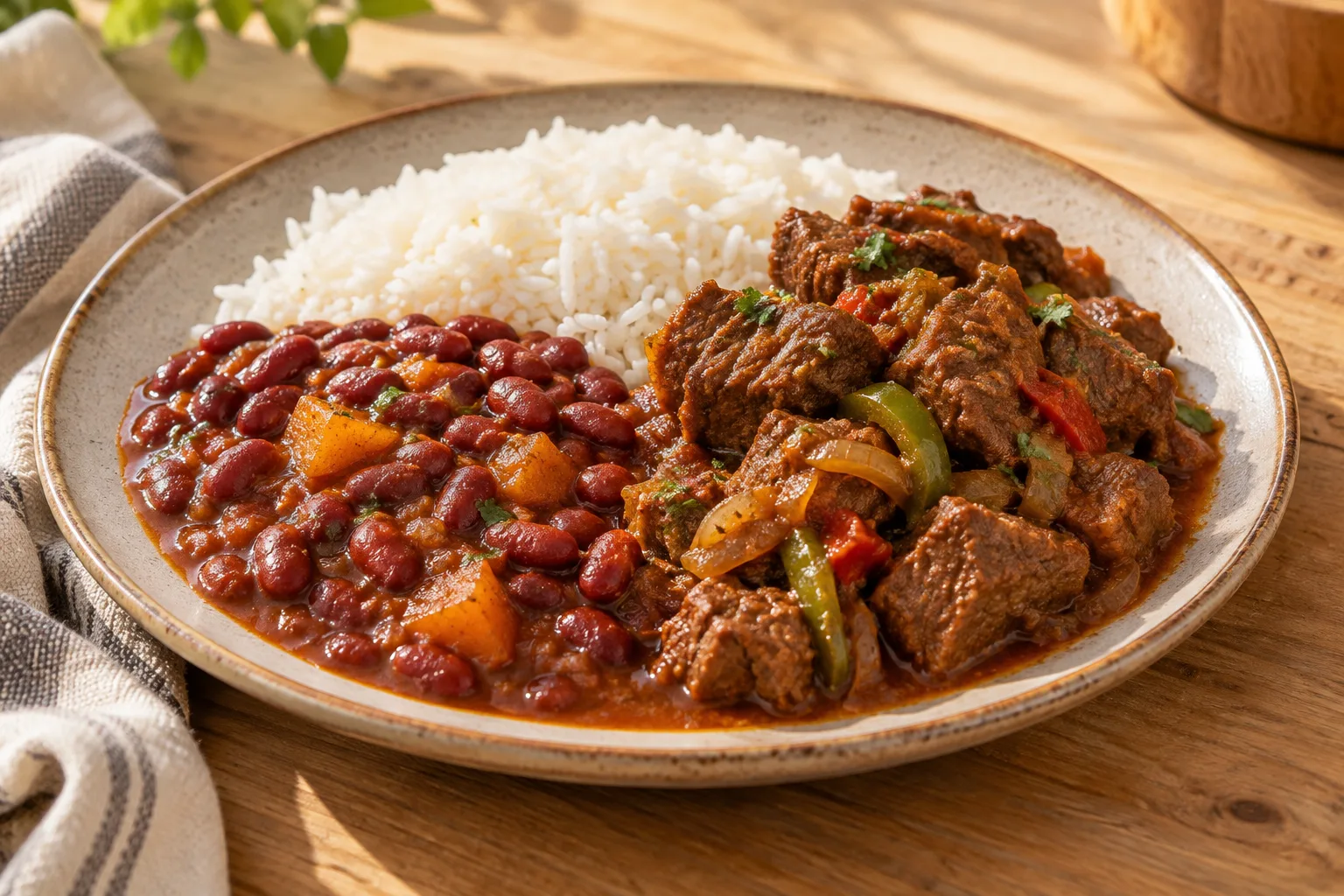
Use sazón when you want to add several seasoning notes with one blend, for example to rice, beans, stews, or dishes made with meat, fish, or vegetables. The timing depends on the blend and the result you want: it can be added before, during, or near the end of cooking. If you are new to a product, start with a small amount and taste the dish before adding more. For delicate food, such as mild fish, choose a blend with moderate intensity; a bolder mixture may suit a hearty stew. The product label is the best guide to the specific ingredients.
How to use it
Read the label first and check whether the blend already contains salt, chile, or other strong-tasting ingredients. Stir a small amount into the food before or during cooking, mix well, and taste before adding more. You can also combine a dry sazón blend with a little oil to coat ingredients before roasting or baking; if the product is already moist, follow its package directions. For stews and rice dishes, add it with the other seasonings and adjust the flavor at the end. There is no universal amount because the composition and strength vary between products. Keep any seasoning that has touched raw food separate from the portion used for serving.
Flavour and texture
Flavor and texture depend on the formula: sazón may taste herbal, warm, hot, salty, or combine several of these notes. Dry versions are usually powders or granules; moist versions may be pastes or fluid mixtures. Color also varies with the ingredients. Do not assume that all sazón products taste alike or can be used in equal amounts. Check the package and add the blend gradually.
How to choose it
Choose a product with a readable ingredient list and check which herbs, spices, salt, or other components it contains. Compare labels if you want a less salty blend, no heat, or a particular flavor profile; the name sazón does not guarantee a uniform recipe. Check whether the product is dry or moist, and follow the package directions. If it is sold in bulk, ask about its ingredients before buying, especially if you need to avoid a particular ingredient.
Storage
Store the product according to its package directions, since a dry blend and a moist blend may not require the same handling. Keep the container closed and do not put wet or unclean utensils into it. For a dry blend, choose a cool, dry place away from steam and direct light. If the package specifies refrigeration or another condition, follow that instruction. Discard the product if its package is damaged or you notice unusual changes in its appearance or smell.
Substitutions
There is no single substitute for every sazón blend because ingredients and strength vary. Replace it with a herb-and-spice blend suited to the dish, or combine individual seasonings to match the profile shown on the label. Add extra salt only after checking whether the original sazón already contained it. Start with a small amount, taste, and adjust; an exact replacement cannot be guaranteed without knowing the product’s formula.
Common mistakes
A common mistake is assuming that every product called sazón has the same ingredients or strength. Another is adding a large amount without tasting, particularly when the blend may contain salt or chile. Do not ignore the label or automatically replace one blend with the same measure of another. For balanced flavor, start small, mix well, and adjust the seasoning at the end.
Safety and allergens
Check the package for ingredients and potential allergens, since formulas vary between products. Follow the package directions, and do not let utensils that have touched raw food contaminate seasoning intended for serving.
Culinary uses
- Flavoring and aromatizing food
- Adding a blended seasoning base to dishes
Recommended techniques
- Stir into food before or during cooking
- Mix with oil or another suitable liquid to make a coating or marinade
Pairs well with
- Rice and bean dishes
- Meat, fish, and vegetables, matched to the blend’s flavor and intensity
Frequently asked questions
Does every sazón blend have the same ingredients?
No. The name is used for blends whose ingredients can vary. Check the ingredient list on the specific product.
Should sazón be added before or after cooking?
It may be added before, during, or near the end, depending on the blend and dish. Start with a little and adjust after tasting.
Does sazón always contain salt?
You cannot assume that every product has the same formula. Check the package to see whether it contains salt and adjust the rest of the seasoning.
Estimated nutrition
- Fat
- 0 g
- Saturates
- 0 g
- Carbohydrate
- 0 g
- Sugars
- 0 g
- Fibre
- 0 g
- Protein
- 0 g
- Salt
- 42.5 g
Sources and review
Automatically researched, cross-checked and validated content. Sources consulted:
- El origen de las especias: historia y sabores auténticos munozypujante.com
- Client Challenge doi.org
- Culinary Mestizaje: An Afro-Latino Collective Sensory ... via.library.depaul.edu
- Guía básica de especias: usos culinarios y propiedades (Parte I) - El Sabor de lo Bueno sabordelobueno.com
- protocolo de criterios mínimos para la evaluación de aesan.gob.es
- The Happy Kitchen: Community Designed Cooking Classes digital.library.unt.edu
- - YouTube youtube.com
- Duke Student Affairs students.duke.edu
- What Is a Tasting Menu? How Multi-Course Fine Dining Works - Escoffier escoffier.edu
- Page 4 | Nutrition and Food - Penn State Extension extension.psu.edu
- CIA Alumni Lead the Way in Food Business Innovation ciachef.edu
- "Y sazonar al gusto": guía de las sazones imprescindibles y sus usos | Gastronosfera gastronosfera.com