- Category
- Vegetables
- State
- Fresh
- Usual unit
- unit
What it is
Scallion greens are the edible green leaves of a fresh Allium vegetable. The names scallion and spring onion are not used consistently: scallion may refer to a plant that does not form a bulb, while a spring onion can be a bulb-forming onion harvested while its leaves are still green. A market name alone may therefore not identify one precise plant. This profile covers the green leaves used in cooking, whether chopped into a dish or added as a fresh finish. They are not the same as chives, and they are distinct from the white portion of the same bunch, even though these ingredients can have related culinary uses.
When to use it
Use scallion greens when you want a fresh, lighter onion note, particularly in salads, soups, broths and sauces. Chopped raw, they provide a fresh green finish; cooked into a dish, they contribute to its overall onion flavor without needing to be the main ingredient. Tender, fine leaves can be served raw. If the leaves are thick and fibrous, cooking them in a soup or stir-fry is often a more suitable use than serving them raw.
How to use it
Remove any visibly damaged leaves, then slice or chop the green parts to suit the dish. Add them raw to salads, sauces and garnishes when you want their fresh character to remain noticeable. They can also be stirred into scrambled eggs, a cooked base, soup or broth. Thicker leaves may be better cooked because they can feel fibrous raw. One recipe for sopes uses chopped green onion as a topping alongside cilantro, and other culinary descriptions mention green leaves in soups and broths. Choose a cut that fits the dish, and taste before adding more.
Flavour and texture
Their aroma and flavor are onion-like, but can seem milder and more delicate than those of a mature dry onion. Tender leaves provide a fresh texture when raw; thicker leaves may be fibrous. Flavor and texture vary with leaf thickness and condition, so taste a small amount before deciding whether to serve the greens raw or cooked.
How to choose it
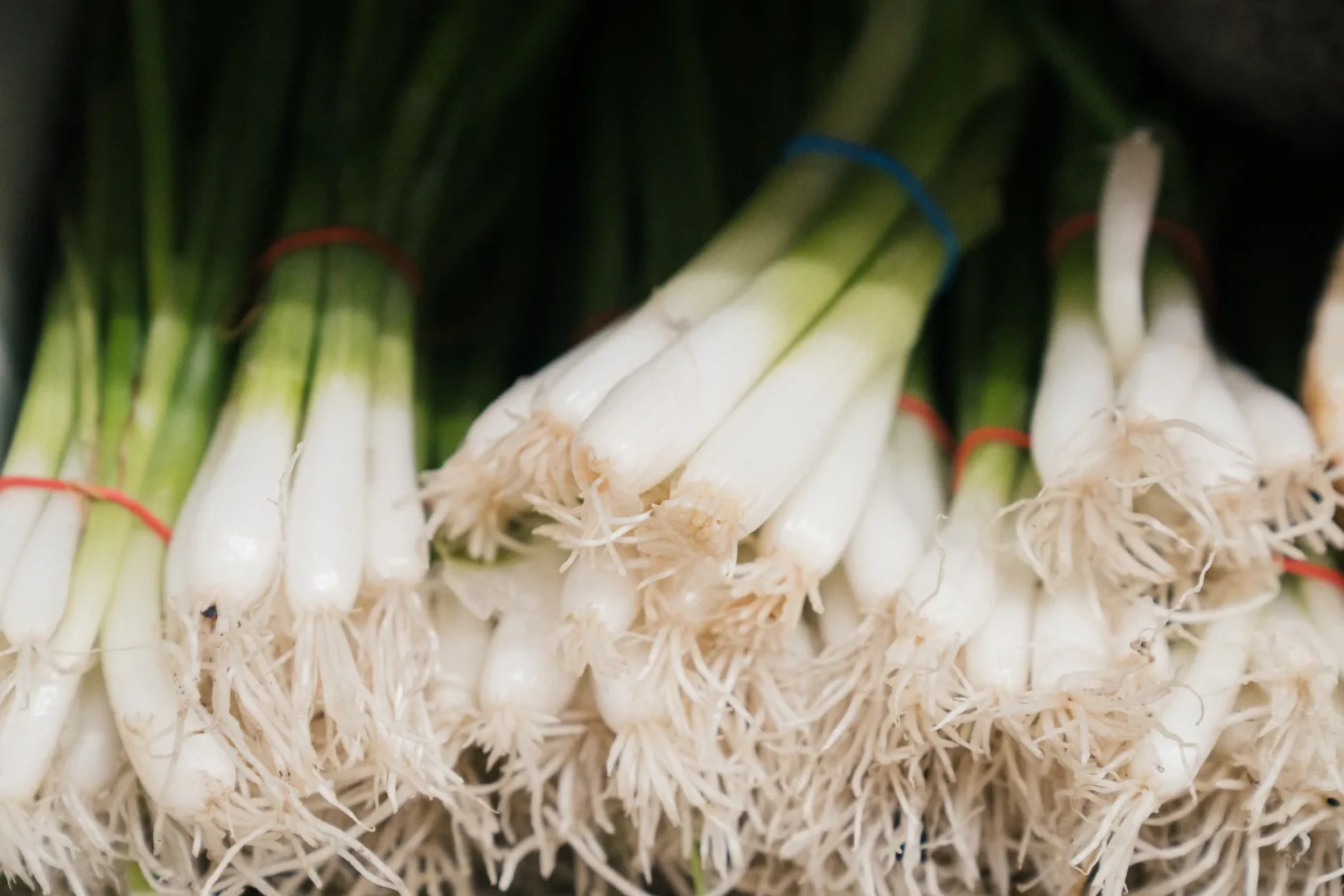
Choose bunches with green leaves that look fresh and firm, without obvious damaged or dried areas. Very thick leaves may be fibrous raw, so consider using them in a cooked dish. Appearance alone cannot reliably establish whether a product is a scallion or a spring onion: the names are used inconsistently in different contexts.
Storage
Keep fresh scallion greens refrigerated. The available evidence does not establish a specific storage duration for these leaves, so avoid relying on an unsupported time claim. Check their condition before use and discard damaged portions. Refrigeration helps maintain freshness; follow local official food-safety guidance for handling fresh produce.
Substitutions
Green leaves from a tender spring onion can serve a similar culinary purpose, including in chopped salads, soups and sauces. The white portion of the same bunch may work in a cooked preparation, but it has a different texture and role. Neither substitution is guaranteed to provide exactly the same freshness or result.
Common mistakes
Do not assume that scallion and spring onion always name the same plant. Nor should the green leaves be discarded automatically: they can be used in salads, sauces, soups and broths. Thick leaves may not be as tender raw as fine ones, so cooking them can be a better choice.
Safety and allergens
The supplied evidence identifies no specific safety warning for scallion greens. Handle fresh produce carefully and follow official food-safety guidance in your area.
Culinary uses
- Acabado fresco y aromático para platos
- Ingrediente crudo para ensaladas y guarniciones
Recommended techniques
- Cortar en rodajas finas y añadir al final
- Picar y cocinar en sopas, caldos o salteados
Pairs well with
- Sopas, caldos y fideos
- Ensaladas, salsas, carnes y pescados
Frequently asked questions
Can you eat scallion greens?
Yes. Chop the leaves into salads and sauces, or add them to soups, broths, cooked bases and scrambled eggs.
Can scallion greens be eaten raw?
Yes, especially when the leaves are tender. Thicker leaves can be fibrous raw and may be better cooked.
Are scallions and spring onions the same?
Not always. The names are used inconsistently, and a spring onion may be a bulb-forming onion harvested with green leaves.
Sources and review
Automatically researched, cross-checked and validated content. Sources consulted:
- Client Challenge doi.org
- The Essential Glossary of Cooking Terms for the Culinary Arts - Escoffier escoffier.edu
- Qué es la cebolleta en España: La joya verde de nuestra gastronomía - Agrícola Campolor agricolacampolor.com
- EFNEP Hispanic Heritage Recipes | Community Nutrition | Extension/College of Agriculture, Health & Natural Resources | University of Connecticut communitynutrition.cahnr.uconn.edu
- Producción de Cebolla extension.psu.edu
- shallots - Extension St. Croix County stcroix.extension.wisc.edu
- Cebolleta o cebolla tierna | Gastronomía & Cía gastronomiaycia.com
- Comparativa de los Mejores Productos para Usar Cebolla Verde en Comida Asiática: Guía y Análisis thaibistro.es
- Sopes | Dinner Tonight dinnertonight.tamu.edu
- MyPlate-Garden Veggies 3rd grade- 5th grade coloradosph.cuanschutz.edu
- Para la ciudadanía aesan.gob.es
- Aprovéchalo todo de la cebolleta ametllerorigen.com
- Swiss Chard | UNL Food | Nebraska food.unl.edu
- Publications | Servicio de Extensión de OSU extension.oregonstate.edu