- Category
- Vegetables
- State
- Fresh
- Usual unit
- g
What it is
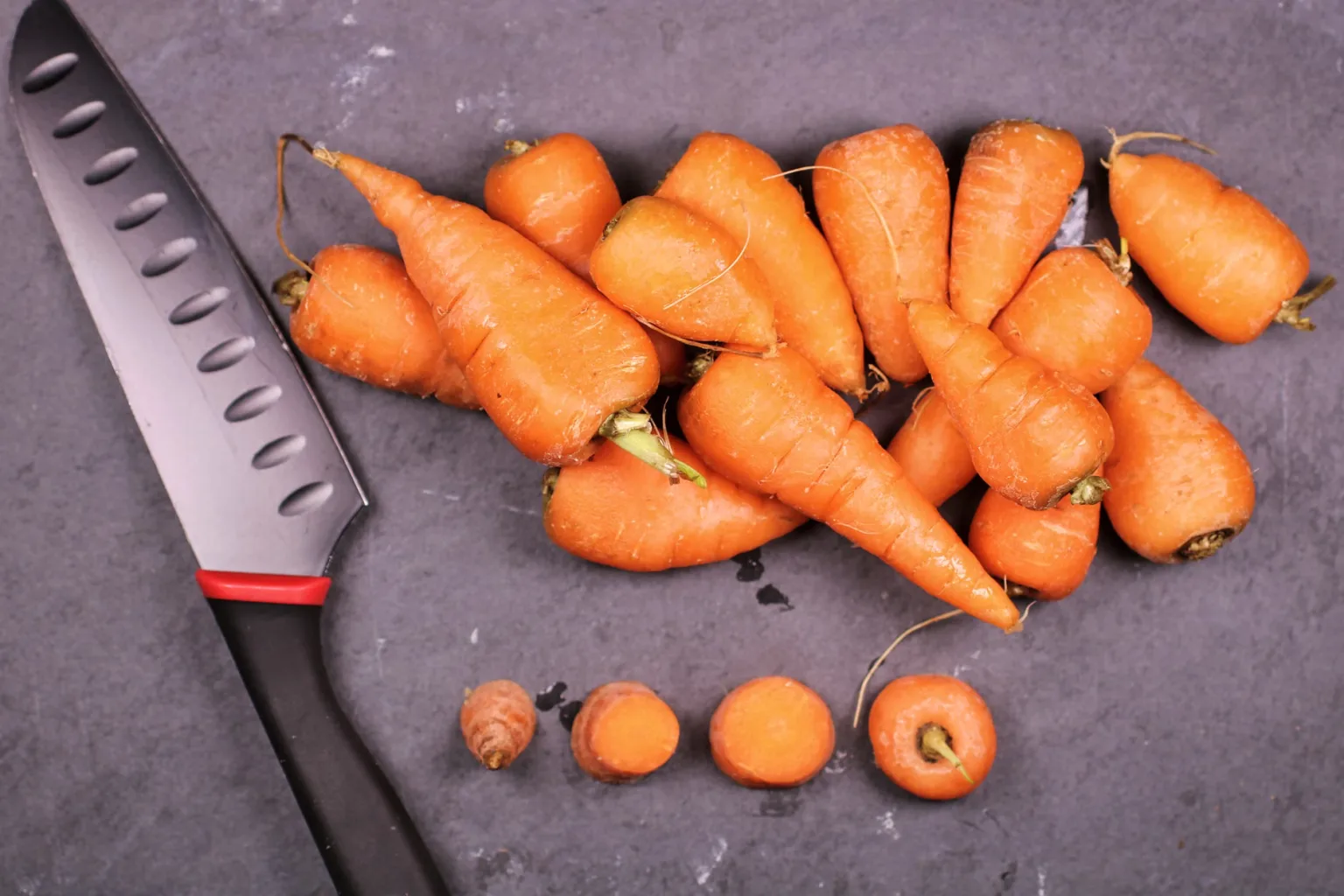
Small carrots are carrots sold or prepared in a compact size. The name does not always refer to one specific kind: some are naturally small varieties, while others are full-size carrots peeled and cut into uniform shapes. A bag labelled small or baby carrots may therefore contain miniature roots or shaped pieces. Both are carrots and can be used in raw or cooked dishes. If a recipe depends on a particular size or appearance, check what you have and adjust the cut before cooking.
When to use it
Use small carrots when you want to serve whole carrots or bite-size pieces, prepare a side dish, or add color and texture to a meal. Ready-to-eat shaped pieces are convenient with a dip, while larger carrots can be cut into sticks or pieces to suit. Add them to salads, stir-fries, soups, stews, and casseroles, or roast them as a side. When size matters for appearance or cooking, cut the pieces to a similar size so they cook more evenly.
How to use it
Wash carrots before eating or preparing them, rubbing away visible dirt under running water. Dry them if you want them to brown more readily. Serve them raw, whole or as sticks with hummus or another dip; grate them into a salad, or chop them for a stir-fry, soup, stew, or casserole. You can also roast them with a glaze or seasonings and serve them as a side. For a smoothie, combine cooked carrots with pineapple and yogurt. Choose a cut that suits the dish and check that cooked pieces are tender to your liking before serving.
Flavour and texture
Carrots are generally mildly sweet with a firm interior. Raw pieces are crunchy, while cooking softens them. Their small size makes them convenient to serve whole or as bite-size pieces, though shape and texture can vary depending on whether they are miniature varieties or larger carrots peeled and shaped. Cutting pieces to a similar size gives a more consistent look to the dish.
How to choose it
Choose carrots that feel firm and have a deep color; avoid ones that are soft or split. With a pack of small carrots, check whether they are miniature roots or full-size carrots that have been peeled and shaped, since size and shape can differ. Avoid visibly damaged or limp pieces. If the green tops are attached, remove them before storage.
Storage
Remove any attached green tops and keep carrots in a plastic bag in the refrigerator. General carrot guidance gives storage for up to two weeks this way; check their condition before using and discard any that have spoiled. If the package provides specific storage directions for the product, follow those directions.
Substitutions
If small carrots are unavailable, use regular carrots, peeled and cut into similarly sized pieces. True miniature varieties can also stand in for peeled, shaped small carrots when the recipe allows a change in appearance. Match the cut to the dish and the way you plan to serve it.
Common mistakes
Do not assume that every small or baby carrot is a miniature variety: some are made by peeling and shaping larger carrots. Remove attached green tops before storage when possible, and avoid cooking pieces of very different sizes without checking their doneness, as they may be ready at different times.
Safety and allergens
Wash carrots under running water and rub away visible dirt before eating or preparing them. For home canning, do not improvise a preservation method; use a tested recipe and the equipment specified for that food.
Culinary uses
- Raw snack or dipper
- Side dish
- Ingredient in salads, soups, stews, casseroles, and baked goods
Recommended techniques
- Eat raw, whole or cut into sticks
- Roast
- Steam or boil
- Stir-fry
- Grate or chop for salads, soups, and baking
Pairs well with
- Hummus or another dip
- Pineapple and yogurt in a smoothie
- Seasonings or a glaze
Frequently asked questions
Are all small carrots miniature varieties?
No. The name is also used for full-size carrots that have been peeled and shaped into small, uniform pieces.
How can I serve small carrots?
Serve them raw with a dip, or roast or stir-fry them. They can also be added to salads, soups, stews, and casseroles.
How should I store them?
Remove any green tops and store the carrots in a plastic bag in the refrigerator. General guidance for carrots is up to two weeks this way; follow the package directions if they differ.
Sources and review
Automatically researched, cross-checked and validated content. Sources consulted:
- Client Challenge doi.org
- The Essential Glossary of Cooking Terms for the Culinary Arts - Escoffier escoffier.edu
- ¿Cuál es el origen de las zanahorias baby? | Consumer consumer.es
- Cómo se hacen las zanahorias baby | Gastronomía & Cía gastronomiaycia.com
- Raíces comestibles: remolachas, zanahorias, nabos y colinabos (Spanish) - National Center for Home Food Preservation nchfp.uga.edu
- Vamos a Conservar Alimentos: Raíces comestibles: remolachas, zanahorias, nabos y colinabos extension.psu.edu
- Carrots | UNL Food | Nebraska food.unl.edu
- Food & Nutrition | Colorado State University Extension foodsmartcolorado.colostate.edu
- Para la ciudadanía aesan.gob.es
- Zanahorias | Servicio de Extensión de OSU extension.oregonstate.edu
- How can I cut down on food waste? | University of Nevada, Reno unr.edu
- Las zanahorias, un tesoro nutricional biotta.es
- Aprovecha al máximo las zanahorias friolisa.es