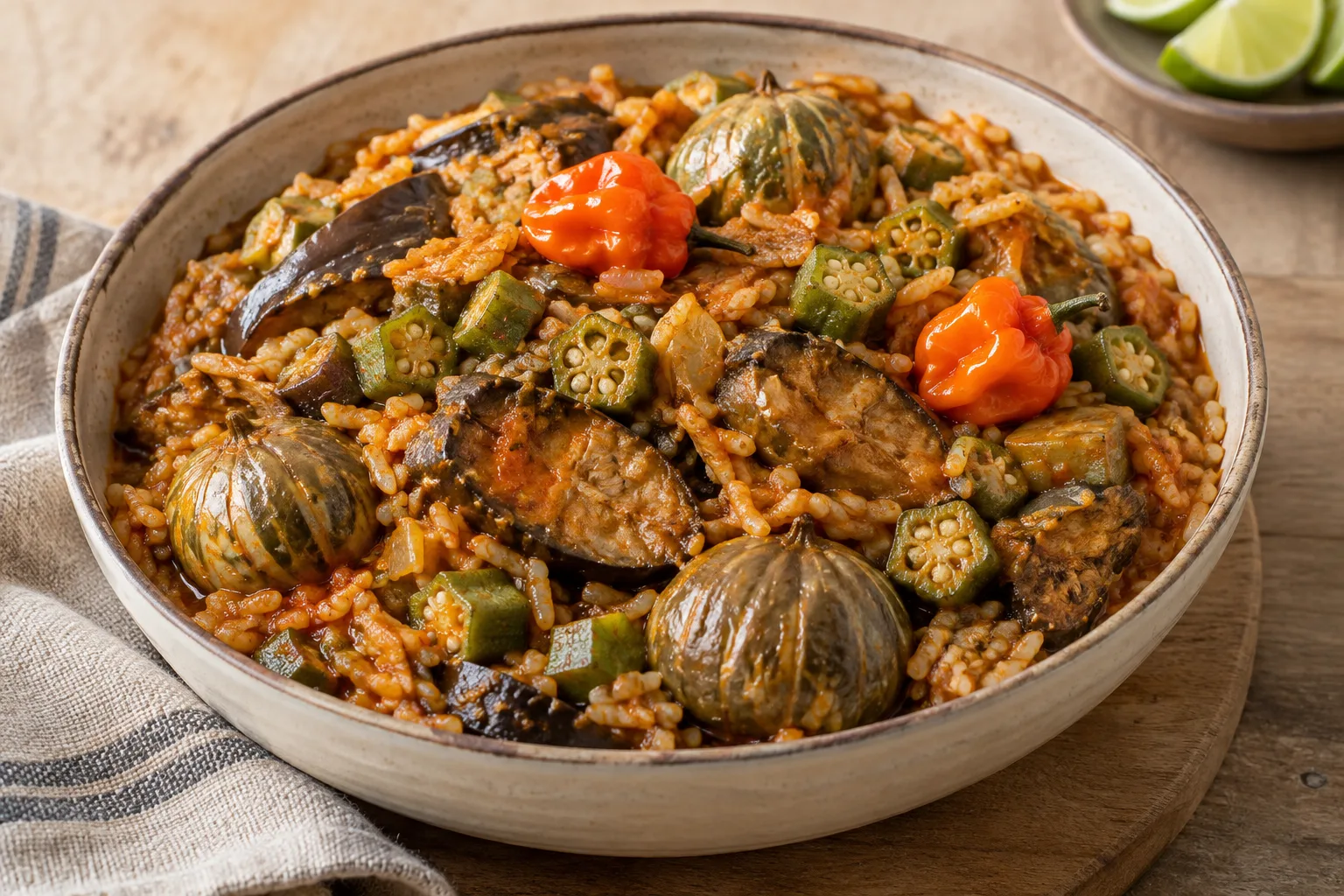
- Category
- Sauces and condiments
- State
- Preserved
- Usual unit
- tablespoon
What it is
Soumbara, also spelled soumbala or sumbala, is a fermented condiment associated with West African cooking. It is traditionally made from seeds of the néré tree, although other seeds may also be used and soybean versions exist. The traditional preparation described involves cooking and cleaning the seeds before fermentation; salt is added at the end. Fermentation gives the condiment its distinctive pungent aroma. Soumbara is available in artisanal forms and in industrial formats such as stock cubes. Recipes, seed ingredients, and forms of sale can differ, so check the label of the specific product you have rather than assuming every version is the same.
When to use it
Use soumbara when you want to give a savory preparation the pronounced character of a fermented West African condiment. Its aroma is pungent and the product is salted, so begin with a small amount, mix it in, and taste before adding more. It suits cooks looking for soumbara’s distinctive character rather than a neutral seasoning. Products may differ in the seeds used and in format, from artisanal preparations to industrial cubes. Check the ingredient list before use, particularly if you need to avoid soy.
How to use it
Add a small amount of soumbara to a savory preparation and stir it through; taste before deciding whether to add more. Adding it gradually helps you control its pungent aroma and the salt it may contribute. There is no single amount that applies to every product: the seeds, formulation, and format can vary. If using an industrial cube, follow the package directions and account for the salt it may add. Read the ingredient list to check whether it is made with soy or other seeds. Keep the product in its packaging and follow the storage instructions provided by its manufacturer.
Flavour and texture
Soumbara is known for a pungent aroma that develops during seed fermentation. The finished product is salted, so its saltiness can vary with the preparation and format. Available information describes both artisanal preparations and industrial cubes, but does not establish one texture for every form. Check the product you have and start with a small amount: its distinctive character can be noticeable even when used sparingly.
How to choose it
Check the product name and ingredient list to confirm that you are buying soumbara and to find out which seeds it contains. Traditional soumbara is associated with néré seeds, but other seeds are also used and soybean versions exist. It may be sold as an artisanal preparation or as industrial cubes; do not assume the formats have identical ingredients or intensity. If you need to avoid soy, check the packaging before buying.
Storage
The available information describes soumbara as a fermented and salted product but does not give a universal shelf life or storage conditions. Follow the instructions on the specific product, keep it packaged as directed, and do not assume that artisanal preparations and industrial cubes share the same storage requirements. If the package gives no guidance, ask the seller or manufacturer how to store it before use.
Substitutions
The seeds used can differ: traditional soumbara is made with néré seeds, while versions made with other seeds, including soybeans, also exist. These are alternatives within the product family, but they should not be assumed to have the same flavor, ingredients, or intensity. If you need a substitute, look for another soumbara version and check its ingredients first; the available information does not establish a different ingredient as an equivalent replacement.
Common mistakes
Do not assume every soumbara is made from the same seed: some versions may contain soy or other seeds. Another common mistake is adding a large amount at once; its aroma is pungent and the product is salted, so start small and taste. Do not assume an industrial cube and an artisanal preparation have identical ingredients or storage instructions.
Safety and allergens
Check the ingredient list, especially if you need to avoid soy, since some versions are made with it. Follow the product’s storage and use instructions. If the product is unlabeled or you cannot confirm its ingredients and handling, ask the seller or manufacturer before using it.
Culinary uses
- Fermented seasoning for savory dishes
- Pungent condiment used to add a distinctive fermented character
Recommended techniques
- Stir into a savory preparation as a seasoning
- Add gradually and taste as you go
Pairs well with
- Savory preparations that suit a strong fermented seasoning
- Dishes in which a distinctive West African condiment is appropriate
Frequently asked questions
What is soumbara made from?
It is traditionally made from néré seeds, but versions made from other seeds, including soybeans, also exist. Check the label to find out what is in the specific product.
What does soumbara smell like?
It has a distinctive pungent aroma associated with fermenting the seeds. The intensity can vary with the recipe and product format.
How should I start using soumbara?
Add a small amount, stir it in, and taste before adding more. The product is salted and strongly aromatic; check the package, especially if you are using an industrial cube.
Sources and review
Automatically researched, cross-checked and validated content. Sources consulted:
- Client Challenge doi.org
- Maridaje de sabores 101: cómo descubrir combinaciones perfectas - Aromatech aromatechgroup.com
- ¿Qué es el maridaje de sabores? - Hostelería Benidorm hosteleriabenidorm.com
- La guía práctica para un buen maridaje - Industrias Espadafor S.A. espadafor.es
- Zumaque o sumac, la especia imprescindible de Oriente Medio: qué es, a qué sabe y cómo usarla en la cocina directoalpaladar.com
- ¿Cómo hacer un maridaje perfecto? | SumiVin sumivin.com
- Maridaje en gastronomía: guía fácil para combinar sabores elcarbondevalentina.madrid
- Elementos del maridaje. La textura. – Terroaristas, el Blog del VINO terroaristas.com
- Tipos de maridaje y consejos para maridar - Cup de la Muntanya cupdelamuntanya.es
- US Food Security and Climate Change: Agricultural Futures dr.lib.iastate.edu
- Sumbala - Wikipedia, la enciclopedia libre es.wikipedia.org
- ¿Que es el sumac? El zumaque es una especia de la cocina árabe con propiedades antiinflamatorias sportlife.es
- soumbala es.gastronomiac.com
- Técnicas modernas en gastronomía: guía práctica – Aflamas Restaurant aflamas.com