- Category
- Sugar and sweeteners
- State
- Dry
- Usual unit
- g
What it is
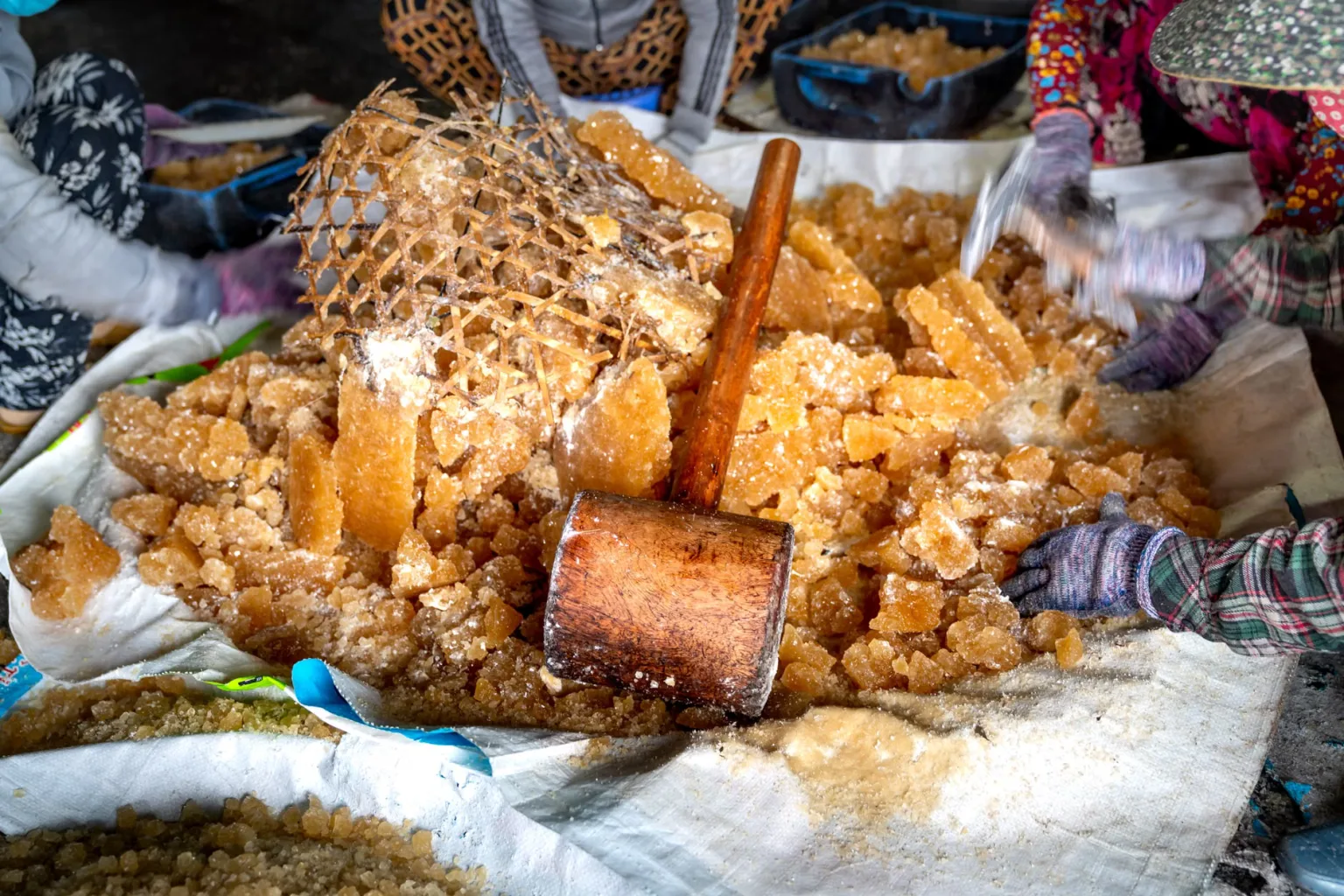
Sugar for a recipe base is crystalline sugar used to sweeten and to play a functional role in different preparations. The name alone does not specify whether it is white, brown or another variety, so follow the type named in the recipe. Ordinary granulated sugar is a versatile general option; finer crystals dissolve faster, while powdered sugar has a different texture and may include an anti-caking ingredient. Sugar can also add volume when beaten with fat and affect the texture of the finished preparation.
When to use it
Use it when a recipe calls for sugar to sweeten a drink, baking mixture, syrup, meringue or caramel. Granulated sugar is versatile, but crystal size matters: fine crystals incorporate faster, and powdered sugar mixes readily into preparations that need a fine texture. When beaten with fat, sugar can help incorporate air. For home canning, do not change the amount of sugar specified by a tested recipe unless that recipe explicitly allows the change.
How to use it
Measure the type of sugar called for and combine it with the other ingredients in the order given. In liquids, stir to help the crystals dissolve; fine-grained sugar generally dissolves faster than ordinary granulated sugar. For preparations that beat sugar with fat, use the crystal size specified: beating can incorporate air and contribute to volume and texture. Sugar is also used to make caramel, meringue and syrups. Do not automatically swap granulated sugar for powdered sugar: powdered sugar has a different texture and may contain starch or another anti-caking ingredient.
Flavour and texture
Sugar provides sweetness and, in granulated form, a crystalline texture that disappears as it dissolves. Crystal size affects how quickly it incorporates: superfine sugar dissolves sooner than ordinary granulated sugar, while powdered sugar is much finer. Brown varieties can add molasses notes, aroma and color, so they may not produce the same result as white sugar.
How to choose it
Choose sugar in intact, dry packaging from a trusted commercial source. For a recipe base, follow the variety and crystal size specified: ordinary granulated sugar is versatile, superfine sugar dissolves faster, and powdered sugar has a different texture. If the recipe calls for white sugar, do not assume brown sugar will give an identical result.
Storage
Store dry sugar in a cool, dry place, away from strong odors and moisture. An airtight, moisture-resistant container helps preserve its quality; refrigeration is not needed. Moisture can harden or clump granulated sugar, and strong odors can be absorbed. Clumps may make sugar harder to use, but do not by themselves show that it has spoiled.
Substitutions
Superfine sugar can be an option when faster dissolving is useful, and powdered sugar may work in mixtures that need a fine texture. Brown sugar adds molasses notes and color, so it can change the result. Do not treat these as automatic equivalents: follow the recipe, especially for baking and home canning, and make changes only when the recipe permits them.
Common mistakes
Do not assume all sugars behave alike: crystal size, molasses and anti-caking ingredients can change how a mixture comes together and its final result. Avoid storing sugar where it can absorb moisture or strong odors. For home canning, do not alter the amounts in a safe, tested recipe unless it explicitly permits the change.
Safety and allergens
The evidence reviewed provides no ingredient-specific safety warning. Use food-grade sugar in intact packaging and follow the recipe; for home canning, use a tested recipe without changing its quantities unless it permits the change.
Culinary uses
- Sweetens foods and drinks
- Supports texture and aeration when creamed with fat
- Helps balance perceived acidity in some preparations
Recommended techniques
- Stir into liquids until dissolved
- Cream with fat where the recipe calls for it
- Use to make caramel, syrup or meringue
Pairs well with
- Tea and coffee
- Fruit and dairy-based desserts
- Baking mixtures and sauces
Frequently asked questions
What kind of sugar does “sugar for the base” mean?
The name does not specify a particular variety. If the recipe gives no further detail, ordinary granulated sugar is a general option; follow the full recipe instructions.
Can I replace granulated sugar with powdered sugar?
Not automatically. Powdered sugar has a different texture and may contain an anti-caking ingredient; use it when the recipe calls for it or allows it.
How should I store sugar?
Keep it in a closed container in a cool, dry place, away from strong odors. It does not need refrigeration.
Sources and review
Automatically researched, cross-checked and validated content. Sources consulted:
- The Essential Glossary of Cooking Terms for the Culinary Arts - Escoffier escoffier.edu
- Tipos y variedades de Azúcar que encontrarás en el mercado, apuntes. - Cocina y Aficiones cocinayaficiones.com
- Vamos a Conservar Alimentos: Ingredientes Utilizados en las Conservas Preparadas en Casa extension.psu.edu
- ¿Qué es el azúcar? Tipos, sacarosa y edulcorantes - Zschimmer & Schwarz, Inc. zschimmer-schwarz.es
- Storing Sugars | USU extension.usu.edu
- Processed Foods and Health • The Nutrition Source nutritionsource.hsph.harvard.edu
- Safe & Healthy Food Pantries Project - Health & Well-Being health.extension.wisc.edu
- Changes to the Nutrition Facts Label | FDA go.unl.edu
- SugarScience.UCSF.edu | Hidden in Plain Sight sugarscience.ucsf.edu
- Por qué el azúcar de la fruta es bueno para la salud y el de los procesados no doi.org
- Azúcar para todos los gustos – La vida sabe mejor lavidasabemejor.es
- Beneficios y usos del azúcar en tu cocina republica.com
- Azúcar: El ingrediente mágico que -con moderación- transforma tus recetas hola.com
- How do I tell if there’s added sugar in my drink? ¿Cómo puedo saber si mi bebida contiene azúcar agregado? | University of Nevada, Reno unr.edu
- Para la ciudadanía aesan.gob.es
- development of a culinary medicine assessment tool for scholars.csus.edu