- Category
- Herbs and spices
- State
- Fresh
- Usual unit
- g
What it is
Thai basil, also called Thai sweet basil or horapa, is a culinary basil distinct from Thai holy basil. It is commonly recognized by its green leaves and an anise-like aroma with hints of licorice. Stems or young shoots may show purple tones, but color alone does not identify the herb: other basils used in Thai cooking have different appearances and flavors. Thai basil is sold fresh, as leaves or bunches, and lends a characteristic fragrance to Southeast Asian dishes.
When to use it
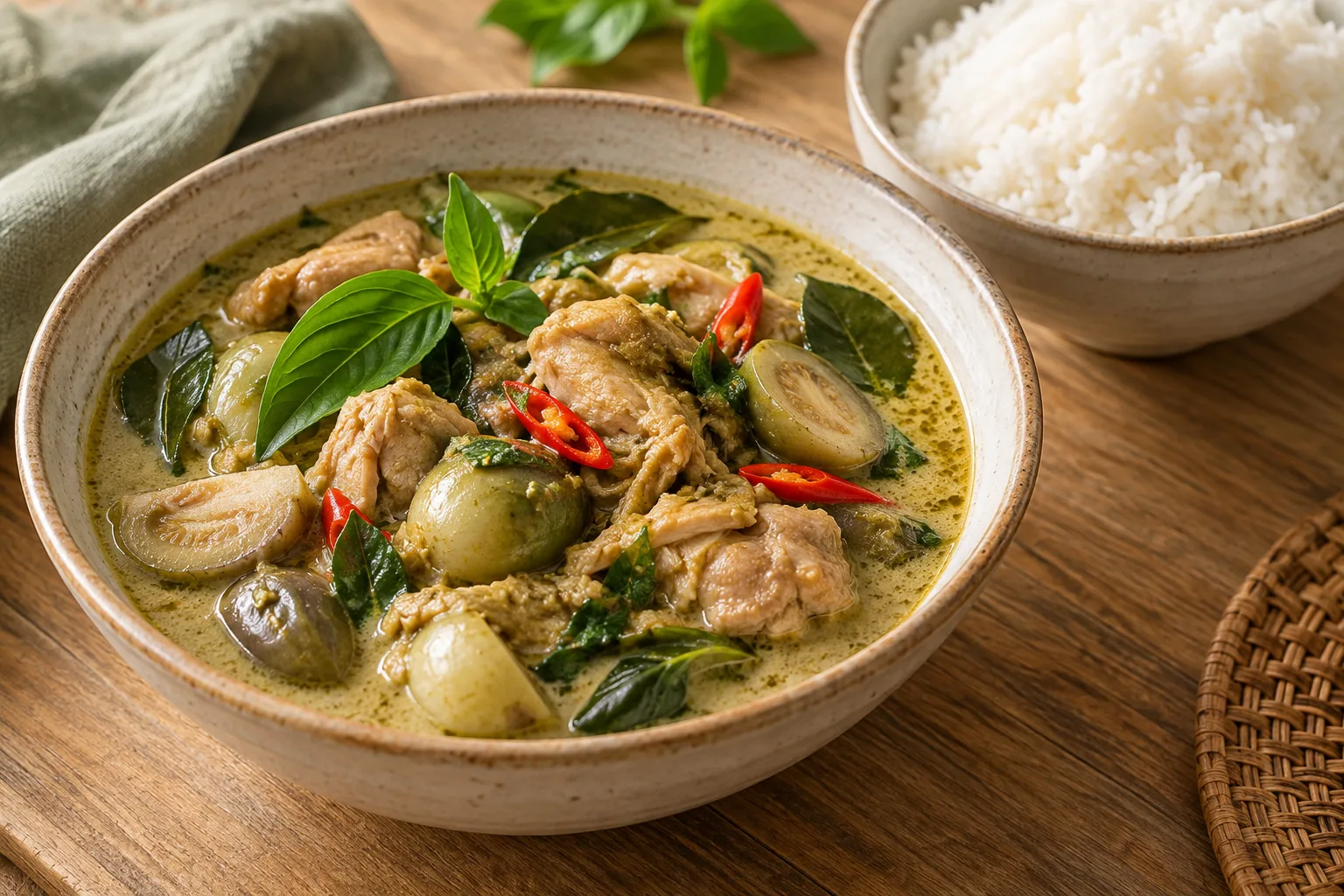
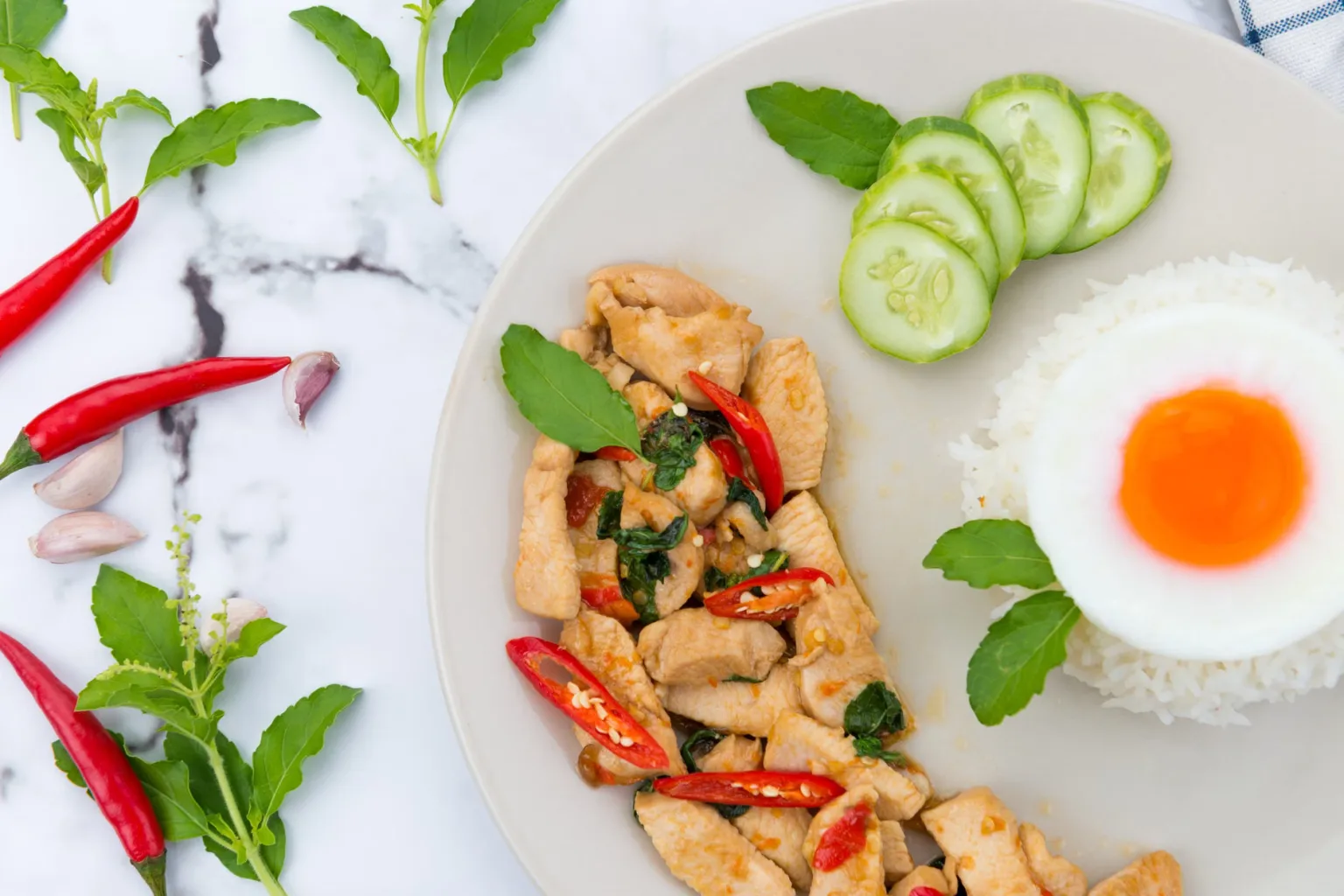
Choose Thai basil when you want a fresh, pronounced anise-like aroma rather than the milder profile of common sweet basil. It suits curries, noodle soups and stir-fries, including dishes with chicken or beef. It can also be served as an accompaniment or added to salads and other fresh dishes. If a recipe calls for holy basil or kaprao, remember that this is a different variety: both are used in Thai cooking, but their aromatic profiles are not the same.
How to use it
Separate the leaves from the stems and check that they are in good condition. Add them whole or slice them just before serving; you can also tear them by hand and fold them into a hot dish. In curries, soups and stir-fries, add the leaves near the end of cooking or after taking the pan off the heat, so prolonged cooking does not overwhelm their fresh aroma. For a simple finish, scatter a few leaves over the dish just before serving. They can also be offered as a fresh accompaniment. Pair them with ingredients commonly used in these dishes, such as chili, garlic, coconut milk, lemongrass or fish sauce.
Flavour and texture
The leaves have a distinctive anise-like aroma with licorice notes and a more assertive aromatic flavor than common sweet basil. Fresh, they are tender and bring a fragrant, green note to food. Descriptions can vary among varieties and individual bunches, so aroma is a more useful clue than stem color alone.
How to choose it
Look for fresh, intact green leaves, and take care not to confuse Thai sweet basil with Thai holy basil. Thai sweet basil commonly has green, rounded leaves, while holy basil can differ in leaf shape and color. Check the product name on the label or at the market and, if possible, gently rub a leaf to recognize its anise-like scent. Purple stems or shoots alone do not confirm the variety.
Storage
Buy the leaves when you plan to use them and keep them fresh until preparation. Remove damaged leaves and avoid storing a crushed or wet bunch. The available evidence identifies this herb as a fresh ingredient but does not establish a specific storage method or time for its leaves; follow any storage directions provided on the package or by the seller.
Substitutions
Common sweet basil can stand in if Thai basil is unavailable, though the result will be less anise-like and less faithful to the expected flavor. Holy basil is also used in Thai dishes, but its flavor leans more toward clove, pepper and mint; it is not identical and will change the dish. Adjust the amount to the aroma of the herb you have and the flavor you want.
Common mistakes
Do not confuse Thai sweet basil or horapa with holy basil or kaprao: they are different varieties. Do not identify a leaf by purple stem color alone, since appearance can vary. Adding the leaves too early and cooking them for a long time can make their aroma less prominent; add them near the end or at serving.
Safety and allergens
Use fresh leaves suitable for eating and discard any that are spoiled. No specific food-safety warning for this herb is established here.
Culinary uses
- Aromatic herb for Southeast Asian dishes
- Fresh finishing herb and edible garnish
- Herb for adding anise-like fragrance to curries, soups and stir-fries
Recommended techniques
- Add whole leaves near the end of cooking or just before serving
- Tear or slice leaves shortly before use
- Stir leaves into a hot dish at the end so they soften without prolonged cooking
Pairs well with
- Chili and garlic
- Coconut milk and lemongrass
- Fish sauce
- Noodles, curries and stir-fried chicken or beef
Frequently asked questions
Is Thai basil the same as holy basil?
No. Thai sweet basil, also called horapa, differs from holy basil or kaprao. Horapa has an anise-like aroma; holy basil is described with clove, pepper and mint notes.
When should I add Thai basil to a dish?
Add it near the end of cooking or just before serving to keep its aromatic character noticeable.
What can I use if I cannot find Thai basil?
Common sweet basil is an alternative, though it is less anise-like. Holy basil is also used in Thai cooking, but shifts the flavor toward clove, pepper and mint.
Sources and review
Automatically researched, cross-checked and validated content. Sources consulted:
- Hojas de Albahaca Santa doi.org/10.31003/uspnf_m7444_02_02 doi.org
- Albahaca sagrada tailandesa – Kwan Homsai www.kwanhomsai.com/albahaca-sagrada-tailandesa/ kwanhomsai.com
- Living Whole Recetas myllu.llu.edu/livingwhole/recetas/ myllu.llu.edu
- Condimentalo extension.usu.edu/fscreate/files/2020-22-staff/Condimentalo.pdf extension.usu.edu
- Albahaca: qué es, para qué sirve y beneficios bonviveur.com/es/noticias/albahaca bonviveur.com
- Cultivo de albahaca en huertos familiares | Extensión de la UMN es.extension.umn.edu/garden-and-home/yard-and-garden/yard-and-garden-problems/growing-basil es.extension.umn.edu
- Cocina tailandesa acercamiento a los sabores y texturas de la cocina tailandesa | OpenAlex openalex.org/W1608788919 openalex.org
- EAT IT ALBAHACA solutions.tennessee.edu/?view_pub_pdf=2301 solutions.tennessee.edu
- La albahaca tailandesa combina la belleza, la fragancia y el sabor de la naturaleza thursd.com/es/articulos/albahaca-tailandesa thursd.com
- Aromáticos de Tailandia y sus plantas | Umami Madrid www.umami-madrid.com/2008/09/01/aromaticos-de-tailandia-y-sus-plantas/ umami-madrid.com
- ingredientes thai ✧ Cómo encontrarlos para tus recetas tailandesas thaigarden.es/ingredientes-thai/ thaigarden.es
- La albahaca como especia | El Huerto Urbano www.elhuertourbano.net/la-albahaca-como-especia/ elhuertourbano.net