- Category
- Vegetables
- State
- Fresh
- Usual unit
- unit
What it is
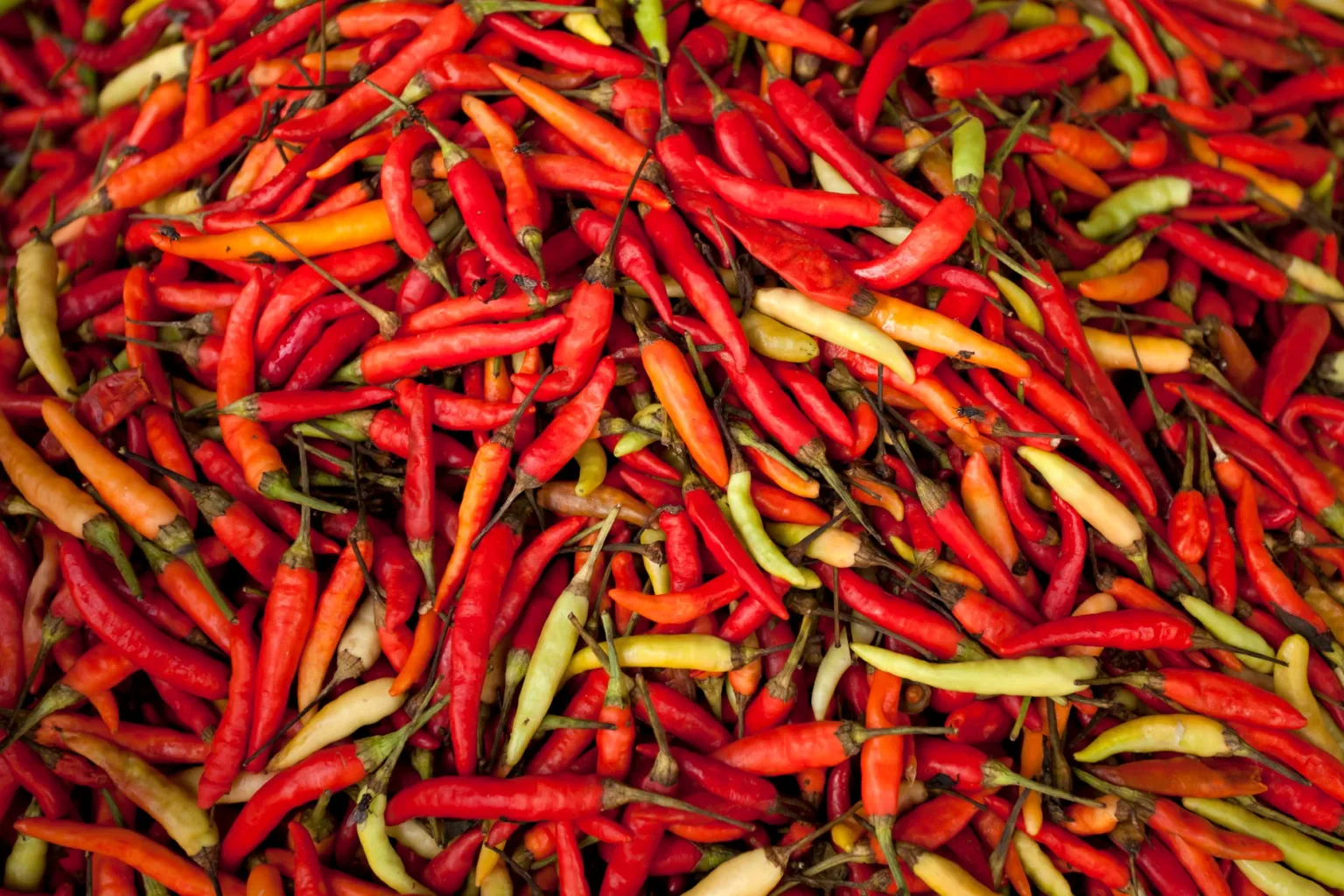
Thai chili is a culinary name for small, hot peppers used in Southeast Asian dishes. In recipes and shops, the name may refer to more than one kind of pepper, so size, color, and heat are not always identical. Sold fresh, it can be used whole, sliced, or chopped. Its usual role is to contribute heat and chile flavor, rather than to stand in automatically for a mild vegetable. The available evidence connects it with curries, soups, salads, and sauces; it does not establish one single variety or heat level for every pepper sold under this name.
When to use it
Use it when you want pronounced heat in a soup, curry, curry paste, papaya salad, or dipping sauce. It can also be served separately so diners can adjust their own portions. Because intensity varies, start with a small amount and increase it after tasting. In a delicate dish, add the pepper gradually so it does not overwhelm the other flavors. A small piece can have a noticeable effect, so taste the dish before adding another.
How to use it
Rinse the pepper under clean running water and dry it before preparing. Remove the stem, then slice or chop it; for a paste, pound or blend it with the other ingredients. Leave or remove the seeds and inner ribs according to preference, but do not assume that removing them eliminates all the heat. Add a small amount to curries, soups, salads, or sauces, then taste before adding more. Avoid touching your eyes while preparing it, and wash your hands with soap and water after handling.
Flavour and texture
Thai chili brings strong heat and the distinctive flavor of fresh chile. Intensity can differ from pepper to pepper, so the name does not guarantee the same experience every time. When fresh, the flesh is firm and juicy; slicing releases its aroma and can spread heat quickly through a sauce or moist dish. A small amount may be enough to give a preparation character.
How to choose it
Choose peppers that look fresh and show no obvious signs of spoilage, such as soft patches, unusual moisture, or mold. Check that they are sold as fresh, and do not treat the common name as proof of one exact variety. Size and color may vary and are not reliable measures of heat. If you do not know the batch, buy only what you need and taste a small piece before using it generously.
Storage
Keep fresh peppers refrigerated and protected from excess moisture. The available evidence does not establish a specific storage life for this pepper, so check its condition and discard any that show mold or spoilage. Keep it away from dirty surfaces and utensils, and wash your hands before and after handling. For longer storage, follow the package directions or a reliable vegetable-freezing guide.
Substitutions
Another fresh hot pepper can work as a substitute, but its flavor and heat may differ; start with less and adjust to taste. Dried chile may suit some preparations, though its texture and flavor are not the same as fresh pepper. There is no fixed quantity-for-quantity conversion across varieties, so taste the substitute before adjusting the dish.
Common mistakes
Do not add a large amount at the start: peppers sold as Thai chili can vary in heat. Do not assume size or color accurately predicts intensity. Avoid touching your eyes or face while preparing it; washing your hands with soap and water helps remove pepper residue. Taste the dish before adding more.
Safety and allergens
Chili pepper can irritate skin and eyes. Avoid touching your face while handling it, and wash your hands with soap and water afterward. Wash the pepper and utensils, and refrigerate fresh food appropriately. Discard peppers or preparations that show mold or spoilage.
Culinary uses
- Fresh heat and chile flavor in sauces, curries, soups, and salads
- A spicy garnish or table condiment
Recommended techniques
- Slice or finely chop and add to a dish or condiment
- Pound or blend into a curry paste or sauce
Pairs well with
- Curry pastes and soups, including tom yum
- Papaya salad and sweet-and-sour dipping sauce
- Meat or fish dishes
Frequently asked questions
Does Thai chili always have the same heat?
No. The name can cover different peppers, and heat varies between individual fruits. Start with a small amount, taste, and adjust.
How can I use it fresh?
Slice or chop it into curries, soups, salads, and sauces, or serve it on the side as a condiment. Add it gradually to control the heat.
Can I substitute dried chile?
It can work in some preparations, but the flavor and texture will differ. Begin with a small amount and adjust after tasting.
Estimated nutrition
- Fat
- 0.44 g
- Saturates
- 0.04 g
- Carbohydrate
- 8.81 g
- Sugars
- 5.3 g
- Fibre
- 1.5 g
- Protein
- 1.87 g
- Salt
- 0.02 g
Sources and review
Automatically researched, cross-checked and validated content. Sources consulted:
- Client Challenge doi.org
- The Essential Glossary of Cooking Terms for the Culinary Arts - Escoffier escoffier.edu
- Chapter 2: In the Kitchen (Storing and Preparing Food; Preventing Food Waste) – Culinary Medicine opentextbooks.library.arizona.edu
- Food Allergens - International Regulatory Chart | Food Allergy Research & Resource Program | Nebraska farrp.unl.edu
- UCLA Teaching Kitchen | Recreation - FITWELL fitwell.recreation.ucla.edu
- El chile — Canela Limón Chile canelalimonchile.com
- 10 Essential Cooking Tips to Improve Kitchen Skills northbridge.edu
- La historia del chile en Tailandia: del intercambio global a la mesa tailandesa danielaragay.net
- Revista del comité científico de la Aecosan número 27 aesan.gob.es
- La historia del chile en la gastronomía mundial | Recetas Mexas recetasmexas.com
- Grubhub: Food Delivery App - App Store my.pitt.edu
- July: Culinary Arts Month - Spotlight Books - NICC Library at Northeast Iowa Community College library.nicc.edu
- Chef Arnold Myint Lives, Laughs, Loves Thai Rice at ICE NYC Cooking Demo | Institute of Culinary Education ice.edu
- Thai Cuisine - Beef Selection l Le Cordon Bleu Dusit cordonbleu.edu
- Chile tailandés, el ojo de pájaro pungente - Koketo piri piri koketo.es
- Las 10 mejores especias que definen los platos tailandeses – deSIAMCuisine (Thailand) Co Ltd siam.recipes