- Category
- Grains, flour and pasta
- State
- Fresh
- Usual unit
- g
What it is
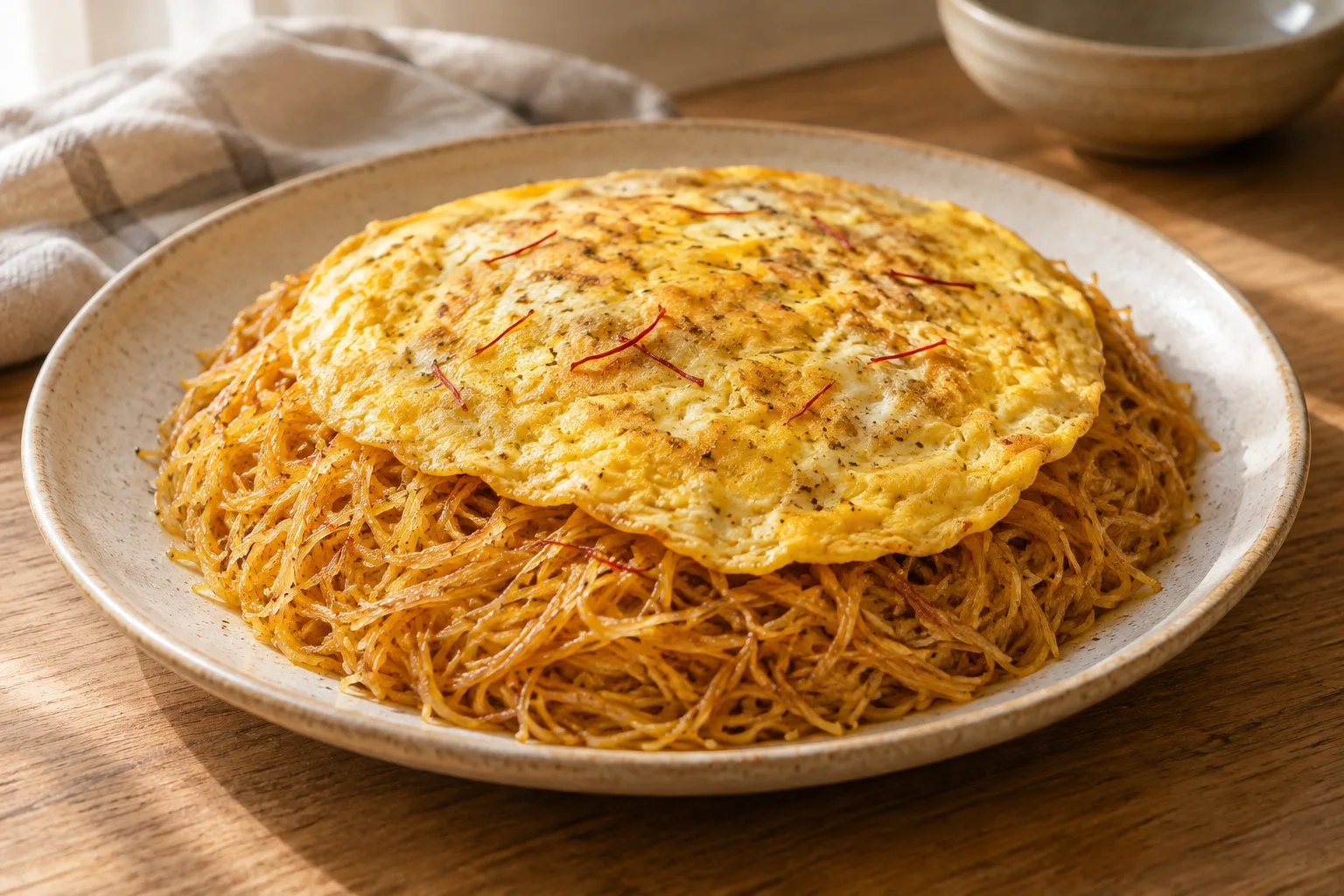
Wheat vermicelli is a long, fine pasta, thinner than spaghetti. The name vermicelli is also used for strands made from other ingredients, including rice and soy starch, so the name alone does not identify what is in the package. Check the ingredients and preparation directions to confirm that it is wheat pasta. Some wheat vermicelli is made with durum wheat. Its flavor is generally mild, making it a useful base for broth, vegetables, proteins and sauces. This profile covers the wheat variety only, not rice or soy vermicelli, which are different products even when their strands look similar.
When to use it
Choose wheat vermicelli when you want fine, elongated pasta for soup, a stir-fry or a sauced noodle dish. Its slender shape is easy to distribute among other ingredients and gives a different result from thicker pasta. It can be paired with vegetables, mushrooms, meat or seafood. Check the package before buying: rice vermicelli and other similar-looking noodles are not the same ingredient and may need different preparation. If a recipe specifically calls for rice or soy noodles, do not assume that wheat vermicelli will behave or taste the same.
How to use it
First check that the package identifies the product as wheat pasta, then follow its cooking directions. Vermicelli can be made from different ingredients, so there is no single cooking time or method that applies to every product. If the label instructs you to boil it, cook it as directed and avoid extending the cooking unnecessarily; fine strands can lose their firmness when overcooked. For soup, add or prepare the strands as the package directs and serve when ready. For a stir-fry, prepare the other ingredients first, cook or soak the pasta as directed, then combine it near the end so the sauce coats the strands. Pair it with vegetables, mushrooms, meat or seafood and season to taste.
Flavour and texture
Wheat vermicelli has a mild flavor that lets broth, seasonings and accompanying ingredients take the lead. The strands are long and very fine, like filaments, and are thinner than spaghetti. The finished texture depends on the product and how it is cooked, so use the package directions to avoid making it too soft. Do not confuse it with rice or soy vermicelli: they share a name and a fine shape, but are made from different ingredients.
How to choose it
Read the ingredient list and look for wheat to confirm that you are buying the intended variety; vermicelli can also refer to rice or soy-starch noodles. Check the cooking and storage directions on the package as well, since instructions can vary between products. If you need a particular wheat pasta, choose a package that identifies it clearly rather than relying on the strands' appearance alone.
Storage
Store the product according to the directions on its package, which apply to that specific presentation. Check whether it gives instructions for refrigeration, including after opening, and follow any date or storage guidance shown on the label. Vermicelli covers products made from different ingredients and sold in different forms, so do not assume that every variety has the same storage needs.
Substitutions
Another fine wheat noodle can serve a similar purpose, although its thickness and cooking behavior may differ. Rice vermicelli can be an alternative if the recipe allows a different grain, but it is not identical and may change the texture and handling. Check the alternative's ingredients and directions, and adjust the preparation to its package.
Common mistakes
A common mistake is assuming that all vermicelli is wheat-based; rice and soy-starch versions also exist. Another is applying the directions for one product to a different type, or cooking the strands longer than the package instructs. Check the ingredients and method before starting, then mix the pasta gently with the sauce to help it keep its shape.
Safety and allergens
Contains wheat and gluten. If you need to avoid these ingredients, check the label and do not treat wheat vermicelli as interchangeable with rice noodles. Follow the package directions for preparation and storage.
Culinary uses
- Base de sopas y platos de fideos
- Ingrediente para salteados y ensaladas de fideos
Recommended techniques
- Cocer en agua siguiendo las instrucciones del envase
- Añadir a sopas o mezclar con ingredientes salteados
Pairs well with
- Verduras y setas
- Marisco, carne, hierbas y salsas saladas o agridulces
Frequently asked questions
Is wheat vermicelli the same as rice vermicelli?
No. They share a fine, elongated shape, but wheat and rice vermicelli are made from different ingredients. Check the package ingredients.
How should I cook wheat vermicelli?
The method depends on the product. Follow its package directions rather than automatically using instructions for another kind of vermicelli.
What dishes can use wheat vermicelli?
It can be used in soups and stir-fries, or paired with vegetables, mushrooms, meat, seafood and sauces. Choose the variety specified by the recipe.
Sources and review
Automatically researched, cross-checked and validated content. Sources consulted:
- ¿Por qué la muerte es origen de miedos y tabúes? doi.org
- Pasta - Wikipedia, la enciclopedia libre es.wikipedia.org
- Historia de la gastronomía - Wikipedia, la enciclopedia libre es.wikipedia.org
- Qué es (y qué no es) la estadística, usos y abusos de una disciplina clave en la vida de los países y las personas | Estudios económicos doi.org
- Vermicelli | Gastronomía & Cía gastronomiaycia.com
- Vermicelli: propiedades y beneficios en la cocina de los fideos asiáticos ideales para hacer platos de pasta más ligeros directoalpaladar.com
- Tanzania Food Composition Tables | The Nutrition Source nutritionsource.hsph.harvard.edu
- Vermicelli: la mejor opción para cocina asiática - Conzazoni google.com
- Vermicelli: propiedades y beneficios en la cocina de los fideos asiáticos ideales para hacer platos de pasta más ligeros google.com