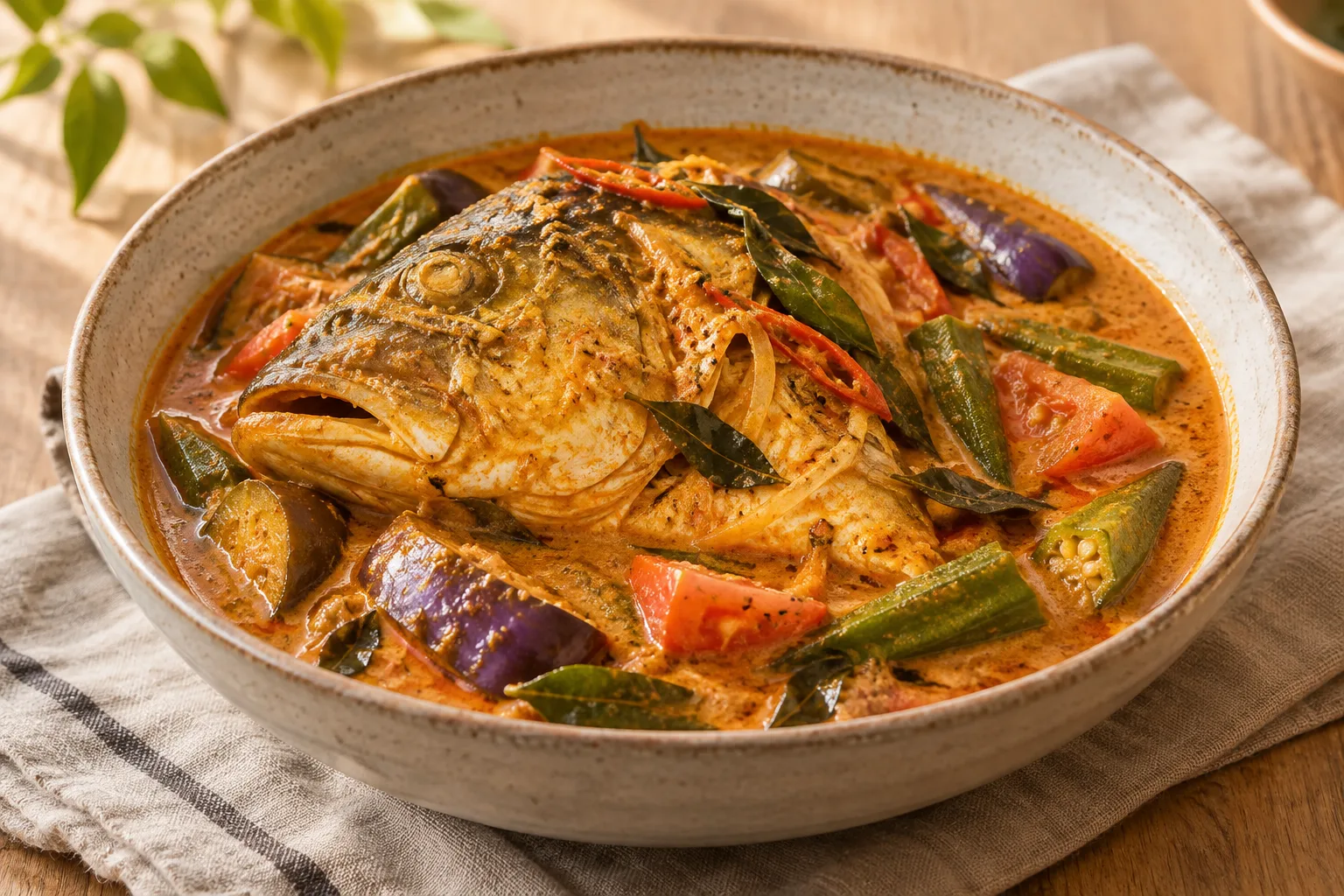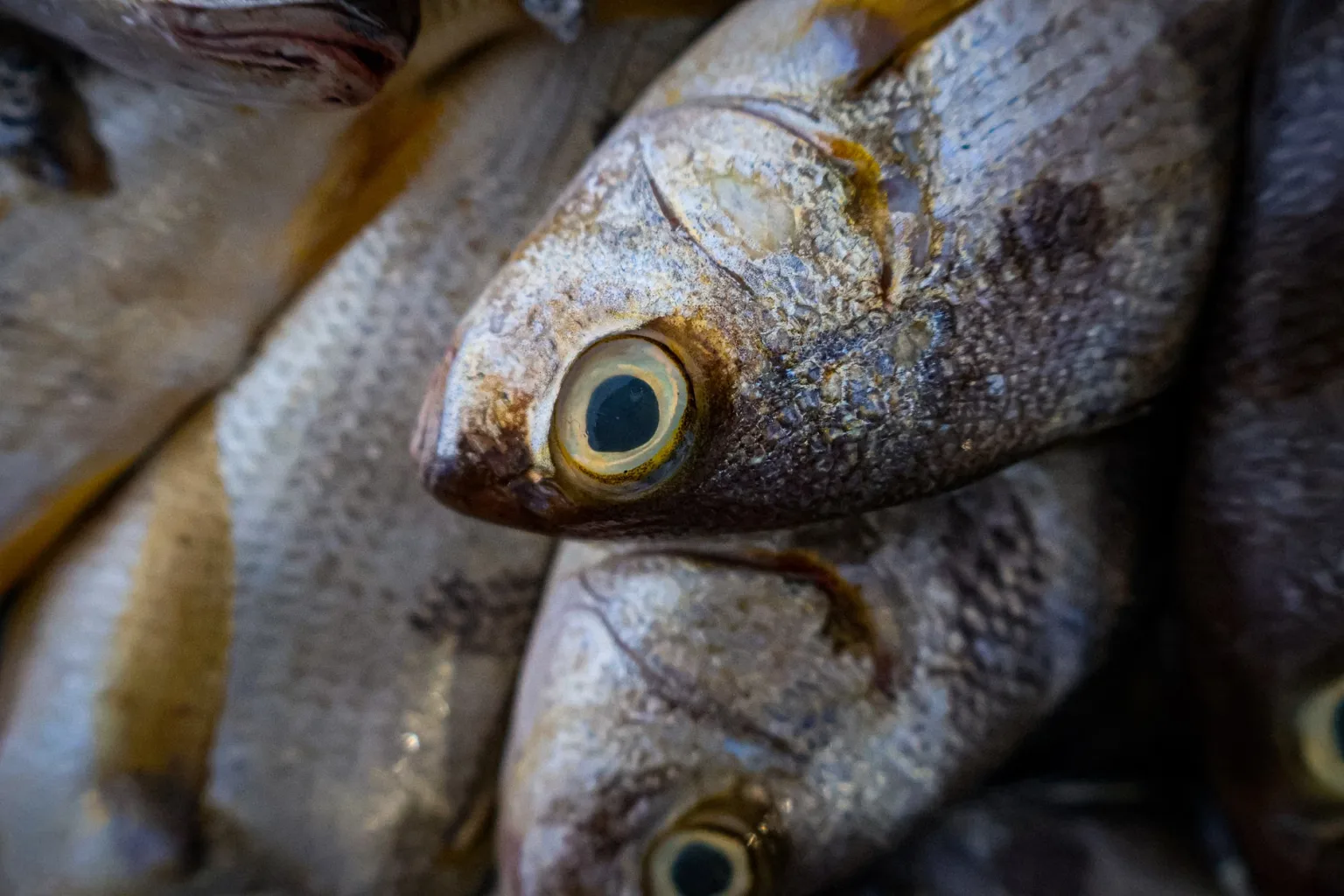
- Category
- Fish and seafood
- State
- Fresh
- Usual unit
- kg
What it is
“White fish with head” describes a whole fish sold with its head whose flesh is considered white; it does not identify a particular species. The label may cover fish with different shapes, sizes, and textures, so there is no single cooking method that suits every example. White fish is generally subtle in flavour and less oily than fish such as salmon or mackerel. Some kinds are commonly cooked whole in the oven; more delicate fish may suit gentler methods. Ask which species you are buying and how large it is before deciding how to cook it. The head is part of the presentation, not a reliable guide to species or cooking time.
When to use it
Choose it when you want to serve a whole fish, make the fish the focus of a meal, or use it in a soup or stew. The head contributes to the whole-fish presentation and may be used in preparations with broth, but this broad description does not establish the species, size, or firmness. Confirm the fish’s identity and texture before choosing between baking, steaming, pan-cooking, or grilling. If the species is unknown, do not rely on a generic cooking time.
How to use it
First confirm the species, size, and whether the fish has been cleaned; the general name does not tell you these details. Baking is a practical option for a whole fish, while steaming may suit delicate white fish. Pan-cooking is especially useful for delicate fillets, so do not assume a whole fish with its head cooks in the same way. Grilling is better suited to fish firm enough to hold its shape. Pair it with lemon, herbs such as dill or rosemary, capers, or white wine. Match the method to the actual fish and follow the seller’s or package’s instructions.
Flavour and texture
White fish is often mild in flavour with pale flesh, but texture varies by species and cut: it may be delicate and flaky or relatively firm. Whole white fish with the head has no single defining texture or taste. Citrus and herbs can complement its flavour without overwhelming it; choose seasonings to suit the particular fish.
How to choose it
Ask for the species name and whether the fish has been gutted and cleaned; the broad label does not answer either question. Check the size and ask the seller which cooking method suits that particular fish. Choose a seller who can explain the product’s handling and follow any package information. Do not judge freshness from the general category or from the fact that the fish is sold whole alone.
Storage
This broad name is not enough to give a reliable storage period: species, handling, and packaging can affect the instructions. Follow the storage directions from the seller and on the package, and consult applicable official food-safety guidance. If the directions are unclear, ask the seller before storing or eating it; do not rely on an invented shelf life for fish whose species and handling history are unknown.
Substitutions
If this fish is unavailable, substitute another mild white fish such as cod, haddock, hake, or sole. The swap will not be exact: firmness, size, and shape affect cooking. Choose an alternative with a similar size and texture, then adjust the method; do not automatically transfer the cooking time from one species to another.
Common mistakes
A common mistake is treating every white fish as though it were the same species. Do not assume that a whole fish cooks like a fillet, or that every white fish is firm enough for grilling. Identify the fish and adapt the method, cut, and cooking time to that particular piece.
Safety and allergens
The species and handling history are unspecified. Do not assume the fish is suitable for eating raw; follow the seller’s and package’s instructions and official food-safety guidance. If you are unsure how it has been handled or stored, ask the seller before eating it.
Culinary uses
- main course
- ingredient for soups and stews
- whole fish presentation
Recommended techniques
- baking
- pan-cooking
- steaming
- grilling when the fish is firm enough
Pairs well with
- lemon and other citrus
- dill or rosemary
- capers and pickles
- white wine
Frequently asked questions
Is “white fish with head” a specific species?
No. It is a broad description of a whole white fish sold with its head. Ask for the species before choosing a preparation.
Can I bake it?
Baking is an option for whole fish, but the method and cooking time depend on the species and size.
What can I use instead?
Try another mild white fish, such as cod, haddock, hake, or sole, and adapt the cooking method to its firmness.
Sources and review
Automatically researched, cross-checked and validated content. Sources consulted:
- Client Challenge doi.org
- Gastronomía del Perú - Wikipedia, la enciclopedia libre es.wikipedia.org
- Gastronomía de la provincia de Valencia - Wikipedia, la enciclopedia libre es.wikipedia.org
- Agencia Española de Seguridad Alimentaria y Nutrición aesan.gob.es
- Pescado blanco: tipos y cómo cocinarlos | Fine Dining Lovers finedininglovers.es
- Formas de cocinar pescado | Peix a Casa peixacasa.cat