- Category
- Herbs and spices
- State
- Dry
- Usual unit
- teaspoon
What it is
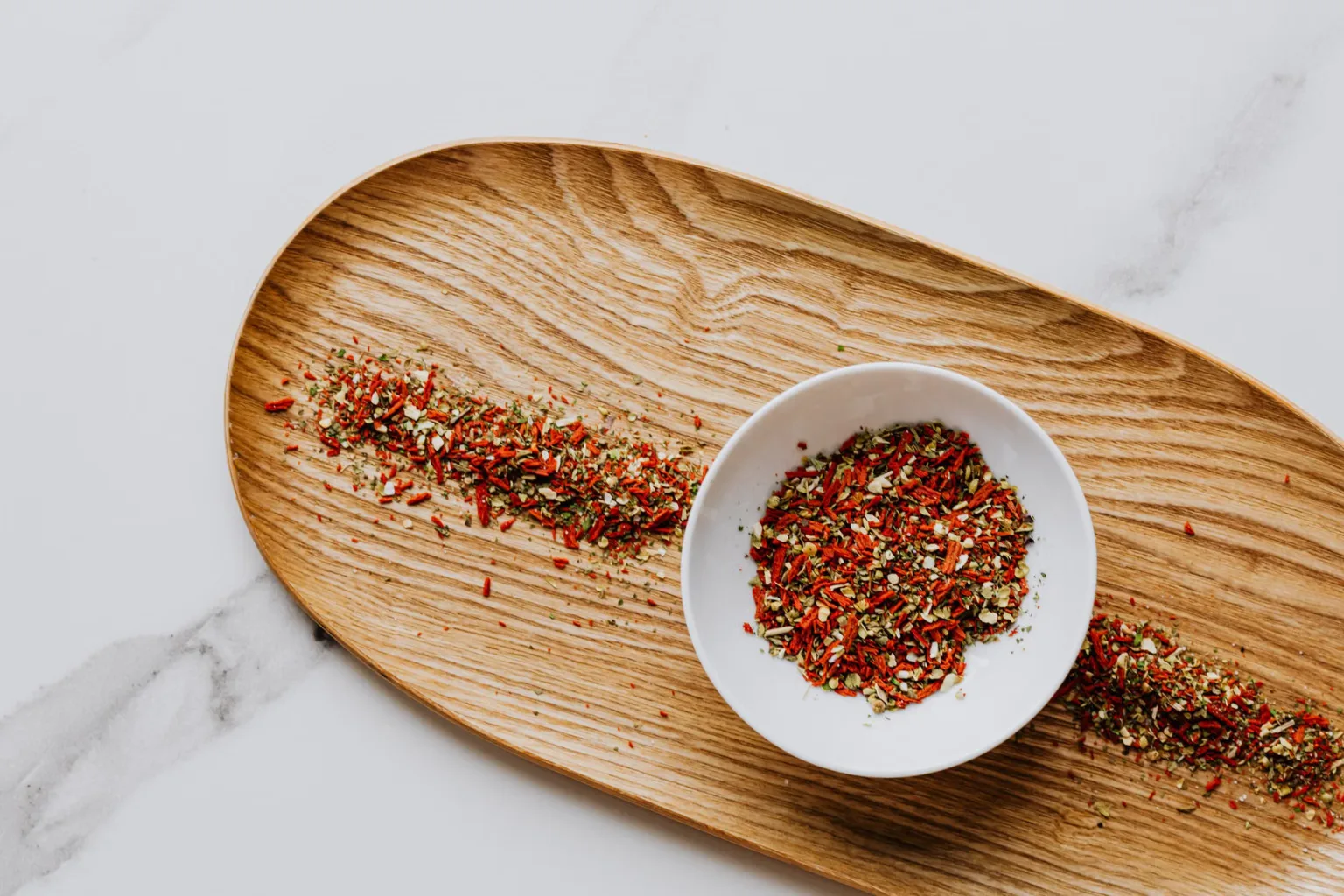
Za’atar is a name used for both certain aromatic herbs and a seasoning blend. This profile refers to the dry blend sold as a condiment. It commonly includes herbs such as thyme, oregano, or marjoram, together with sumac and sesame seeds; some versions also contain salt or other spices. There is no single fixed recipe: ingredients and proportions vary among regions, families, and makers. As a result, blends can differ in color, tanginess, herbal intensity, saltiness, and texture. Read the ingredient list to find out what a particular product contains rather than assuming every za’atar has exactly the same ingredients.
When to use it
Use za’atar when you want to add herbal, toasted, and gently tangy character to a dish in one step. It is especially well suited to flatbread with olive oil, as a finishing sprinkle on hummus or labneh, and for seasoning vegetables before or after cooking. It can also bring aroma to salads, rice, marinades, and meat or vegetable dishes. Some blends contain salt and their intensity varies, so taste the blend before adding more salt. Add it near the end when you want its aroma and texture to stand out; add it earlier when you want it to become more integrated into the dish.
How to use it
Sprinkle za’atar directly over bread, salads, hummus, labneh, or vegetables as a finishing seasoning. For a simple paste, stir it into olive oil and spread it over flatbread before baking; alternatively, serve the oil and blend separately for dipping bread. Add za’atar to marinades for meat or vegetables, or mix it with oil as a dressing. For roasted vegetables, use it before cooking or scatter it on just before serving. It also works over rice and other dishes that benefit from an herbal, tangy contrast. Start with a small amount, taste, and adjust: the proportions of herbs, sumac, sesame, and salt differ from one blend to another.
Flavour and texture
The usual profile brings together aromatic herbs, sumac’s fruity or citrus-like tang, and toasted sesame notes. A blend can taste salty if salt is included in its formula. Sesame adds small crunchy pieces, while dried herbs give the mixture a loose, granular texture. Neither intensity nor balance is fixed; both depend on the ingredients and their proportions.
How to choose it
Compare ingredient lists: za’atar blends may differ in the herbs used and in whether they contain sumac, sesame, salt, or other spices. Check the package if you need to know whether sesame is present or want to monitor salt. Color and flavor balance can also vary between products, so choose a blend suited to the way you plan to use it and follow its product information.
Storage
Check and follow the storage directions on the package, since composition and packaging can differ between products. Close the container securely after each use and avoid leaving the blend exposed to moisture. If the maker provides different instructions, follow those instead. Check the product label again after opening.
Substitutions
There is no exact substitute because za’atar blends can use different herbs and proportions. To approximate its profile, combine dried thyme and oregano with sumac and sesame, if available. Adjust gradually: without sumac, some characteristic tang is missing; without sesame, the toasted notes and texture are reduced. The result will be similar, not identical.
Common mistakes
Do not assume every blend follows the same recipe or automatically add salt, since some products already contain it. Avoid using a large amount before tasting: herbal intensity and sumac tang vary by product. If sesame is a concern, do not rely on the name alone; check the package ingredients.
Safety and allergens
Many za’atar blends contain sesame, but formulas vary. If you need to avoid sesame, check the ingredient list and allergen information on the package.
Culinary uses
- condimento
- acabado aromático
- mezcla para untar o mojar con aceite
Recommended techniques
- espolvorear antes o después de cocinar
- mezclar con aceite de oliva para formar una pasta
- incorporar a marinadas y aliños
Pairs well with
- pan plano y aceite de oliva
- hummus, labneh y baba ganoush
- verduras asadas
- ensaladas y arroz
Frequently asked questions
Is za’atar a single spice?
In common culinary use, za’atar sold as a seasoning is a dry blend. The name can also refer to certain herbs, so check the particular product.
What ingredients are in za’atar?
It commonly combines herbs such as thyme, oregano, or marjoram with sumac and sesame. Some blends include salt or other spices; there is no single fixed formula.
How do you use za’atar with bread?
Mix it with olive oil and spread the paste over flatbread before baking, or serve za’atar alongside olive oil for dipping bread.
Sources and review
Automatically researched, cross-checked and validated content. Sources consulted:
- Client Challenge doi.org
- USDA FoodData Central libguides.marist.edu
- Food and Cuisine - Palestine - LibGuides at Skyline College guides.skylinecollege.edu
- A Recipe for Understanding - CMU Ambassadors - Carnegie Mellon University cmu.edu
- Zaatar: qué es, ingredientes, sabor y cómo utilizarlo munozypujante.com
- What is Za’atar Seasoning? | Institute of Culinary Education ice.edu
- What Is Za'atar Spice? A Brief Guide & Recipe - Escoffier escoffier.edu
- Virtual Cooking with Alumni Chefs - Punahou School bulletin.punahou.edu
- Zaatar: la mezcla sagrada del Levante | La Especiera laespeciera.es
- Zaatar, la próxima especia de moda que tienes que probar lavanguardia.com
- Zaʿatar - Wikipedia, la enciclopedia libre es.wikipedia.org
- Zaatar - Sátar - Zatar - El foro del pan elforodelpan.com
- ¿Cuáles son los beneficios del zaatar? - Blog de La Parada de las Especias comprarespecias.net