- Category
- Nuts and seeds
- State
- Dry
- Usual unit
- g
What it is
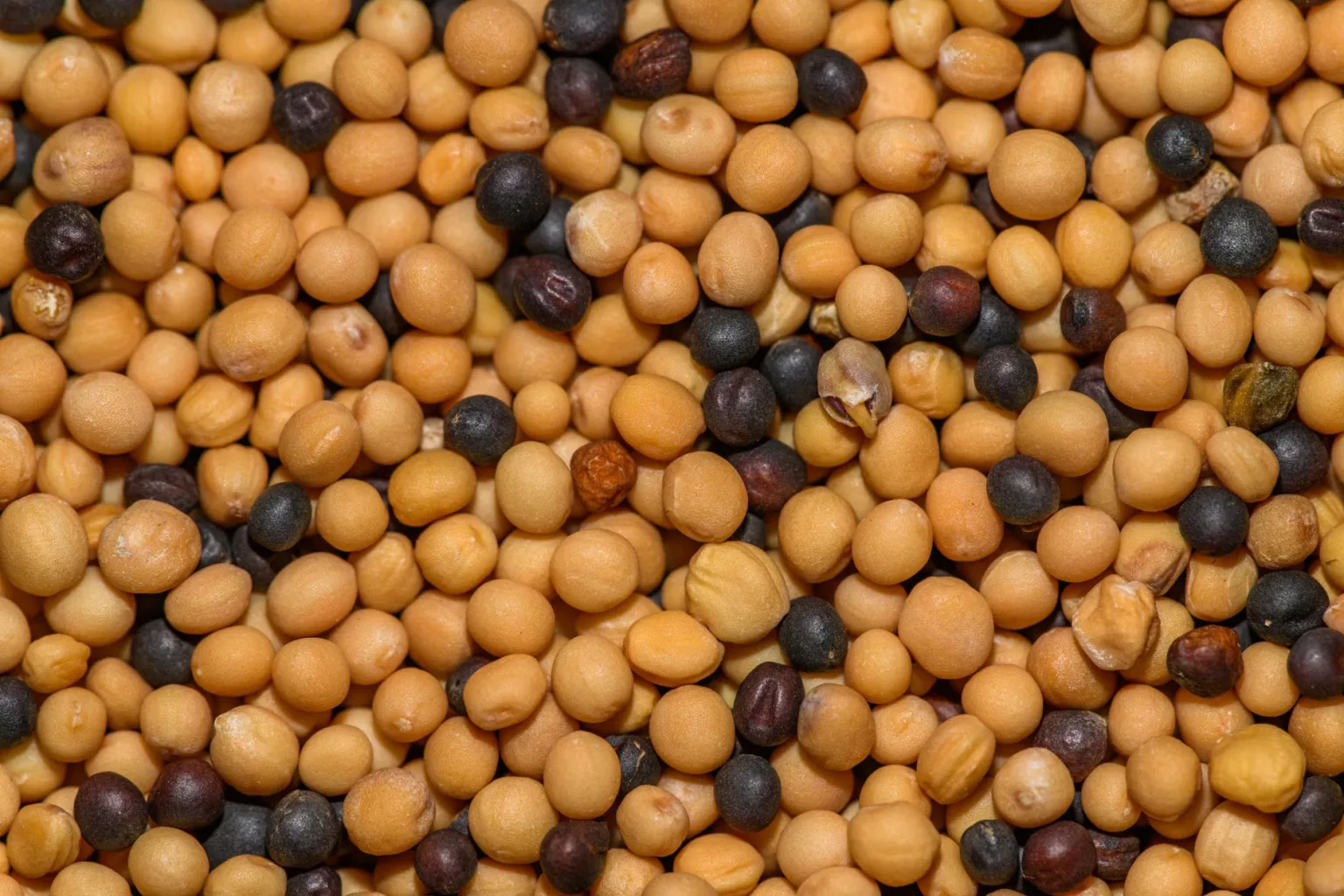
Zgougou is the name used for the dark seeds of the Aleppo pine in Tunisian cooking. They are not the pale pine nuts commonly used in other dishes: assida zgougou is made from these ground seeds, and the seeds give the dessert its dark colour. In the preparation described, the seeds are cleaned and gently toasted, then ground finely, mixed with water and strained repeatedly to remove hard pieces. The resulting liquid is thickened with wheat flour or starch and served as a sweet cream. Zgougou refers to the ingredient, not to a spice blend or a nut that can be exchanged without changing the dish.
When to use it
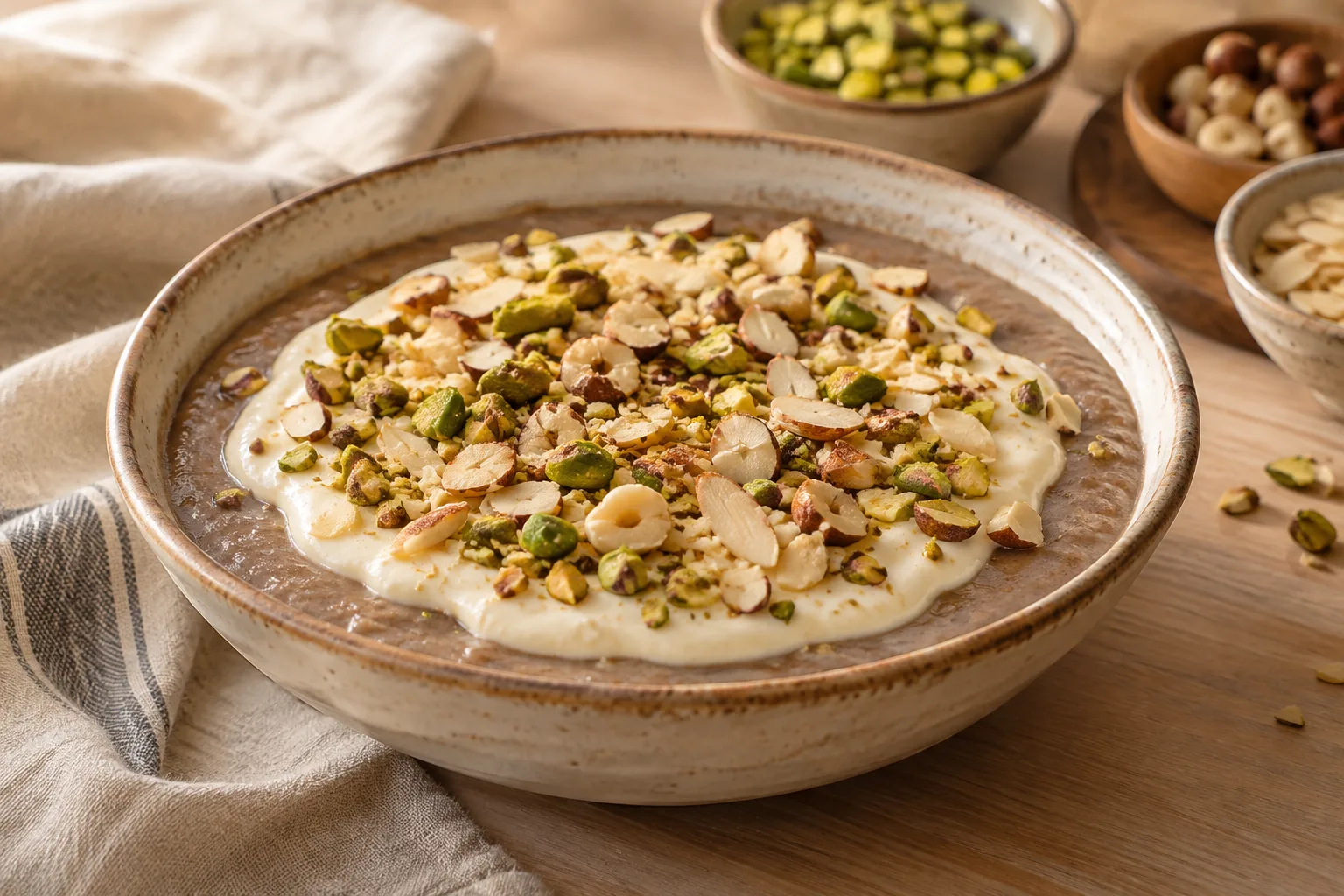
Use zgougou when making assida zgougou, the Tunisian dessert especially associated with the Mawlid celebration. The described preparation turns the seeds into a dark, thick cream served in bowls, often with a pale topping and nuts. The seeds are also mentioned for use in dishes, salads and cakes, although the available evidence does not give detailed recipes for those uses. If a recipe depends on their distinctive flavour and colour, remember that other pine nuts are not the same ingredient.
How to use it
For assida, sort and clean the seeds, rinse them and toast them gently; then grind them very finely. Mix them with water and let them stand so their flavour can be extracted. Strain the liquid several times through a fine sieve, removing hard seed particles. Add wheat flour or starch and cook the mixture gently, stirring continuously until it thickens. Divide the cream among serving bowls and let it cool. One described version has a separate pale topping made with milk, sugar, starch and egg yolks, and is finished with nuts; those topping ingredients are not part of the zgougou seeds themselves.
Flavour and texture
In assida, ground zgougou makes a thick cream with a deep brown colour. A reported tasting describes the flavour as slightly nut-like; an orange-blossom-scented pale layer and nuts on top add contrast. The final character depends on the recipe and how the seeds are processed.
How to choose it
Look for a product explicitly labelled zgougou or Aleppo pine seeds so it is not confused with the pale pine nuts commonly used in cooking. The available evidence does not describe reliable freshness signs, commercial grades or product variations. Check the product name and package directions, and ask the seller if the species or form is unclear.
Storage
The available sources do not establish a shelf life or specific storage conditions for zgougou seeds. Keep them in their packaging and follow the manufacturer’s or seller’s directions; do not infer a use-by period from advice about other seeds.
Substitutions
No substitute is established as an exact match for zgougou. Other pine nuts may work as a seed alternative in some preparations, but they are not the dark seeds of the Aleppo pine, so colour and flavour can change. Flour or starch can thicken a mixture but cannot replace the seeds’ flavour.
Common mistakes
Confusing zgougou with pale pine nuts can change the main ingredient and appearance of the dish. In the described method, skipping the straining step can leave hard particles in the cream; adding flour or starch does not replace the seeds’ flavour.
Safety and allergens
The available evidence provides no specific official safety warning for these seeds. Follow the package directions and, if a food allergy is relevant, confirm ingredients and possible cross-contact with the seller or preparer.
Culinary uses
- Base de la crema espesa assida zgougou
- Ingrediente aromático para postres tunecinos
Recommended techniques
- Limpiar y enjuagar antes de preparar
- Tostar suavemente, moler fino, remojar y colar para extraer el sabor
- Cocer la mezcla removiendo hasta que espese
Pairs well with
- Harina de trigo o almidón para espesar la preparación
- Leche, azúcar y una cobertura de frutos secos en la assida zgougou
Frequently asked questions
What are zgougou seeds?
They are dark seeds from the Aleppo pine, used especially to make assida zgougou.
Are they the same as pale pine nuts?
No. The source distinguishes zgougou from the pale pine nuts commonly used in other dishes.
How are they used in assida?
They are cleaned, toasted, ground, soaked and strained; the extracted liquid is then thickened with wheat flour or starch.
What gives assida its dark colour?
The source says the dark colour comes from the ground zgougou seeds.
Sources and review
Automatically researched, cross-checked and validated content. Sources consulted:
- ¿Por qué la muerte es origen de miedos y tabúes? doi.org
- Usos de las semillas en la cocina | ITAC Profesional itac-professional.com
- Semillas de nigella, ajenuz o comino negro: ¿qué es y cómo usar esta especia en la cocina? directoalpaladar.com
- ASSIDA ZGOUGOU | un grano de sal ungranodesal.wordpress.com
- Assidat Zgougou: origen, ingredientes y alérgenos menuella.com
- Assidat zgougou: el postre cremoso tunecino | Comer viajando jidlonacestach.cz
- Las semillas en la alimentación - Ybarra en tu cocina ybarraentucocina.com
- - YouTube youtube.com
- MANUSCRIT ACCEPTAT diposit.ub.edu
- Floating Roots: Agnes Varda's Uncle Yanco repository.brynmawr.edu
- "الحمص والفلافل" أكلات شعبية رمضانية nn.najah.edu
- Semillas de sésamo o ajonjolí (Sesamum Indicum) | Gastronomía & Cía gastronomiaycia.com