- Category
- Sauces and condiments
- State
- Liquid
- Usual unit
- ml
What it is
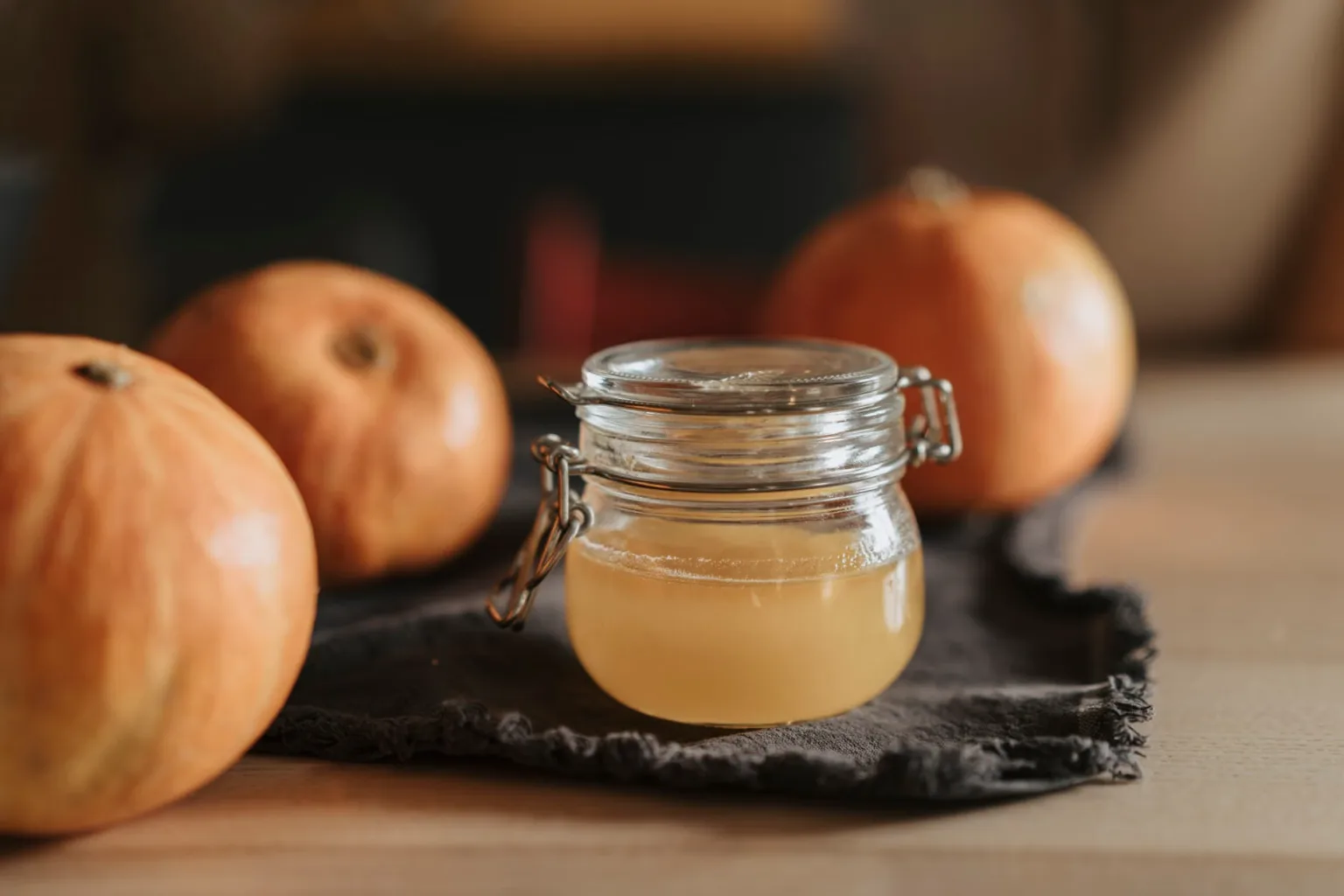
Apple cider vinegar, also called cider vinegar, is vinegar made from a fermented apple drink. In the first stage, yeast ferments sugars in the juice into alcohol; in the next, acetic acid bacteria turn that alcohol into acetic acid. The result is an acidic liquid whose aroma and flavor depend on the apples, fermentation and processing. It may be sold clear and filtered or unfiltered, with cloudiness or sediment. Some bottles contain a film or mass known as the “mother,” associated with fermentation. These differences in appearance do not, by themselves, mean that the product has spoiled. It is a condiment, not a fresh ingredient or a remedy: its everyday culinary role is to add acidity to food.
When to use it
Use it when a dish needs acidity to balance flavors, cut through richness or add contrast to sweet ingredients. It works in vinaigrettes, leafy or cabbage salads, simple sauces and marinades. It can also flavor quick-pickled vegetables kept in the refrigerator, but it is not a replacement for a tested shelf-stable canning recipe. Its fruity character pairs naturally with apple, onion and herbs. Since acidity and intensity vary by product, start with a small amount and taste before adding more. It does not need to be reserved for a particular season; it is sold bottled as a pantry condiment.
How to use it
For a vinaigrette, mix it first with salt, mustard or another seasoning, then whisk in the oil; taste and adjust the balance to suit the dish. In a sauce or stew, add a small splash near the end to brighten the flavor without letting the vinegar dominate. To deglaze, pour it into a pan after cooking, scrape up the browned juices and combine them with the rest of the sauce. For a marinade, mix it with oil, herbs and spices, and follow a suitable recipe for the food being prepared. It can also be used in quick pickles that are refrigerated. Do not use apple cider vinegar as a substitute for the acidity specified in a canning recipe; for room-temperature storage, use a tested recipe and the vinegar it calls for.
Flavour and texture
Its taste is tangy and sharp, with an aroma that may suggest apples or cider. The strength and nuances depend on how it was made and filtered, so some bottles are milder and others more pronounced. Filtered vinegar is usually clear; unfiltered vinegar may be cloudy and contain sediment or a “mother.” Appearance alone does not tell you exactly how strongly it will come through in a dish, so taste it and adjust the amount.
How to choose it
Choose a product labeled apple cider vinegar or cider vinegar and intended for food use. Check the label to distinguish plain vinegar from flavored or blended products, and to see whether it is filtered or pasteurized if that matters to you. Cloudiness or a “mother” can be a product characteristic, not an automatic sign of spoilage. For recipes that depend on a specific acidity, check the package information and follow a reliable recipe that specifies the vinegar to use.
Storage
Keep the bottle tightly closed in a cool, dark place away from heat and direct sunlight. Replace the cap after pouring and avoid introducing water or other ingredients into the bottle. Over time, some vinegars may change color, turn cloudy or develop sediment; these can be changes in appearance and do not necessarily mean spoilage. If the product has an unusual change that concerns you, do not use it. Follow the manufacturer’s storage directions as well.
Substitutions
White wine vinegar can replace it in dressings, sauces and marinades, though the fruity apple note will be less noticeable. Rice vinegar often gives a milder result; adjust the amount after tasting. Lemon juice can add acidity to dressings and some sauces, but changes the aroma and is not interchangeable in every preparation. For canning recipes, do not replace the specified vinegar with another acid unless a tested recipe allows it.
Common mistakes
Adding too much at once can make the dish taste overwhelmingly sour, so add it gradually and taste as you go. Do not assume all apple cider vinegars have the same flavor, appearance or intensity. Cloudiness or a “mother” may be a normal product feature and does not, by itself, prove spoilage. Do not use cleaning vinegar in food or improvise vinegar changes in canning recipes.
Safety and allergens
Use vinegar labeled for food use, not cleaning products. For shelf-stable home canning, follow a tested recipe and use the vinegar type and acidity it specifies; do not rely on an improvised substitution. Refrigerate quick-pickled foods and follow the recipe instructions.
Culinary uses
- Aporta acidez a aliños y salsas
- Equilibra sabores grasos, dulces o salados
- Ingrediente para marinados y encurtidos rápidos
Recommended techniques
- Batir en una vinagreta
- Desglasar una sartén
- Añadir al final de la cocción para ajustar la acidez
Pairs well with
- Aceite de oliva y mostaza
- Manzana, col y hojas verdes
- Cebolla, hierbas y verduras asadas
Frequently asked questions
What does “with the mother” mean?
It refers to a film or mass associated with fermentation that can occur in some unfiltered vinegars. Its presence alone does not mean the vinegar has spoiled.
Does apple cider vinegar need refrigeration?
A tightly closed bottle is generally stored in a cool, dark place. Follow any specific storage directions on the label.
Can I use it for home canning?
Only when a tested recipe specifies that vinegar type and acidity. Do not replace the stated vinegar or alter the recipe on your own.
Estimated nutrition
- Fat
- 0 g
- Saturates
- 0 g
- Carbohydrate
- 50 g
- Sugars
- 44.4 g
- Protein
- 0 g
- Salt
- 0.14 g
Sources and review
Automatically researched, cross-checked and validated content. Sources consulted:
- ¿Por qué la muerte es origen de miedos y tabúes? doi.org
- The Essential Glossary of Cooking Terms for the Culinary Arts - Escoffier escoffier.edu
- Vinagre de sidra de manzana - Wikipedia, la enciclopedia libre es.wikipedia.org
- Vinegar • The Nutrition Source nutritionsource.hsph.harvard.edu
- Salsa de Manzana y Durazno (Melocotón) (Spanish) - National Center for Home Food Preservation nchfp.uga.edu
- Nutrition After Your Transplant - Health Online healthonline.washington.edu
- Seasonal Produce Handouts | UNL Food | Nebraska food.unl.edu
- Home food preservation | Servicio de Extensión de OSU extension.oregonstate.edu
- Comité Científico aesan.gob.es
- Making Cider Vinegar at Home extension.psu.edu
- Vinegar Shelf Life and Safety | Iowa State University Extension and Outreach Wayne County extension.iastate.edu
- Vinagre de manzana: propiedades, usos en la cocina, beneficios y falsos mitos sobre su efecto en la salud directoalpaladar.com
- Vinagre de manzana: guía definitiva conocerlo y usarlo bien factorydiet.com
- Propiedades y usos del vinagre de manzana - Bio Eco Actual bioecoactual.com