- Category
- Fruit
- State
- Fresh
- Usual unit
- kg
What it is
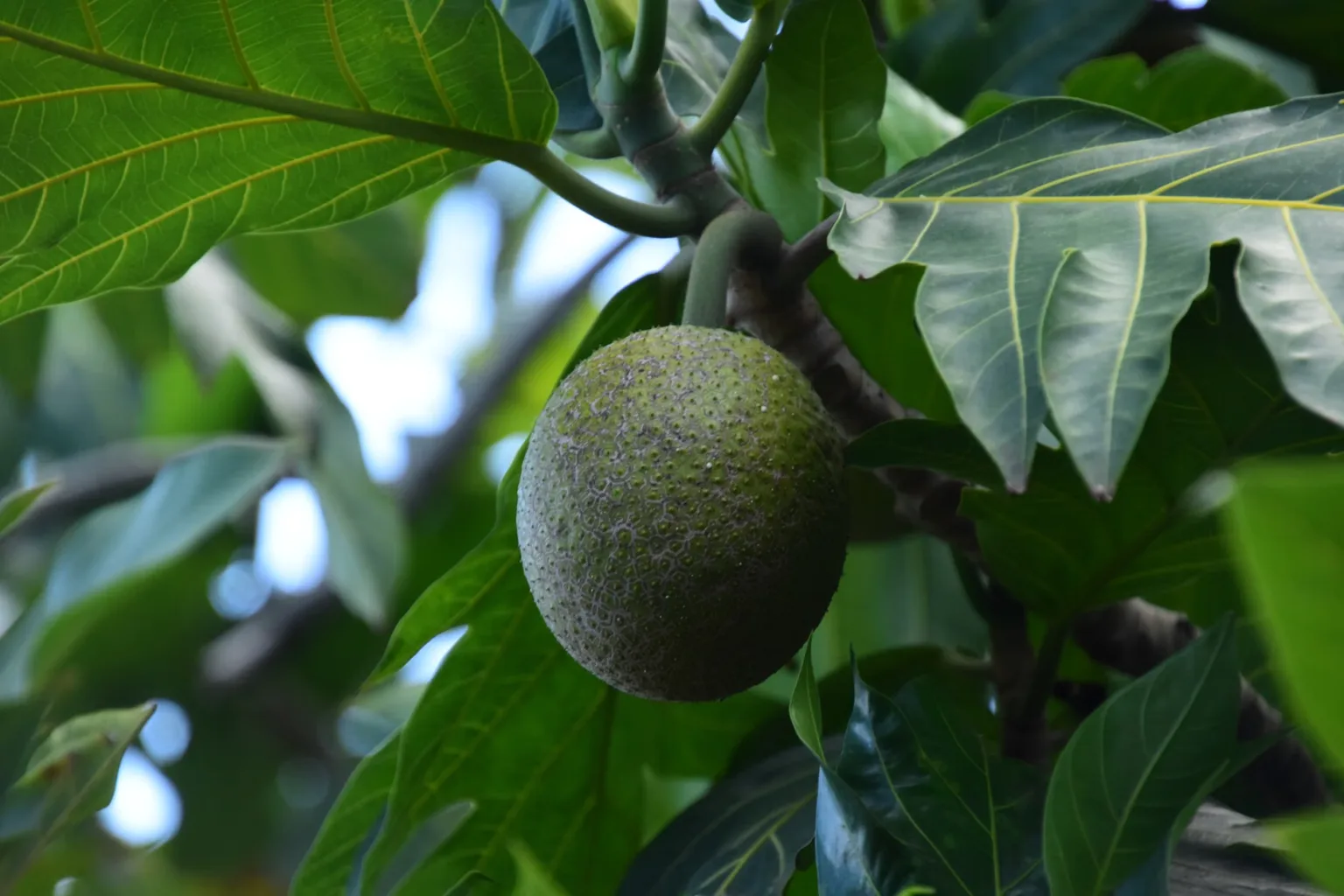
Breadfruit is the fruit of the tree Artocarpus altilis. It is used at different stages of ripeness, and ripeness affects both its flavor and its kitchen uses. When green, its flesh is generally pale, mild and fairly neutral; once cooked, it has a starchy texture that can be used in ways similar to potato. As it ripens, the flesh may become more yellow, sweet and creamy, making it suitable for sweet preparations too. Some varieties contain edible seeds, while others do not. Shape, size, color and seed presence can vary between varieties, so use the fruit’s condition and the seller’s guidance rather than relying on one fixed description.
When to use it
Choose green breadfruit when you want a mild, starchy base for a savory dish such as curry, a warm salad or a gratin. Its restrained flavor works well with aromatic ingredients and sauces. Riper fruit, with sweeter and creamier flesh, may be a better fit for purées, porridge, desserts or a snack. Ripeness matters: green fruit should not be expected to have the sweetness or texture of ripe fruit. Since size and other characteristics differ by variety, consider the dish you plan to make and inspect the fruit before buying it.
How to use it
Before preparing breadfruit, remove the skin and cut the fruit into manageable pieces; trim any hard parts you find, and remove seeds if present and not wanted. Green flesh can be boiled, roasted, baked or fried, then added to curries, gratins or salads. It can also be cooked and mashed for soups or porridge. For a sweet preparation, choose riper fruit and use its creamier flesh in purées or desserts. Adjust the cut and cooking method to the recipe, since fruit size and ripeness vary. Pair its mild flesh with onion, chili or curry spices; coconut milk is also used in curry preparations. If the fruit contains seeds, do not assume they are eaten raw: culinary descriptions use them cooked or roasted.
Flavour and texture
Green breadfruit has a mild, fairly neutral flavor and flesh that can be juicy and slightly fibrous before cooking. Once cooked, it becomes starchy and can be used much like potato. Ripe fruit may have yellower, sweeter and creamier flesh with a soft texture. These qualities depend on ripeness and variety, so the color and consistency are not always the same.
How to choose it
Look for fruit without visibly spoiled areas, and choose the ripeness that fits your recipe: green for mild savory dishes, or riper fruit for sweeter, creamier uses. Color, size and shape can differ between varieties, and some have seeds while others do not. If you are unsure about ripeness or intended use, ask the seller and follow the retailer’s guidance.
Storage
Storage advice can depend on ripeness and how the fruit is sold, so do not assume one universal storage period for whole breadfruit. Follow the seller’s or package instructions and check the fruit regularly. Once cut, refrigerate it in a clean, covered container within two hours and use it within three to four days. Discard parts showing clear signs of spoilage.
Substitutions
Green breadfruit can fill a role similar to potato in cooked curries, gratins or salads because of its mild, starchy character. Conversely, potato can replace it when a recipe needs a neutral-tasting cooked base. The result will not be identical: variety and ripeness affect both texture and sweetness.
Common mistakes
Do not assume all breadfruit tastes the same: green fruit is usually milder and starchier, while ripe fruit may be sweeter and creamier. Do not assume every variety contains seeds or that any seeds should be eaten raw. Avoid using fruit with visible spoilage.
Safety and allergens
Keep hands, utensils and work surfaces clean, and prevent cut fruit from contacting raw meat, poultry or fish. Refrigerate cut fruit in a clean, covered container within two hours and use it within three to four days. Follow package instructions where provided and discard spoiled portions.
Culinary uses
- Unripe fruit used as a mild, starchy, vegetable-like ingredient
- Ripe fruit used in sweet dishes, purées and snacks
- Cooked ingredient for curries, gratins, soups and salads
Recommended techniques
- Boiling
- Roasting or baking
- Frying
- Mashing or puréeing
Pairs well with
- Onion and chili
- Coconut milk and curry spices
- Beans or other legumes
Frequently asked questions
Can breadfruit be used green or ripe?
It can be used at different stages of ripeness. Green fruit is commonly suited to savory dishes, while riper, sweeter and creamier fruit can also be used in sweet preparations.
How can I cook breadfruit?
Green flesh can be boiled, roasted, baked or fried. It can also be mashed and used in curries, gratins, soups, porridge or salads.
Does every breadfruit have seeds?
No. Some varieties have seeds and others do not. Culinary descriptions use seeds when present cooked or roasted, rather than raw.
Estimated nutrition
- Fat
- 0.23 g
- Saturates
- 0.05 g
- Carbohydrate
- 27.1 g
- Sugars
- 11 g
- Fibre
- 4.9 g
- Protein
- 1.07 g
- Salt
- 0 g
Sources and review
Automatically researched, cross-checked and validated content. Sources consulted:
- En el etiquetado alimentario hay algunas menciones que son obligatorias eletiquetadocuentamucho.aesan.gob.es
- Client Challenge doi.org
- The Essential Glossary of Cooking Terms for the Culinary Arts - Escoffier escoffier.edu
- John Worth Faculty Homepage - Spanish Florida - Culture - Recipes pages.uwf.edu
- Freezing fruits and vegetables | OSU Extension Service extension.oregonstate.edu
- Para la ciudadanía aesan.gob.es
- Food Preservation: Drying Fruits | NDSU Agriculture ndsu.edu
- Mariano Moreno Culinary Institute | EN mmci.edu
- Storing and Washing Fresh Fruits and Vegetables - Cooperative Extension: Food & Health - University of Maine Cooperative Extension extension.umaine.edu
- Cornell Cooperative Extension Home Food Preservation tompkins.cce.cornell.edu
- Artocarpus altilis - Wikipedia, la enciclopedia libre es.wikipedia.org
- Fruta del pan: guía de cultivo y cuidados (zonas 10-12) plotmygarden.com
- Fruta del pan, cruda (fruta del árbol del pan, fruta del pan | Fundación G+E diet-health.info