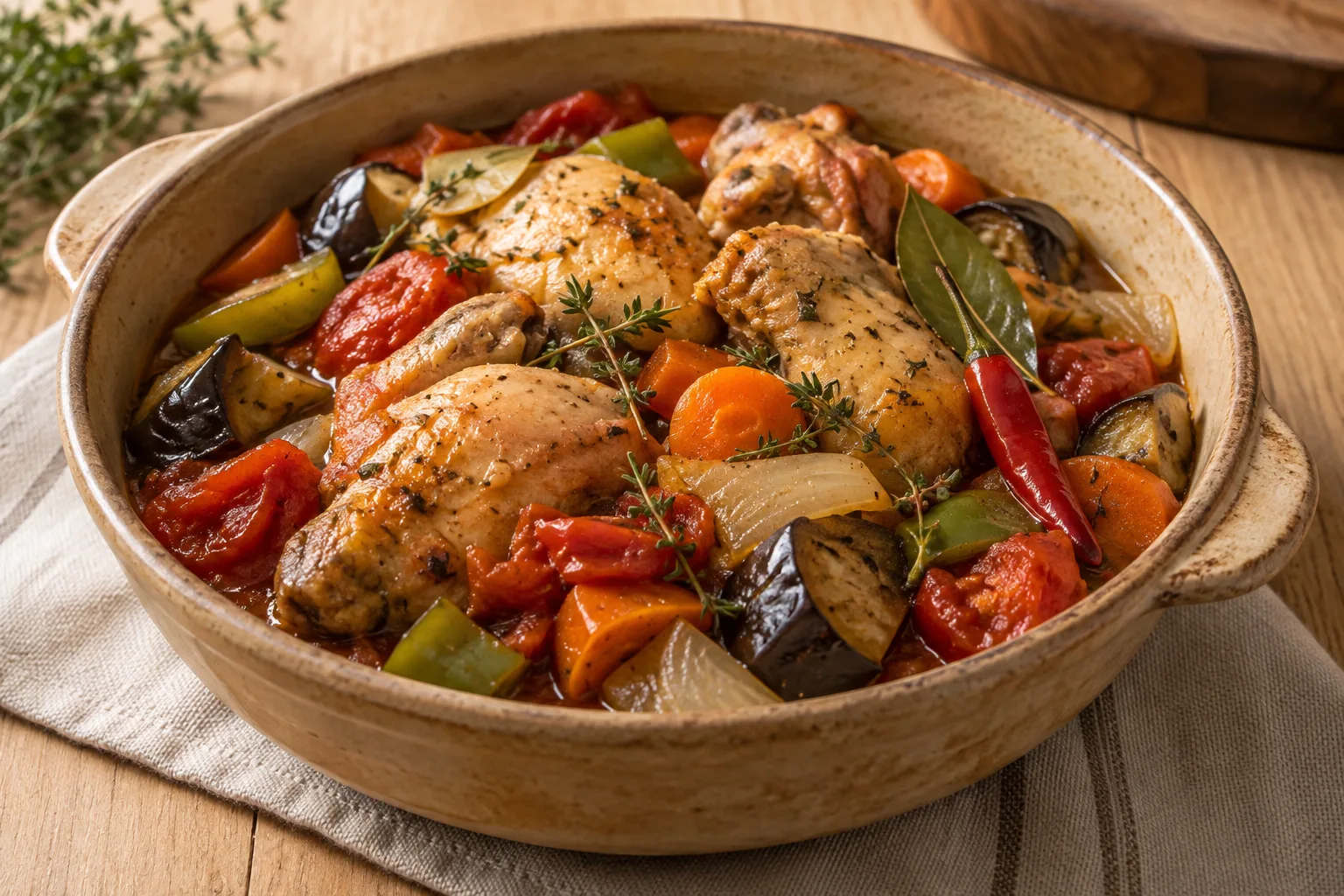
- Category
- Sauces and condiments
- State
- Dry
- Usual unit
- unit
What it is
A chicken bouillon cube is a compact, dry concentrated seasoning designed to dissolve and add flavor to a dish. Although it is often described as dehydrated broth, commercial products do not all have the same ingredients: they may combine salt, starches, fats, flavorings, extracts and varying amounts of chicken ingredients. A cube is therefore not necessarily equivalent to a portion of reduced homemade broth. The shape and size also depend on the product, and powdered versions are available. Check the package directions and ingredient list to find out what a particular product contains and how much liquid it is intended to make.
When to use it
Use a cube when you want a quick broth-like savory flavor in soup, stew, sauces, rice or pasta, or when a recipe calls for broth and making it from a cube is convenient. You can also add it directly to a dish that contains liquid, provided it dissolves thoroughly. Formulas and intensity vary by brand, so do not automatically add the same amount of salt you would use with unsalted broth. Taste the dish and adjust the seasoning at the end.
How to use it
To make broth, dissolve the cube in hot water using the proportions on the package; directions can differ between products. To season a dish, crumble it or dissolve it in a little hot liquid first, then mix thoroughly to avoid concentrated patches. You can also add it to soup, sauce or stew as it cooks, checking that it dissolves. When making rice or pasta, account for salt already present in the cube and other ingredients. Taste before adding extra salt and adjust at the end. Store any unused product according to the manufacturer's directions.
Flavour and texture
It generally adds an intense savory flavor associated with broth, but the exact profile depends on the manufacturer's recipe and added seasonings. Dry, a cube is usually compact and can be crumbled or dissolved; mixed with hot water, it makes a seasoned liquid. Saltiness and intensity are not consistent across products, so taste the broth before adding it to other ingredients.
How to choose it
Compare the ingredient list and preparation directions, not just the product name or advertised flavor. Products can differ in chicken content, salt, fats, flavorings and other ingredients. If you need to avoid an allergen, read the full label and package warnings: some formulations may contain wheat, egg, soy or celery. Choose a product whose ingredients and instructions suit your recipe.
Storage
Keep the cube in its packaging and follow the manufacturer's storage directions, protecting it from moisture. If the wrapper can be resealed, close it after each use; otherwise, keep remaining cubes in a clean, dry container. Check the date and storage conditions printed on the package. Do not assume that one product has the same shelf life as another brand or format.
Substitutions
Prepared chicken broth can replace a cube; adjust the recipe's other liquid to compensate. Another bouillon cube or broth powder can also work, but the flavor and salt level may change, so start cautiously and taste before seasoning further. Homemade broth is another option, though its intensity may differ. Do not replace a cube with an equal amount of salt: it adds flavor as well as saltiness.
Common mistakes
Do not assume all cubes have the same concentration, ingredients or salt level. Adding salt before tasting can make a dish too salty. Avoid dropping a whole cube into a thick preparation without checking that it dissolves, since concentrated patches may remain. A cube is not a direct one-for-one substitute for salt, and it should not be assumed allergen-free; check the package.
Safety and allergens
Check the label for ingredients, allergens and storage directions, especially when cooking for someone with an allergy. Keep the product dry and follow the manufacturer's instructions. Salt content varies, so taste the dish before adding more salt.
Culinary uses
- Quick broth base
- Seasoning for soups, sauces, rice and pasta
Recommended techniques
- Dissolve in hot water
- Crumble or dissolve into a simmering dish
Pairs well with
- Soups and stews
- Rice and pasta
- Sauces and braised dishes
Frequently asked questions
How do I make broth from a bouillon cube?
Dissolve it in hot water using the proportions stated on the package, which can vary by brand.
Can I add a cube straight to soup or sauce?
Yes. Crumble it or dissolve it in some of the liquid, mix well, and taste before adding more salt.
Do all chicken bouillon cubes have the same ingredients?
No. Ingredients vary by product. Check the ingredient list and allergen warnings on your package.
Estimated nutrition
- Fat
- 0 g
- Saturates
- 0 g
- Carbohydrate
- 25 g
- Sugars
- 25 g
- Fibre
- 0 g
- Protein
- 0 g
- Salt
- 57.5 g
Sources and review
Automatically researched, cross-checked and validated content. Sources consulted:
- ¿Por qué la muerte es origen de miedos y tabúes? doi.org
- Los alimentos como medicina: la dieta antiinflamatoria | Children's Hospital of Philadelphia chop.edu
- Sabores de nuestras tierras/recetas - 2024 | Agricultura y Recursos Naturales ucanr.edu
- Bilingual Budget-Friendly Hispanic Cookbook and ... scholarworks.lib.csusb.edu
- La diabetes y la alimentación: Cómo planificar y cocinar comidas sabrosas y saludables | CAES Field Report fieldreport.caes.uga.edu
- Vamos a Conservar Alimentos: Sopas extension.psu.edu
- Cubitos y polvos mágicos: así nació la comida instantánea | El Comidista | Gastronomía | EL PAÍS elpais.com
- Cubo de caldo - Wikipedia, la enciclopedia libre es.wikipedia.org
- Caldo de Pollo Casero (Consomé) | Video+Receta - Tia Clara tiaclara.com
- WINTER SQUASH - Extension St. Croix County stcroix.extension.wisc.edu
- Apples • The Nutrition Source nutritionsource.hsph.harvard.edu
- - YouTube youtube.com
- Prepara tus cubitos de caldo de pollo casero uvesa.es
- De qué están hechos los cubitos o pastillas de caldo concentrado y cuál es su principal inconveniente para nuestra salud directoalpaladar.com