- Category
- Meat
- State
- Fresh
- Usual unit
- unit
What it is
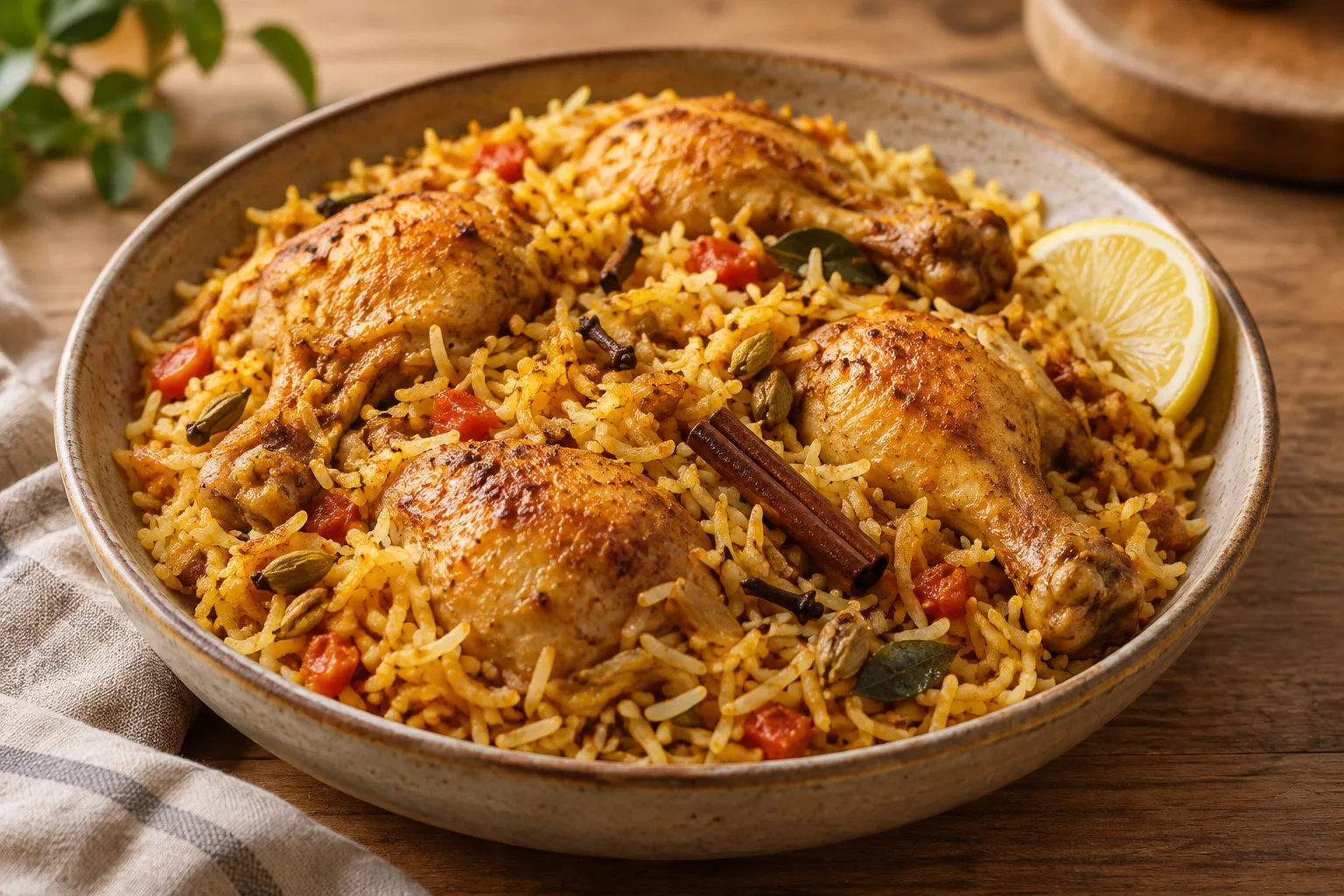
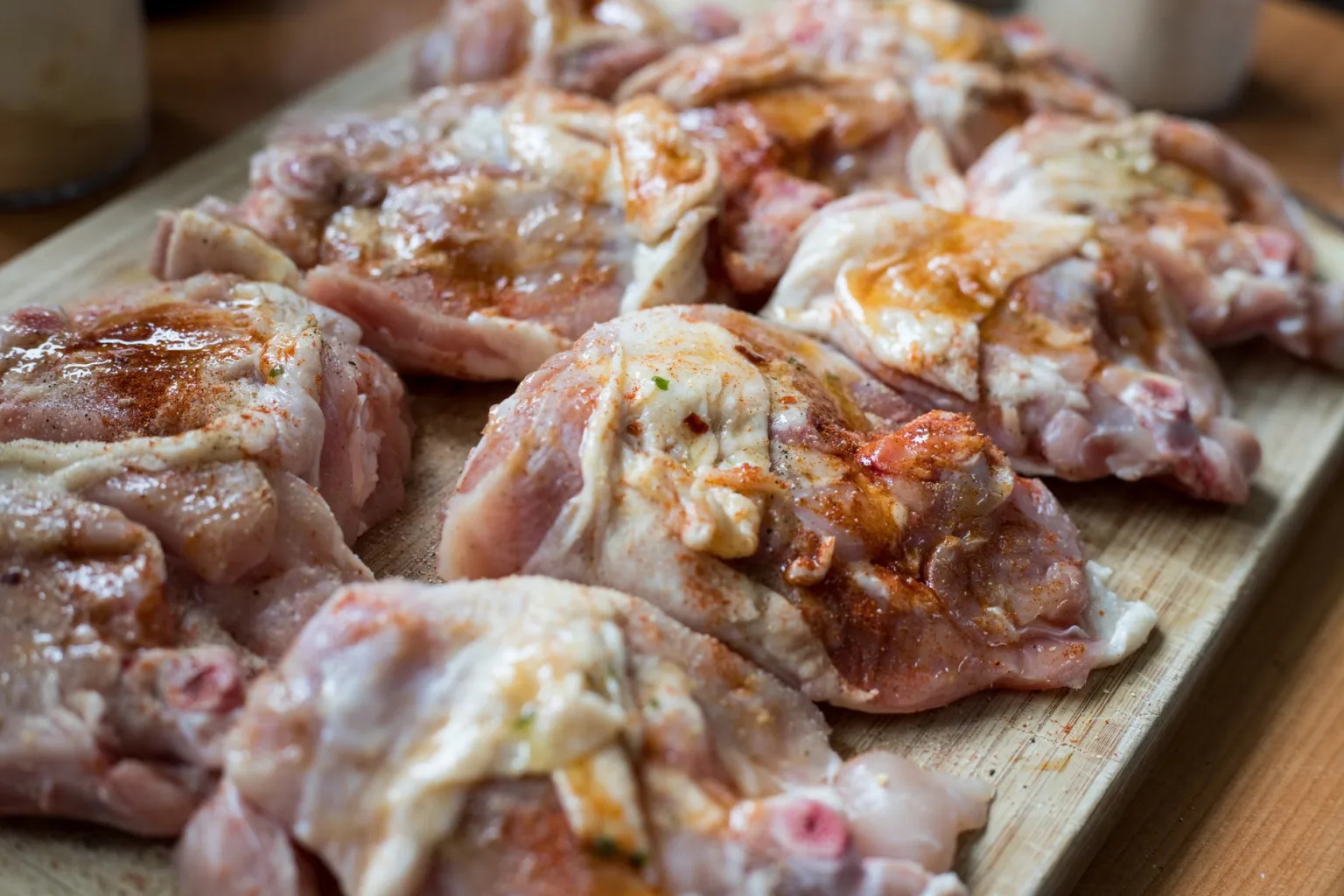
Chicken thighs and legs are cuts from the bird’s legs. In common usage, “thigh” often means the upper portion, while “drumstick” or lower leg refers to the lower portion, though names and butchering conventions vary by region. They may be sold whole or separated, bone-in or boneless, and with or without skin. The meat is commonly described as juicy and may contain more fat than some other chicken cuts. These pieces can be served as the main part of a meal or used in sauced dishes. Since cut, size and presentation vary, no single cooking method or duration applies to every piece and recipe.
When to use it
Choose thighs or legs when you want individual chicken portions for a main dish, or need chicken for a stew, sauced preparation or roast. Their versatility makes them suitable for oven cooking, frying and moist-cooking methods. They can work well in dishes that benefit from juicy meat, but check whether the recipe calls for thighs, drumsticks or both, and whether the pieces should be bone-in or boneless. Breast meat behaves differently, so swapping cuts may require adapting the preparation.
How to use it
Before cooking, identify the cut and check whether it includes skin or bone; those details affect preparation and serving. To roast, arrange the pieces in a suitable dish and season them as directed by the recipe; herbs, lemon or a sauce can accompany them. For a stew, cook the pieces with vegetables and liquid according to the dish’s instructions. They can also be fried when the recipe calls for it. Adapt the cooking process to the piece size, cut and recipe rather than assuming all pieces need the same time. Handle raw chicken carefully and follow package directions and official food-safety guidance where you live.
Flavour and texture
Thigh and leg meat is often valued for its juiciness and a more pronounced flavor than milder chicken cuts. It works with herbs, lemon and savory sauces. Skin, if present, and the bone affect both the eating experience and preparation, so identify the product before choosing a recipe. The final result depends on the cut and cooking method.
How to choose it
Select the cut your recipe calls for: thigh, drumstick or mixed pieces, bone-in or boneless, with skin or skinless. Check the package and its date, and buy the product within its stated period. Avoid open or damaged packaging, and keep raw poultry separate from ready-to-eat food during transport. Appearance alone cannot confirm that poultry is safe; follow the package directions and official local guidance.
Storage
Store the chicken according to the package directions and official local guidance for raw poultry. Keep it sealed and separate from ready-to-eat foods. If you will not use it within the stated period, follow the package instructions or official guidance where you live for freezing. Store cooked leftovers according to food-safety guidance in your area.
Substitutions
Chicken breast can replace thigh or leg in some dishes, but it is leaner and may need a different method or cooking duration to avoid drying out. Turkey thigh or leg is another poultry option, though its size and texture may differ. Adapt the recipe to the cut you have; no substitute behaves identically in every dish.
Common mistakes
A common mistake is treating thigh, drumstick and breast as interchangeable without adjusting the preparation. Do not assume every piece is the same size or includes skin or bone. Check the product and follow the recipe and package directions. Do not rely on exterior browning alone to decide that chicken is done; consult official food-safety guidance where you live.
Safety and allergens
Handle raw chicken carefully and follow the package directions and official local food-safety guidance for preparation and storage.
Culinary uses
- main-course protein
- ingredient for braises, stews and soups
Recommended techniques
- roasting
- braising or stewing
- frying
Pairs well with
- herbs and lemon
- vegetables
- savory sauces
Frequently asked questions
Are chicken thighs and legs the same cut?
Names vary by region. “Thigh” often means the upper part of the leg, while “drumstick” means the lower part; check the product description and the piece itself.
How can I cook chicken thighs or legs?
They can be roasted, fried or cooked in stews and other sauced dishes. Choose a method that matches the cut and the recipe.
Can I substitute breast for thigh?
Sometimes, but breast is leaner. Adapt the preparation rather than assuming it needs the same cooking process as a leg cut.
Estimated nutrition
- Fat
- 12.81 g
- Saturates
- 3.54 g
- Carbohydrate
- 0 g
- Sugars
- 0 g
- Fibre
- 0 g
- Protein
- 23.16 g
- Salt
- 0.85 g
Sources and review
Automatically researched, cross-checked and validated content. Sources consulted:
- ¿Por qué la muerte es origen de miedos y tabúes? doi.org
- Muslos de pollo - Gastronomía Vasca: Escuela de Hostelería Leioa gastronomiavasca.net
- Evaluación de la calidad y composición química de la carne ... scholar.uprm.edu
- actualización de la regla de ocha-ifá - OAKTrust oaktrust.library.tamu.edu
- Translating Eduardo del Campo's Capital Sur etd.ohiolink.edu
- "ALIGN=CENTER>LES TROIS MOUSQUETAIRES -- Los tres mosqueteros" people.duke.edu
- Las mejores recetas de muslos o jamoncitos de pollo al horno: fácil, jugoso y rápido directoalpaladar.com
- Pierna y Muslo de Pollo – Carnes Selectas Ali carnesselectasali.com.mx
- Pechuga vs Muslo: ¿Qué parte del pollo elegir según receta? – DSPC distribuidoracholula.com