- Category
- Vegetables
- State
- Fresh
- Usual unit
- unit
What it is
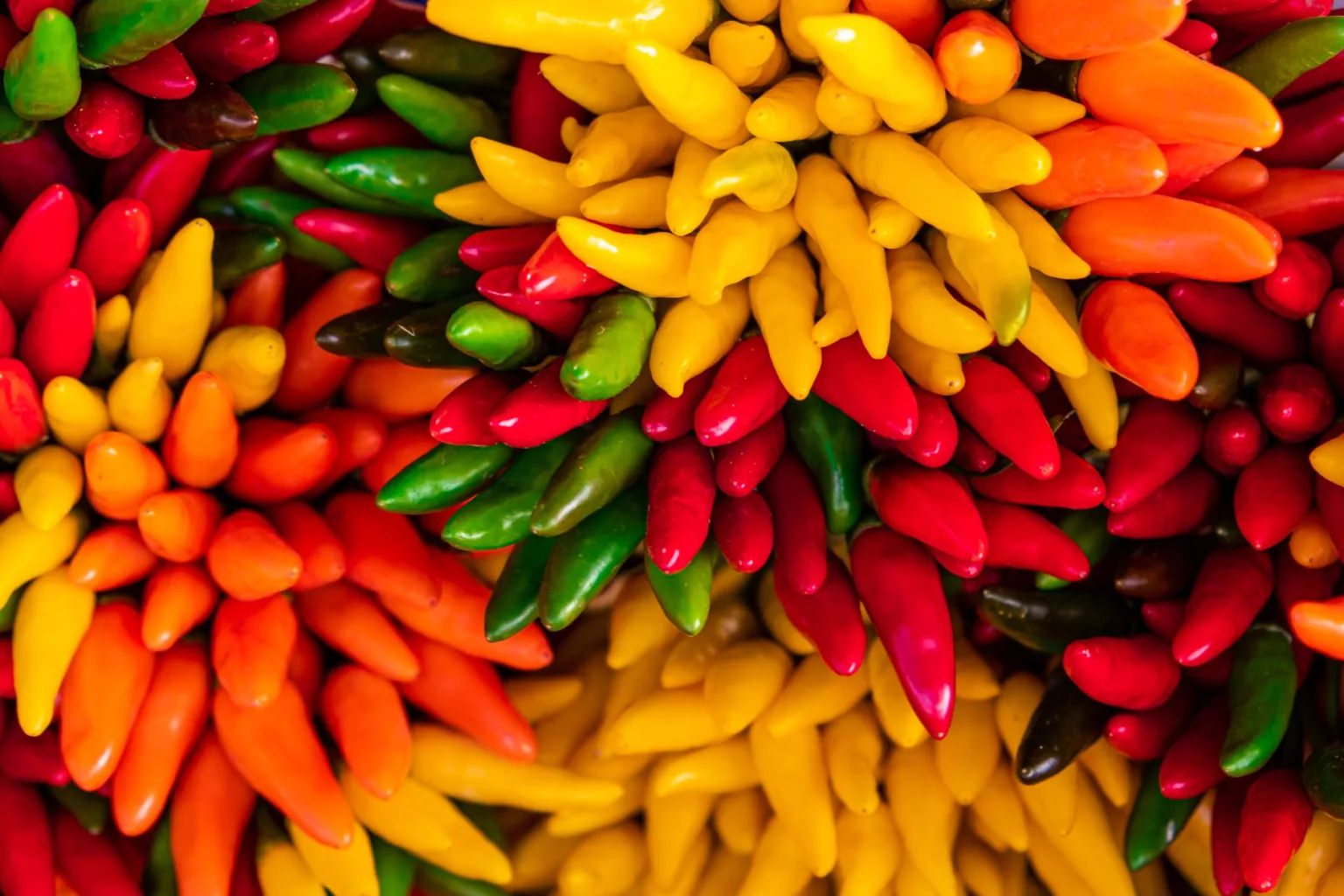
Chilli is the fruit of plants in the Capsicum genus, which belongs to the nightshade family. The name covers many varieties rather than one uniform ingredient: their size, shape, colour, flavour, and heat can differ. Chillies are sold fresh as well as dried or processed, and those forms are not automatically interchangeable in a recipe. They add flavour and heat to preparations such as sauces, moles, adobos, and stews. Some varieties have familiar, specific uses: poblano is often roasted and peeled, while jalapeño and serrano are used in fresh dishes and sauces. When shopping or cooking, check the variety and form instead of assuming that every chilli behaves alike. This helps you choose an ingredient suited to the preparation and avoid an unexpected change in heat or flavour.
When to use it
Use chilli when a dish would benefit from heat, flavour, or colour, and choose a variety that suits the preparation. Fresh chillies can be served raw or cooked: jalapeño is used in guacamole, while serrano appears in salsa verde and pico de gallo. Dried varieties such as guajillo are used in stews and adobos. The larger poblano can be roasted and peeled, then stuffed or added to dishes with cheese, cream, or potatoes. Heat varies between varieties, so do not assume that equal amounts of different chillies will produce the same result. When you are unfamiliar with a particular chilli, add a little first, taste the dish, and increase gradually. That approach gives you more control over the final balance.
How to use it
First identify whether the chilli is fresh, dried, or processed and, if possible, note its variety; the best way to use it depends on those details. Fresh chillies may be served raw or cooked by frying, roasting, or boiling. Serrano is used in salsa verde and pico de gallo, and jalapeño can be added to guacamole. Poblano is commonly roasted and peeled before it is incorporated, and it can also be used for stuffing. Dried chillies such as guajillo go into stews and adobos, while other dried types are used in moles. If you do not know how hot the chilli is, start with a small amount, taste, and add more gradually. Varieties differ in heat and flavour, so replacing one with another can change the character of the dish.
Flavour and texture
Flavour and heat depend on the variety: chillies differ in intensity, colour, and shape. Poblano is described as juicy with glossy skin, while habanero is known for pronounced heat. Drying changes the form of the chilli and its culinary use; dried chillies are used, for example, in stews, adobos, and moles. Do not assume that all chillies have the same heat level or texture.
How to choose it
Look for the variety name, because “chilli” can describe ingredients with very different shapes, colours, flavours, and heat levels. Decide whether you need a fresh chilli or a dried or processed form, since these are not always used in the same way. If a recipe specifies jalapeño, poblano, serrano, or guajillo, choose that variety when possible. If it is unavailable, consider which characteristics matter most to the dish before substituting.
Storage
The available information does not establish a storage temperature or shelf life for fresh chilli. Follow the package or retailer’s directions and use the product while it is in good condition. Fresh, dried, and processed chillies are different forms; store each according to its own instructions. If freezing, drying, or canning chilli at home, use a tested preservation guide and an approved method rather than improvising from a general recipe.
Substitutions
There is no universal substitute: varieties differ in heat, flavour, size, and culinary use. Another fresh chilli may work if its characteristics suit the dish, but the result can change; start with a small amount and adjust. A dried chilli is not automatically equivalent to a fresh one. When a recipe relies on a specific variety—for example, poblano for stuffing or serrano for a particular salsa—choosing that variety is the more predictable option.
Common mistakes
Treating every chilli as equally hot can lead to an unexpectedly different dish: varieties vary in heat as well as flavour. Another common mistake is swapping fresh and dried chillies without considering that they are used in different kinds of preparations. Pay attention when a recipe calls for a particular variety and technique, such as roasting and peeling poblano. If you do not know the heat level, add a little, taste, and increase gradually.
Safety and allergens
Heat varies between varieties; if you are unfamiliar with a chilli, use a modest amount and adjust gradually. For home canning or preserving, follow a tested preservation recipe and approved methods rather than improvising the process. Follow package directions for purchased products.
Culinary uses
- Adds heat, flavor, and color to dishes
- Used as a fresh ingredient or in dried and processed forms
Recommended techniques
- Use raw, cooked, fried, or roasted, depending on the variety and dish
- Use dried chiles in sauces, stews, and adobos
- Roast poblano peppers and remove the skin before using
Pairs well with
- Jalapeño with guacamole
- Poblano with cheese, cream, or potatoes
- Serrano in salsa verde or pico de gallo
- Guajillo in stews and adobos
Frequently asked questions
Are all chillies equally hot?
No. Varieties differ in heat, as well as in shape, colour, and flavour. If you are unfamiliar with one, begin with a small amount and taste before adding more.
Can fresh chilli replace dried chilli?
Not always as a direct swap. Fresh and dried chillies are used in different preparations and can change the result. Follow the recipe’s intent rather than assuming equal amounts are interchangeable.
How is poblano commonly used?
Poblano can be roasted and peeled before use. It is also used stuffed and in dishes with cheese, cream, or potatoes.
Which chillies are used in sauces?
Serrano is used in salsa verde and pico de gallo, while jalapeño can be added to guacamole. Choose according to the flavour and heat you want.
Estimated nutrition
- Fat
- 0 g
- Saturates
- 0 g
- Carbohydrate
- 0 g
- Sugars
- 0 g
- Fibre
- 0 g
- Protein
- 0 g
- Salt
- 0 g
Sources and review
Automatically researched, cross-checked and validated content. Sources consulted:
- Client Challenge doi.org
- Agencia Española de Seguridad Alimentaria y Nutrición aesan.gob.es
- El chile, ingrediente esencial en la cocina de México - Formacion en Gastronomia formacionengastronomia.com
- El CHILE como alimento amc.edu.mx
- UCLA Teaching Kitchen | Recreation - FITWELL fitwell.recreation.ucla.edu
- Chile ucanr.edu
- Food & Nutrition | Colorado State University Extension foodsmartcolorado.colostate.edu
- Chile mexicano: origen, variedades y usos en la cocina - Fundación Herdez fundacionherdez.com
- New Mexico Chile Resources | New Mexico State University | BE BOLD. Shape the Future. bernalilloextension.nmsu.edu
- La historia del chile en la gastronomía mundial | Recetas Mexas recetasmexas.com
- How to Preserve Chiles extension.usu.edu
- Chile’s Law of Food Labeling and Advertising encourages notably healthier choices - UNC Gillings School of Global Public Health sph.unc.edu
- Do food labels influence snack choices among youth in Chile? - World Food Policy Center wfpc.sanford.duke.edu