- Category
- Vegetables
- State
- Fresh
- Usual unit
- g
What it is
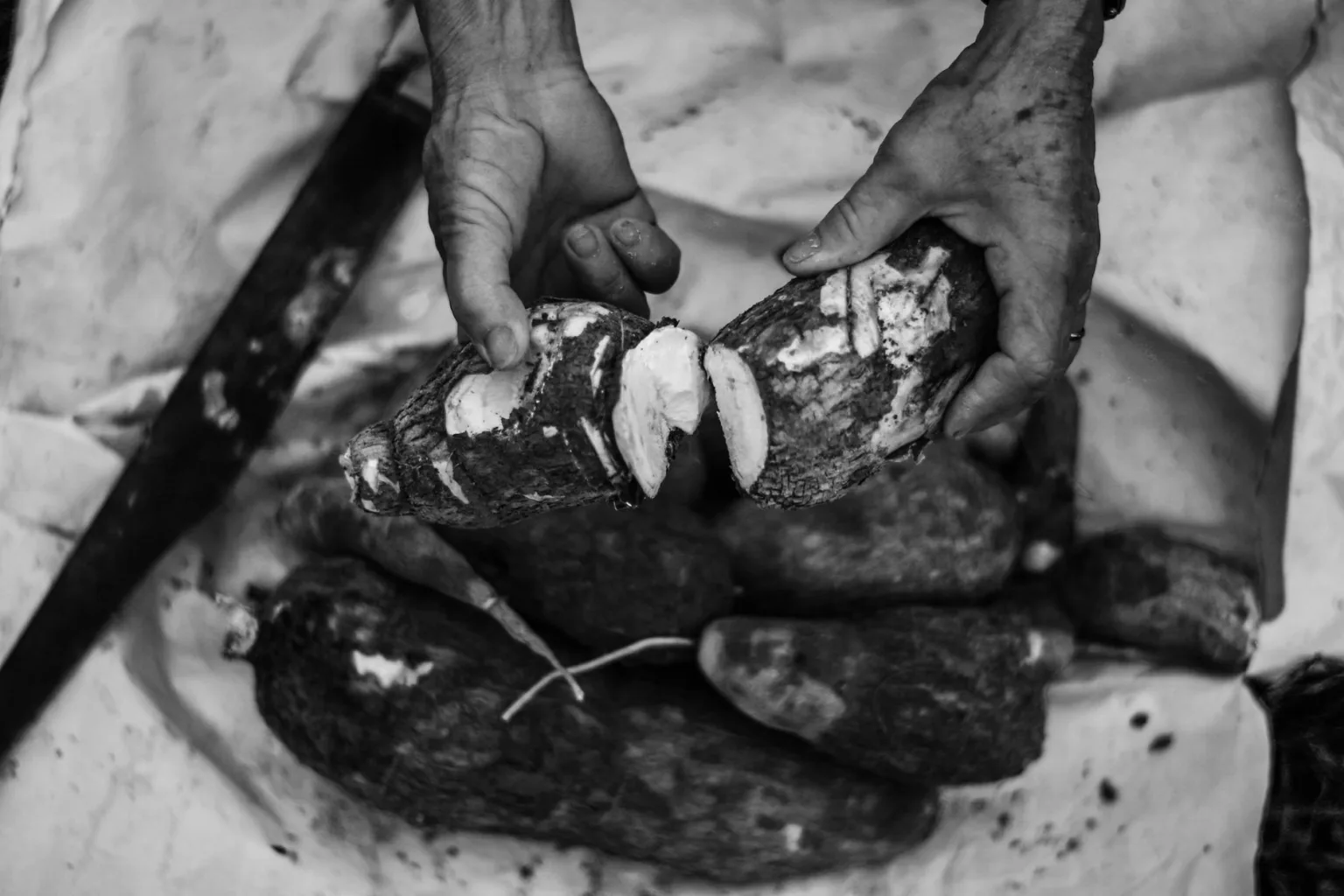
Dasheen is a common name for taro, Colocasia esculenta, a herbaceous plant in the Araceae family that produces an edible underground corm. The starchy corm is eaten as a staple or side dish. The leaves are also eaten as a vegetable, but they must be cooked. Common names such as taro, cocoyam, malanga, and dasheen can refer to different plants or vary by region; this profile concerns Colocasia. Do not eat it raw: the plant is described as poisonous until properly cooked or dried. Buy material identified as food rather than assuming that an ornamental plant or a similarly named root is interchangeable.
When to use it
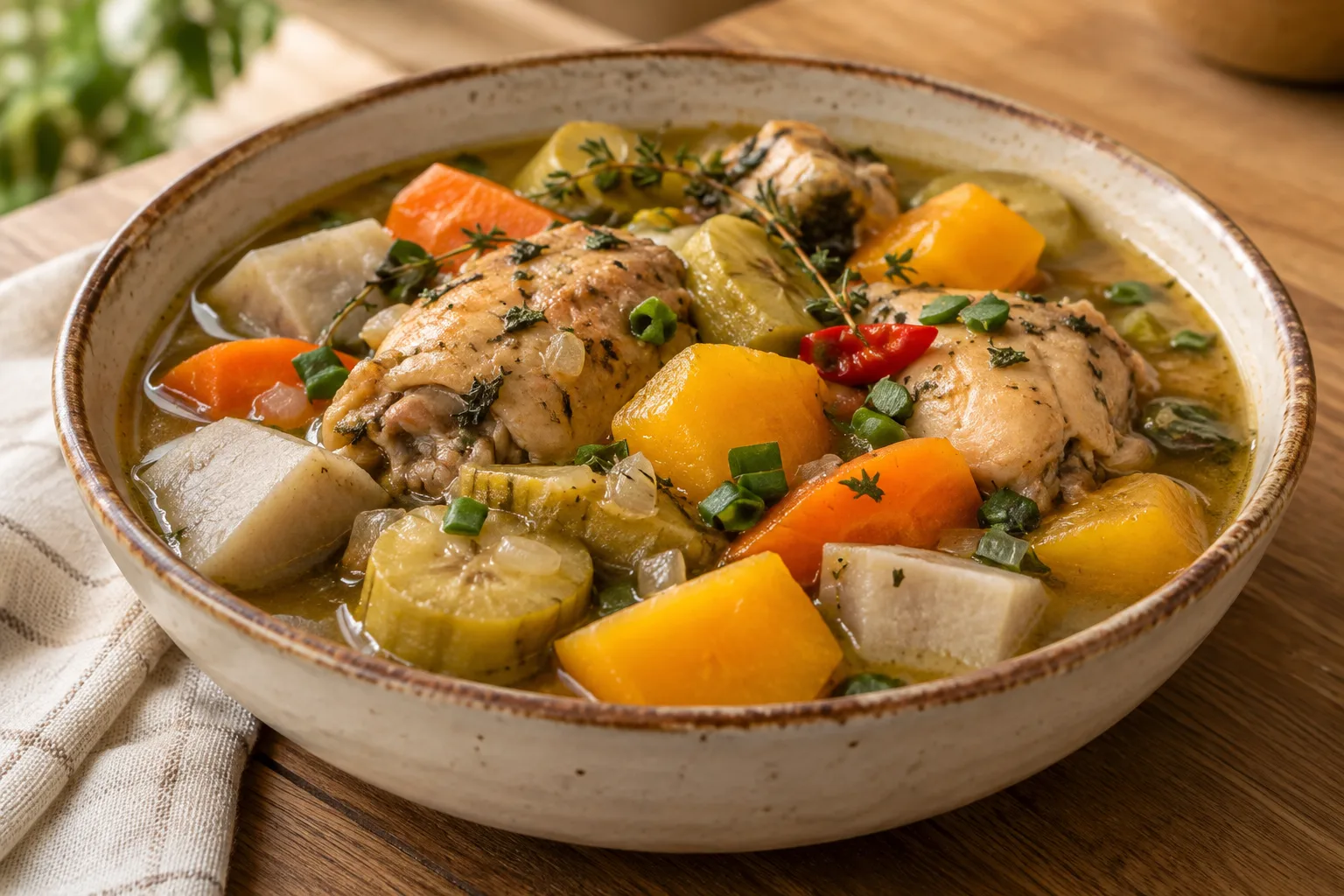
Use dasheen when a meal calls for a starchy root to serve as a side or part of a main dish. The corm can be boiled, roasted, or fried, and it can be dried and milled into flour. Cooked leaves can be used as a vegetable, including in stews. Choose the form to suit the dish and make sure the item is identified as edible taro or dasheen. Since both corm and leaves require cooking, dasheen is not suitable for raw salads, smoothies, or uncooked preparations. Treat the corm and leaves as separate ingredients when following a recipe.
How to use it
Prepare the corm for the recipe and cook it thoroughly before eating. Dasheen corms may be boiled, roasted, or fried; they can also be dried and milled into flour for recipes that use a starchy root flour. Use the leaves as a vegetable only after cooking, for example in a stew. Do not taste the corm, leaves, or other plant parts raw or undercooked. An extension reference describes the plant as poisonous until cooked and notes boiling in salted water as a preparation method. Do not assume every variety or plant part is safe simply because it resembles culinary taro; use correctly identified food-grade material.
Flavour and texture
The corm is starchy and used as a staple food, with the character of a starch-rich root. The available evidence does not establish a precise flavor description or a single texture shared by all varieties and cooking methods; the finished result depends on preparation. The leaves are eaten as a vegetable once cooked. A cooked use does not mean the ingredient is safe to taste raw, so keep preparation and safety in mind when judging its texture.
How to choose it
Look for a product explicitly identified as edible dasheen or taro. Names such as cocoyam may refer to either Colocasia or Xanthosoma, so a common name alone may not confirm the species. Choose corms that appear firm and show no obvious spoilage, and avoid ornamental plants without clear food identification. The available evidence does not set grades, ideal sizes, or detailed freshness standards; follow the seller’s handling directions and choose produce intended for cooking.
Storage
Handle fresh corms gently to avoid damage and follow any storage instructions on the package or from the seller. The available evidence does not establish a validated home-storage temperature, shelf life, or specific storage method for fresh dasheen, so no fixed keeping time can be given here. Use cut or damaged pieces promptly according to local food-handling guidance, and discard pieces with evident spoilage. Keep the ingredient identified and separate from ornamental plant material.
Substitutions
The available evidence does not establish an exact substitute. Xanthosoma cocoyam is an approximate starchy-root alternative, but it is a different plant and may cook differently. Potato may work where a recipe needs a cooked starchy root, though it will not necessarily reproduce dasheen’s result. Adjust preparation to the chosen ingredient and cook it thoroughly; do not treat a substitute’s name or appearance as proof that it is ready to eat raw.
Common mistakes
The key mistake is eating dasheen raw or undercooked: it is not a ready-to-eat root. Another is assuming that every product called cocoyam, malanga, or taro is the same species; common names can include both Colocasia and Xanthosoma. Do not confuse an edible corm with a similar-looking ornamental plant, and do not infer a specific storage life where one has not been established.
Safety and allergens
Do not eat the corm, leaves, or other plant parts raw. Colocasia esculenta is described as poisonous until adequately cooked or dried. Cook edible parts thoroughly and use material identified for food. If the species or plant part is uncertain, do not consume it.
Culinary uses
- Starchy edible corm served as a staple or side dish
- Cooked leaves used as a vegetable
Recommended techniques
- Boiling
- Roasting
- Frying
- Drying and milling into flour
Pairs well with
- Stews
- Other vegetable dishes
Frequently asked questions
Are dasheen and taro the same?
Dasheen is one common name for taro, Colocasia esculenta. Common names vary, however, and do not always identify the same species.
Can dasheen be eaten raw?
No. The corm and leaves need cooking; the plant is described as poisonous before adequate cooking or drying.
Which parts of dasheen are eaten?
The corm is eaten cooked, and the leaves may be used as a vegetable after cooking. Do not eat unidentified or raw plant parts.
Sources and review
Automatically researched, cross-checked and validated content. Sources consulted:
- Client Challenge doi.org
- CARIBBEAN FOOD CROPS SOCIETY - AgEcon Search ageconsearch.umn.edu
- Chapter 12: Culturally Centered Approaches to Culinary Medicine – Culinary Medicine opentextbooks.library.arizona.edu
- Factors Influencing Food Habits in Antigua, W.I. digitalcommons.uri.edu
- the tobago blue food festival's contribution to increased uwispace.sta.uwi.edu
- Colocasia esculenta (Caladium, Dasheen, Elephant Ears, Green Taro, Malanga, Taro) | North Carolina Extension Gardener Plant Toolbox plants.ces.ncsu.edu
- Cocoyam | Diseases and Pests, Description, Uses, Propagation plantvillage.psu.edu
- Dashi: qué es, receta y variedades - Oriental Market orientalmarket.es
- Dashi: el caldo japonés de 2 ingredientes que lo cambia todo sibuyaurbansushibar.com
- - YouTube youtube.com
- Dashi: Qué es, tipos y usos - OneSupermarket onesupermarket.es
- ¿Qué es el dashi? El secreto de Washoku | Historias | El sitio web global de Grupo Ajinomoto - Comer Bien, Vivir Bien. ajinomoto.com