- Category
- Herbs and spices
- State
- Fresh
- Usual unit
- Variable
What it is
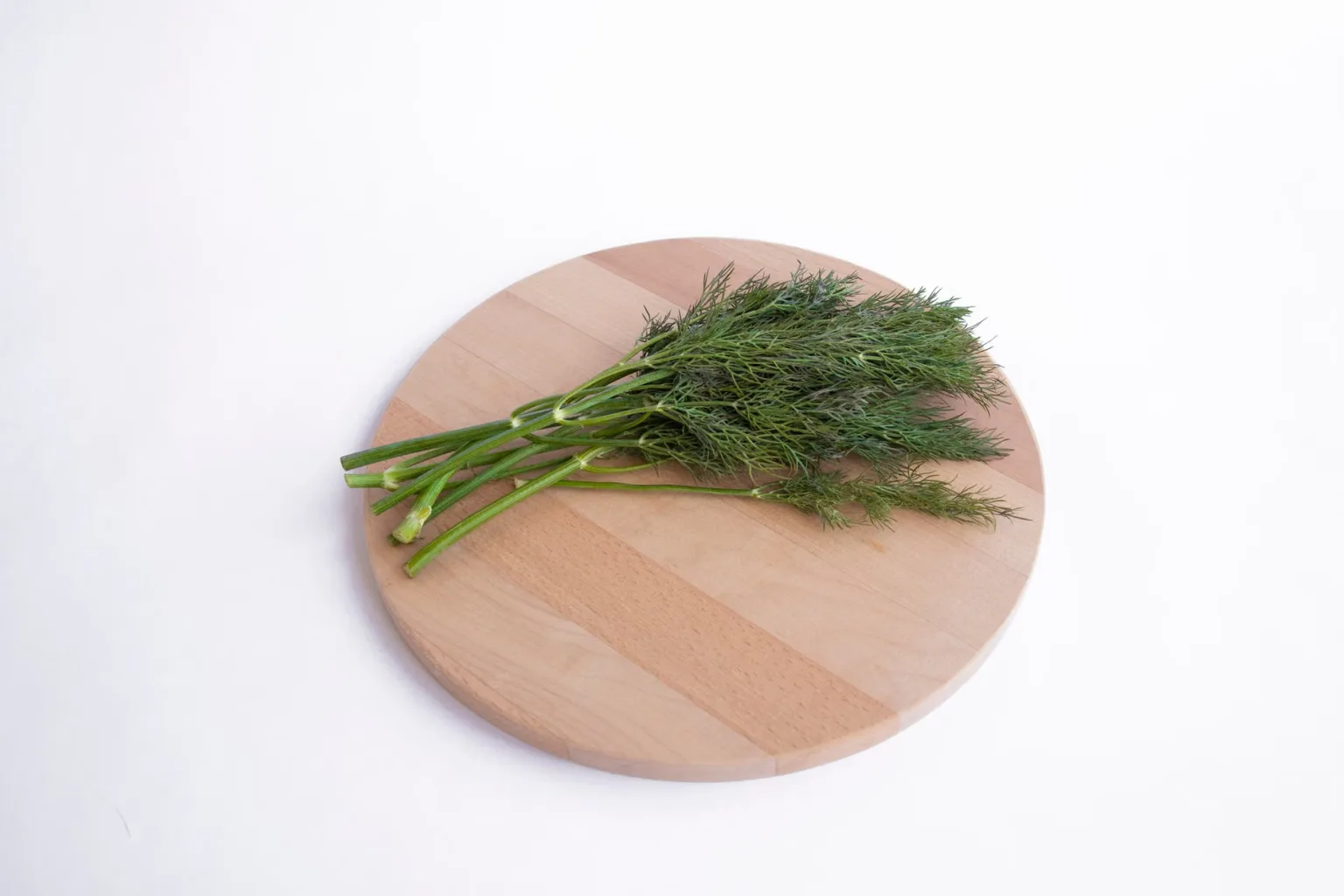
Dill is an aromatic herb used mainly for its fine, feathery green leaves. Its seeds are also used as a spice, but fresh leaves have their own character: a delicate, fresh fragrance with a light anise-like note. Chop the leaves into cold or hot dishes, or use a few sprigs as a finishing touch. Dill appears in many cuisines, accompanying fish, vegetables, soups, sauces and pickles. Fresh and dried dill are not identical: fresh dill is more fragrant and delicate, while dried dill has a different profile and is usually used in a smaller amount. This profile focuses on fresh dill leaves.
When to use it
Choose fresh dill when you want a light, herbal, slightly anise-like note rather than a strong spice flavor. It is particularly useful with fatty fish such as salmon, and in dishes with cucumber, yogurt, potatoes or eggs. Add it to a cold sauce or salad to let its aroma shine, or use it to finish a mild soup. In dishes that cook for a long time, add dill near the end, since prolonged heat can reduce some of its fresh aroma. If a dish already contains very assertive spices, dill’s delicate flavor may be overshadowed.
How to use it
Rinse the sprigs and dry them carefully before chopping. Strip the fine leaves from thicker stems if you want a delicate texture; chop the leaves just before using and mix them into salads, yogurt sauces, dressings or cucumber dishes. You can also sprinkle them over fish, potatoes, eggs or vegetables just before serving. For soups, stews and rice dishes, add dill toward the end of cooking or use it as a finish to retain more of its fresh aroma. Start with a moderate amount, taste and adjust: too much can dominate a dish. Dried dill can replace fresh dill, but it does not have the same freshness; use less and adjust to taste.
Flavour and texture
Fresh dill leaves have a delicate, green fragrance and a lightly anise-like flavor that brings contrast to rich or mild ingredients. Their fine, light texture blends easily into sauces and dressings when chopped. Dried dill has a different profile and less of a fresh character, so the two forms should not be treated as identical in a recipe.
How to choose it
Look for sprigs with lively color and leaves that are not limp or drooping, with no brown spots or yellowing. A noticeable aroma is a useful sign when choosing fresh herbs. Avoid crushed bunches or leaves that are visibly deteriorated, and buy an amount you can use while it still looks fresh.
Storage
To store fresh dill, wrap the cut stems in a slightly damp paper towel and place them in a bag in the refrigerator. Aim to use it within about a week and check its condition before cooking. If the leaves become limp, yellow or damaged, their quality has declined; avoid storing the herb crushed or wet.
Substitutions
Dried dill can replace fresh dill, but its aroma and freshness differ, so start with less and adjust after tasting. In a cucumber-and-yogurt sauce, mint can take its place if you are happy with a different flavor. No substitute exactly reproduces the delicate, lightly anise-like character of fresh dill.
Common mistakes
Using too much dill can let its aroma dominate a dish. Cooking it for a long time can also dull some of its freshness, so it often works best raw or added near the end. Do not assume fresh and dried dill are interchangeable in equal amounts: their aroma and intensity differ.
Safety and allergens
Choose herbs in good condition and rinse them before chopping or serving. Discard visibly deteriorated dill and follow ordinary food-hygiene practices when handling ingredients.
Culinary uses
- Fresh aromatic herb
- Finishing garnish and seasoning
Recommended techniques
- Finely chop and add raw to salads or sauces
- Stir in near the end of cooking to preserve its fresh aroma
Pairs well with
- Fish, especially salmon and other fatty fish
- Cucumber, yogurt, potatoes, eggs, soups and pickles
Frequently asked questions
What does fresh dill taste like?
It has a delicate, green aroma with a lightly anise-like note. Fresh dill generally tastes more fresh and fragrant than dried dill.
When should I add dill to a hot dish?
Add it near the end of cooking or just before serving to preserve more of its fresh aroma.
What foods pair well with dill?
Dill works well with fish, cucumber, yogurt, potatoes, eggs, mild soups and pickles.
Sources and review
Automatically researched, cross-checked and validated content. Sources consulted:
- ¿Por qué la muerte es origen de miedos y tabúes? doi.org
- Client Challenge doi.org
- The Essential Glossary of Cooking Terms for the Culinary Arts - Escoffier escoffier.edu
- Eneldo: propiedades, beneficios y usos en cocina de una hierba que sirve más que para aderezar salmón directoalpaladar.com
- El eneldo: planta aromática y protagonista en la cocina - Plantamus blog.plantamus.com
- Eneldo. ¿Qué es? Propiedades y usos en la cocina abc.es
- Vinagre - Wikipedia, la enciclopedia libre es.wikipedia.org
- Fresh Herbs | UNL Food | Nebraska food.unl.edu
- Eneldo: qué es, propiedades y usos en cocina bonviveur.com
- What’s the proper way to make dill pickles? | Servicio de Extensión de OSU extension.oregonstate.edu
- Wellness Program Finder | Food Ed Hub Resources | Tisch Food Center | Teachers College, Columbia University tc.columbia.edu
- El eneldo: planta aromática y protagonista en la cocina - Plantamus google.com
- Ingredientes que maridan con eneldo ✓ basmatic.com
