- Category
- Herbs and spices
- State
- Fresh
- Usual unit
- Variable
What it is
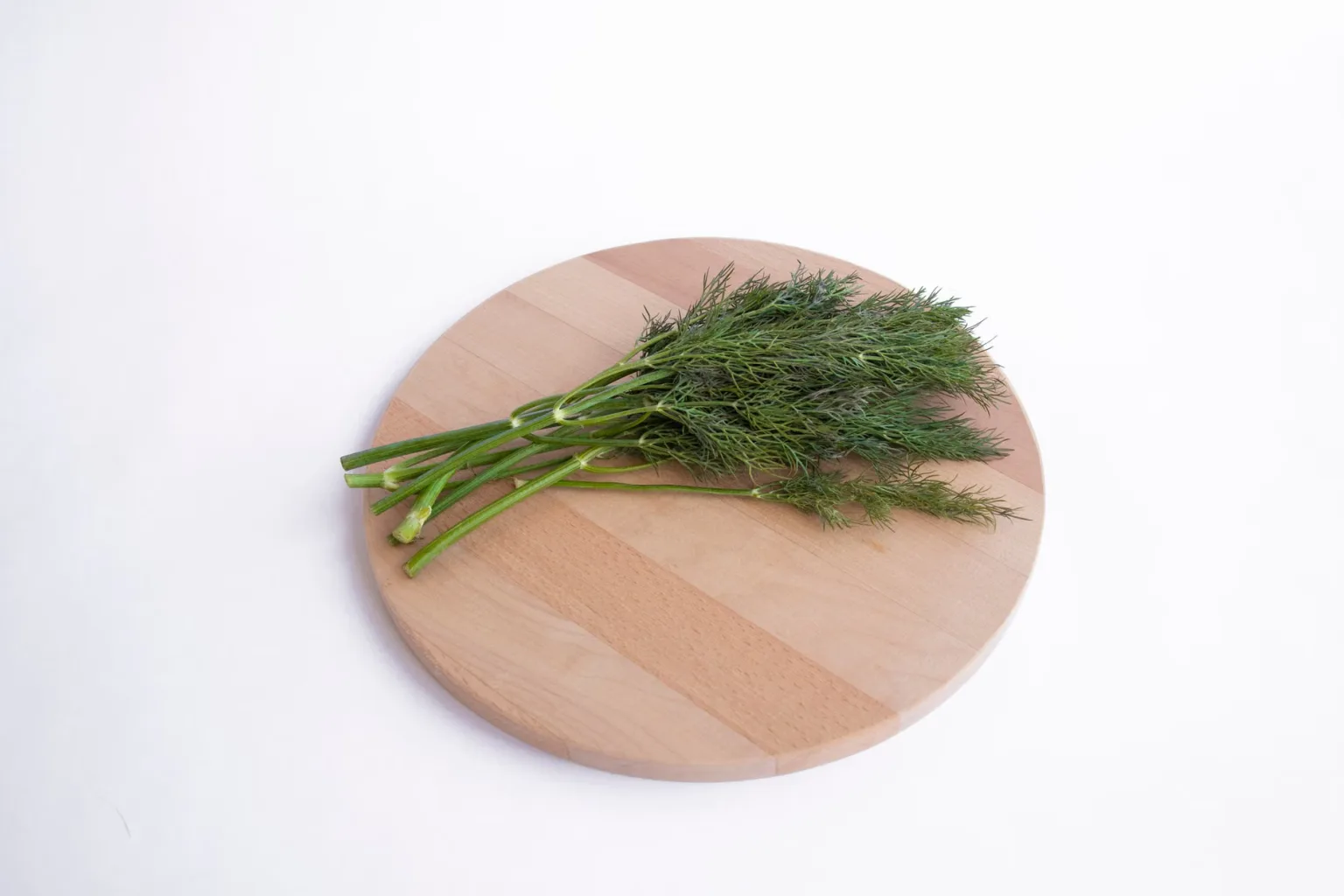
Dill stems are the elongated parts that support the leaves and flower heads of the dill plant, Anethum graveolens. Dill belongs to the Apiaceae family. In cooking, dill is used to flavor pickles, soups, salads, sauces and fish dishes, but stems, leaves and seeds are not exactly the same ingredient. Fresh stems can add aroma, especially when left whole in a liquid or finely chopped if tender. They may not have the delicacy of the leaves, while the seeds have their own uses and flavor. This profile is about fresh stems, not dried seeds or a mixture of leaves and stems. Treat the stems as an aromatic part of the herb, and choose how to use them according to their tenderness and the texture you want in the finished dish.
When to use it
Use dill stems when you want to add an aromatic background to pickles, soups or stews, especially if you can remove them before serving. They can also flavor fish dishes or sauces, though chopped leaves are usually more convenient when you want a delicate, visible fresh finish. If the stems are tender, chop them and add them to the dish. In delicate recipes, start with a small amount and adjust to taste: dill’s aroma can fade with prolonged heat, so consider adding some near the end. For home pickling, use a tested recipe and do not change its vinegar-to-water proportions.
How to use it
Rinse the stems and dry them gently. To flavor a liquid, add whole stems to soup, stew or a jar of pickles, then remove them if you do not want them left in the dish. If the stems are tender, chop them finely and mix them into a sauce, salad or fish preparation. To retain more of dill’s fresh aroma, add chopped pieces near the end of cooking or just before serving rather than exposing them to prolonged heat. Taste before adding more. Stems can be used alongside dill leaves, but they do not replace the leaves’ delicate texture exactly. For home-preserved pickles, follow a tested recipe and keep its ingredient amounts and processing instructions unchanged.
Flavour and texture
Dill stems share the herb’s characteristic fresh, mildly anise-like aroma. Their texture is firmer and more fibrous than the fine leaves, so whole stems often work best for flavoring a liquid and then being removed. Young, tender stems can be chopped, but they give a dish a sturdier presence than leaves. Intensity can vary with the plant part and product; do not expect stems, leaves and seeds to taste or behave identically in a recipe.
How to choose it
Choose stems that look fresh and green, without clearly wilted, slimy or damaged areas. When they are sold with leaves, check that the bunch smells clean and herbaceous and that the stems are not limp. Tender stems are easier to chop; thicker ones are useful for infusing and removing. If you only need stems, you can use the sound stems left over after preparing dill leaves. Appearance varies between bunches and does not by itself establish a particular season.
Storage
Keep fresh stems refrigerated and use them promptly, since dill can lose flavor quickly after harvest. Remove deteriorated parts and avoid leaving the stems wet or crushed in their container. If you bought a bunch with leaves, store it as a fresh herb and separate stems as needed. No reliable, stem-specific storage period is established here. A cited growing guide describes drying dill in a warm, ventilated place away from direct light; drying causes the herb to lose much of its flavor.
Substitutions
Fresh dill leaves or fronds are the closest flavor alternative because they come from the same plant, but they are more delicate and do not provide the same structure as a stem. Dill seeds can suit recipes that work with that form of the spice, but they are not an exact replacement for stems. Start with a moderate amount and taste before adding more. No quantity equivalence between stems, leaves and seeds is established here.
Common mistakes
Do not treat stems, leaves and seeds as interchangeable in texture or intensity. Thick stems can be fibrous if chopped carelessly; use them whole for infusing, or chop only the tender parts. Avoid prolonged heating if you want to retain dill’s fresh aroma. When making pickles at home, do not improvise the vinegar and water amounts or replace a tested recipe with a different ratio.
Safety and allergens
For home pickling, follow a tested recipe and keep its vinegar and water amounts and processing instructions; changing them can compromise safe preservation. This caution concerns pickle preparation, not a specific safety warning about dill stems.
Culinary uses
- Aromatic seasoning for pickles and preserved vegetables
- Herbal flavoring for soups and stews
- Fresh accent for fish dishes and sauces
Recommended techniques
- Add whole stems to a pickle jar or cooking liquid to infuse their aroma, then remove before serving if desired
- Chop tender stems finely and add them near the end of cooking or just before serving
- Use stems as part of the dill flavoring in pickling, following a tested recipe
Pairs well with
- Pickled cucumbers and other pickled vegetables
- Fish, including salmon
- Soups and stews
- Creamy sauces and cucumber
Frequently asked questions
Can you eat dill stems?
This profile focuses on using stems as an aromatic. Tender stems can be chopped; firmer ones are often more useful for flavoring soups or pickles and removing before serving.
Can I use dill stems in pickles?
Dill is used to flavor pickles. Stems can contribute that aroma, but make home-preserved pickles with a tested recipe and do not alter its vinegar-to-water proportions.
Can stems replace dill leaves or seeds?
Not exactly. Leaves are more delicate, and seeds have their own uses. Adjust to taste rather than assuming the same amount will give the same result.
Sources and review
Automatically researched, cross-checked and validated content. Sources consulted:
- ¿Por qué la muerte es origen de miedos y tabúes? doi.org
- Eneldo: propiedades, beneficios y usos en cocina de una hierba que sirve más que para aderezar salmón directoalpaladar.com
- Foeniculum vulgare - Wikipedia, la enciclopedia libre es.wikipedia.org
- Cómo usar eneldo (con imágenes) - wikiHow es.wikihow.com
- Qué es (y qué no es) la estadística, usos y abusos de una disciplina clave en la vida de los países y las personas | Estudios económicos doi.org
- Eneldo aces.edu
- eneldo aggie-horticulture.tamu.edu
- Cultivo de eneldo en huertos familiares | Extensión de la UMN es.extension.umn.edu
- Pickling vegetables | Servicio de Extensión de OSU extension.oregonstate.edu
- Eneldo: qué es, propiedades y usos en cocina bonviveur.com
- El eneldo: planta aromática y protagonista en la cocina - Plantamus google.com
- Instagram google.com
- Artemisia dracunculus - Wikipedia, la enciclopedia libre es.wikipedia.org
