- Category
- Vegetables
- State
- Dry
- Usual unit
- unidad
What it is
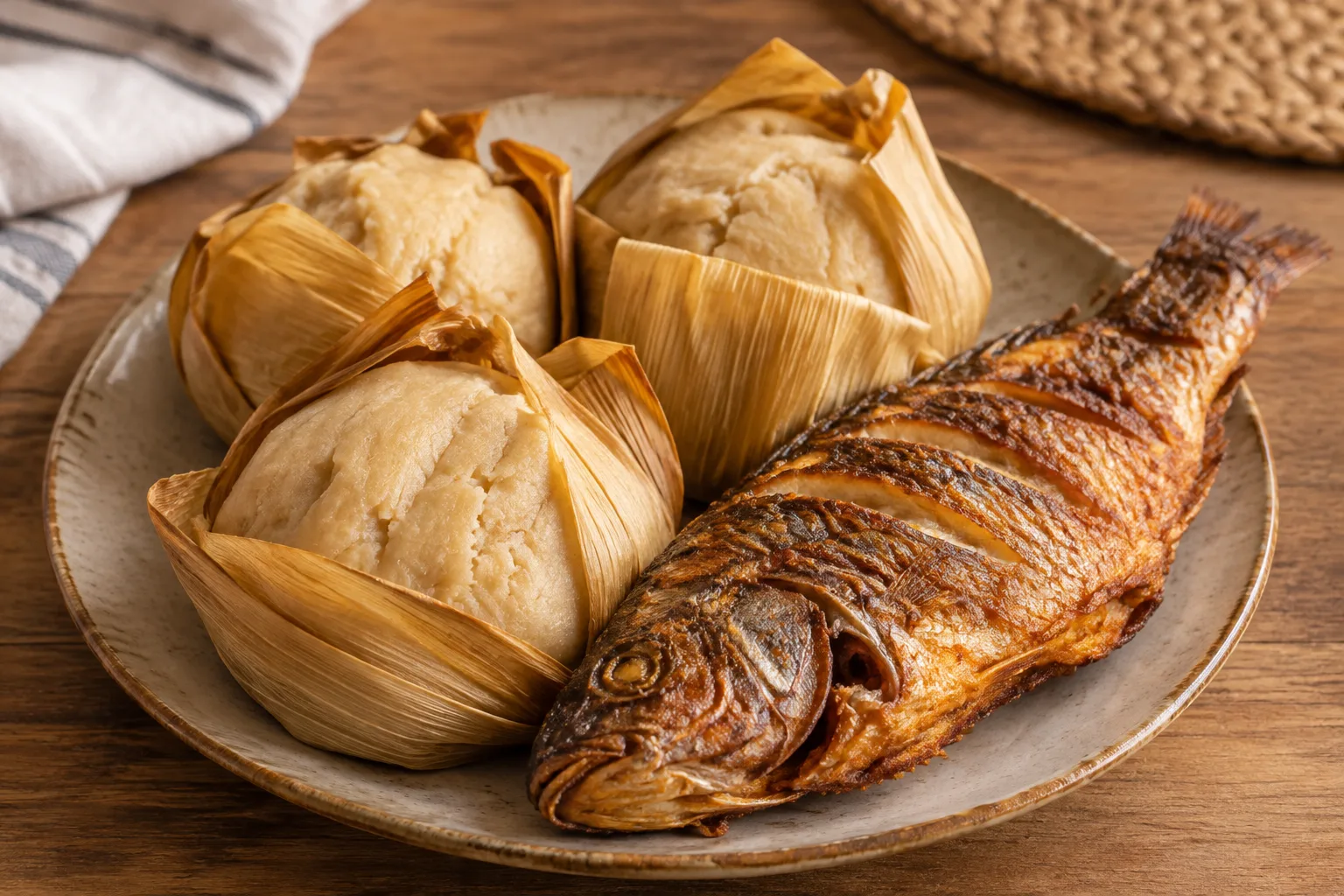
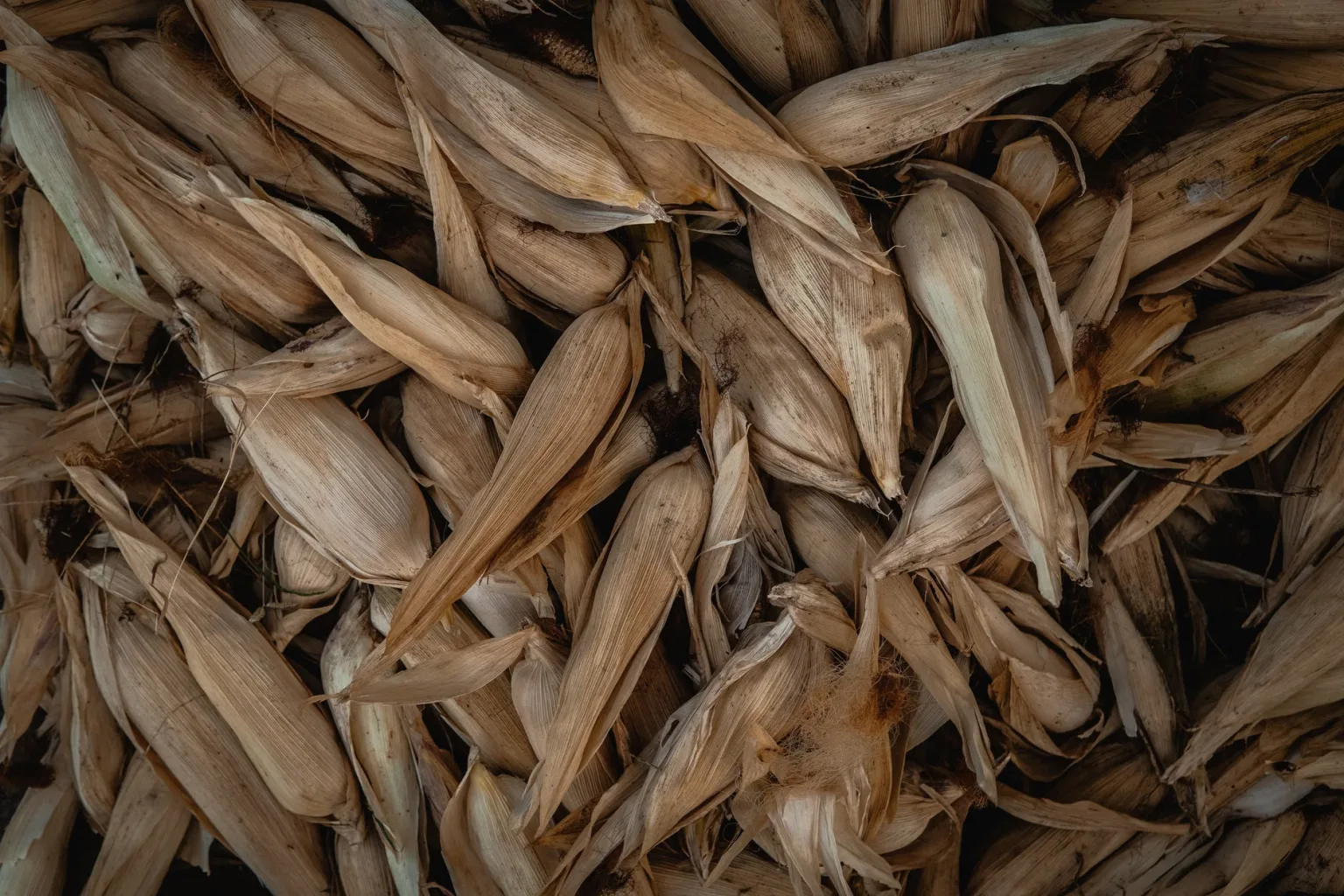
Dried corn husks are the outer leaves that cover an ear of corn, dried for use as a wrapper. They are not the corn kernels or the fine strands of corn silk. In cooking, husks can wrap foods such as tamales, humitas, and some meat preparations; the leaf helps contain the food during cooking. To make a dried husk easier to handle and less likely to crack, soak it in water until flexible again. Regional names vary; they are also known as totomoxtle, chala, panca, or amero, among other names.
When to use it
Use dried corn husks when a recipe calls for corn-leaf wrapping, especially for tamales, humitas, or other foods cooked in a wrapper. They are useful when a leaf needs to be softened and folded around a filling. They do not add corn kernels to a dish: their main role is to wrap and hold the food. If a recipe specifically calls for fresh husks, check before substituting dried ones, because dried husks need soaking to regain flexibility.
How to use it
Inspect the husks and carefully separate the pieces you need. Soak them in water until they fold easily without cracking; the time can vary with how dry they are. Drain and arrange them to wrap the food as your recipe directs, keeping the filling contained. Husks are used, for example, to wrap tamales and humitas. If a husk is too small or torn to close the parcel, overlap more than one when the recipe allows. Follow the recipe's method and directions for cooking the wrapped food.
Flavour and texture
Soaking makes a dried husk more flexible, allowing it to fold around food with less risk of cracking. Its documented role in these preparations is mainly as a wrapper rather than as a main ingredient. The available evidence does not establish a specific flavor or aroma that can be reliably attributed to every husk.
How to choose it
Choose husks sold for culinary use and intended for wrapping food. Look for pieces that are whole or large enough for the food you plan to wrap, and avoid visibly broken pieces that cannot close the parcel you need. Names and formats vary by region. The available evidence does not establish a universal commercial grade, color, or size, so check that the product suits your recipe.
Storage
The available information confirms that these husks are used and sold dry, but does not establish a storage life or specific storage conditions. Keep the product according to its package directions rather than relying on an invented shelf-life estimate. If the package provides specific instructions, follow them; if not, ask the seller or manufacturer about storage.
Substitutions
Fresh corn husks may work when a recipe allows a non-dried leaf, although dried husks need soaking to regain flexibility. Banana leaves are also used as wrappers in some preparations, but they are not identical and the result may differ. Check that your recipe allows a change of wrapper and follow its directions.
Common mistakes
Do not try to wrap food with stiff, dry husks without soaking them first; they may crack when folded. Do not confuse the outer husk with corn silk or corn kernels. Check that each leaf is large enough and in suitable condition to close around the food; otherwise use another leaf or follow the recipe's suggested approach.
Safety and allergens
No specific official safety warning for these husks is provided in the available evidence. Use husks sold for culinary purposes and follow the package and recipe directions. Do not confuse them with wrapping materials not intended for food.
Culinary uses
- Envoltura para cocinar alimentos
- Separador o envoltorio culinario
Recommended techniques
- Rehidratar en agua hasta que las hojas se vuelvan flexibles
- Envolver alimentos antes de cocinarlos
Pairs well with
- Masa para tamales
- Preparaciones de maíz como humitas
- Carne envuelta para cocinar
Frequently asked questions
Do dried corn husks need to be soaked?
Yes. Soak them in water until they are flexible enough to fold around food without cracking.
What foods are corn husks used to wrap?
They are used to wrap tamales, humitas, and other preparations cooked in a wrapper.
Are corn husks the same as corn silk?
No. The husks are the outer leaves covering the ear; corn silk consists of the fine strands inside that covering.
Estimated nutrition
- Fat
- 0 g
- Saturates
- 0 g
- Carbohydrate
- 0 g
- Sugars
- 0 g
- Fibre
- 0 g
- Protein
- 0 g
- Salt
- 0 g
Sources and review
Automatically researched, cross-checked and validated content. Sources consulted:
- The Essential Glossary of Cooking Terms for the Culinary Arts - Escoffier escoffier.edu
- Sabores de nuestras tierras/recetas - 2024 | Agricultura y Recursos Naturales ucanr.edu
- Harinas de maíz ¿Cuántos tipos hay y para qué sirven? - Formacion en Gastronomia formacionengastronomia.com
- educational content to support healthful lifestyle practices sjsu.edu
- Nutrition After Your Transplant - Health Online healthonline.washington.edu
- Vamos a Conservar Alimentos - Home Food Preservation and Safety - Food Safety and Quality extension.psu.edu
- Social Media Toolkit - Health & Well-Being health.extension.wisc.edu
- Maíz: qué es, tipos y beneficios bonviveur.com
- Publicaciones de Seguridad alimentaria aesan.gob.es
- Ingredientes para la receta: El maíz — Cuaderno de Cultura Científica culturacientifica.com
- Winter vegetable production on small farms and gardens west of the Cascades | Servicio de Extensión de OSU extension.oregonstate.edu
- Sweet Corn | UNL Food | Nebraska food.unl.edu
- Hoja de maíz - Wikipedia, la enciclopedia libre es.wikipedia.org
- Estas son las hojas tradicionales mexicanas más usadas para cocinar | Grupo Animal grupoanimal.mx