- Category
- Fish and seafood
- State
- Dry
- Usual unit
- tablespoon
What it is
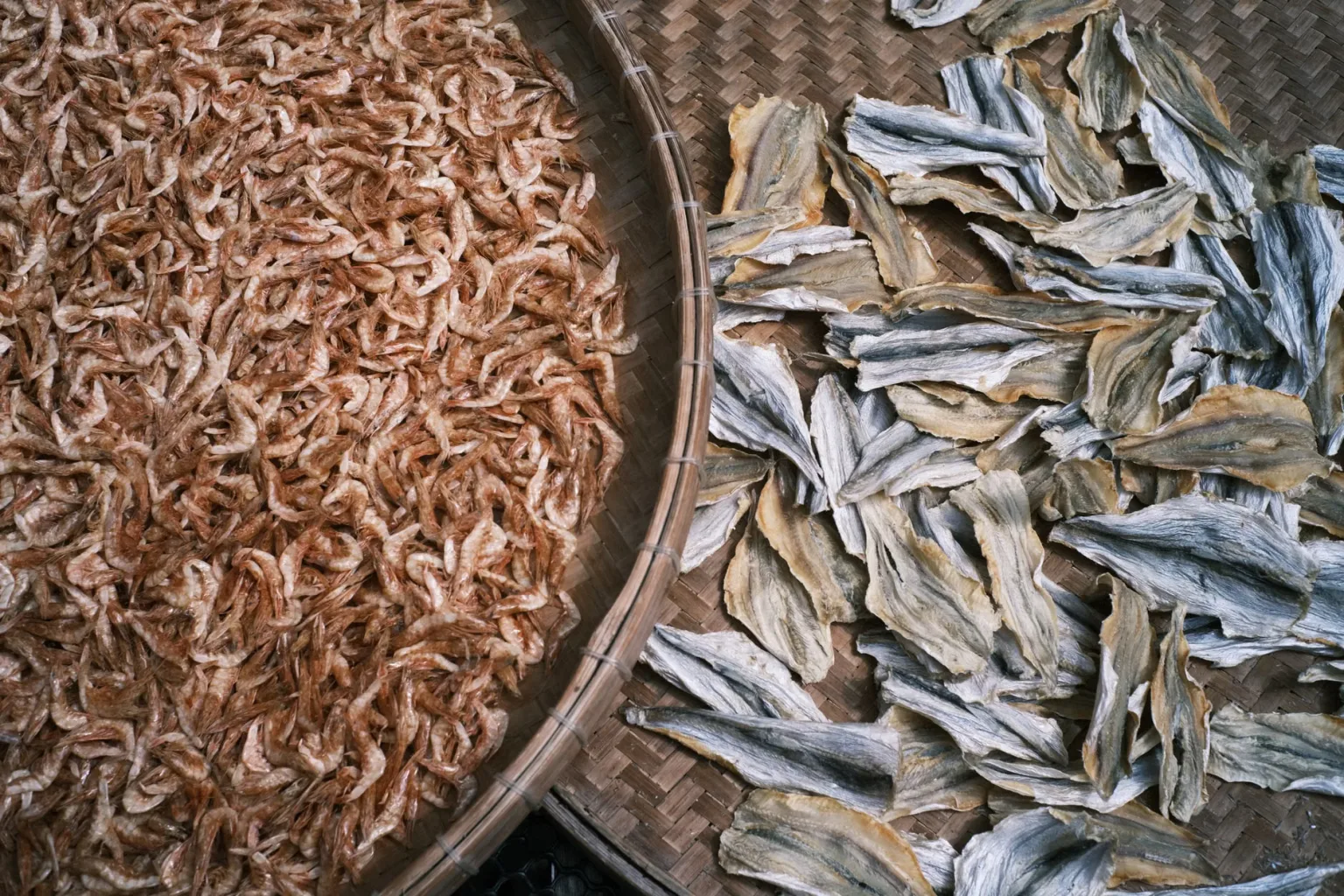
Dried shrimp is shrimp that has been dehydrated; some preparations are dried with salt. Compared with fresh shrimp, it has a more concentrated seafood flavor and a firmer, drier texture, so it is often used as a seasoning ingredient rather than as a serving of seafood on its own. It appears in dishes from several Asian cuisines and may be added whole, chopped, or ground, depending on the recipe. Saltiness, size, and texture can vary by product, so read the package and adjust the amount to the shrimp you have.
When to use it
Use dried shrimp when a broth, soup, rice dish, or stir-fry needs a more pronounced seafood note without relying only on fresh shrimp. It works well in recipes where it can blend with liquid or other ingredients, and it can also be used chopped as a topping for a rice preparation. Its flavor is concentrated and it may contribute salt, so start with a small amount, taste, and season at the end. It is not an exact substitute for fresh shrimp: moisture, texture, and intensity differ.
How to use it
First check the package and recipe instructions: size, salt level, and texture can vary. If the recipe calls for soaking or rinsing, do so and drain the shrimp before adding them; the available evidence does not support one universal soaking time. Chop or grind them to distribute their flavor in soups, broths, rice dishes with liquid, or stir-fries. They can also be chopped and used as a finishing accent on a rice dish. Taste before adding salt, since some products are prepared with salt. Avoid relying on a fixed measure without checking the product; adjust the amount to the recipe and the flavor you want.
Flavour and texture
Dried shrimp has a pronounced, concentrated seafood flavor that can be salty, with a firmer and drier texture than fresh shrimp. The exact taste depends on the product and how it was prepared. Chopped or ground shrimp disperses readily through soups and stir-fries, while whole shrimp make their presence more noticeable in each bite.
How to choose it
Choose a package clearly identified as dried shrimp, and check its directions, ingredient list, and allergen information. Make sure the package is intact and that the product suits the size and texture called for in your recipe. Salt level and degree of drying can vary, so choose with the intended use in mind and taste before salting the dish.
Storage
Follow the package storage directions, which can vary with the product and its packaging. Keep the package tightly closed between uses and use clean, dry utensils when removing shrimp. If the label says to refrigerate it, keep it refrigerated; do not assume that every dried product has the same storage requirements.
Substitutions
Fresh shrimp can provide shrimp flavor, but it will not reproduce the dried ingredient’s intensity or texture and will add moisture to the recipe. Dried scallops are another dried seafood product, but their flavor is different; do not treat them as an exact equivalent. Adjust the quantity and salt to suit the result you want.
Common mistakes
Adding too much dried shrimp at the start can overpower a dish or make it too salty. Taste before seasoning and adjust gradually. Another mistake is replacing it with fresh shrimp as though the two were identical: moisture, texture, and intensity will change. Soak or rinse only when the recipe or package instructions call for it.
Safety and allergens
Dried shrimp contains shrimp, a crustacean. Avoid it if you have a crustacean allergy, and check the label for any additional warnings. Follow the package’s storage and handling instructions; if you are unsure about the product, do not eat it.
Culinary uses
- Concentrated seafood seasoning for soups and broths
- Savory topping or mix-in for rice and noodle dishes
Recommended techniques
- Soak or rinse when a recipe calls for it, then drain before use
- Chop or grind and add to stir-fries, soups, or toppings
Pairs well with
- Rice and rice noodles
- Vegetables, garlic, and other seafood
Frequently asked questions
Do I need to soak dried shrimp?
It depends on the recipe and product. Soak or rinse it if the directions say to, then drain it; do not assume there is one universal soaking time.
Is dried shrimp salty?
Some products are prepared with salt, and the level varies. Taste the dish before adding extra salt.
Can I replace dried shrimp with fresh shrimp?
Fresh shrimp can add shrimp flavor, but it is not an identical replacement: it adds moisture and has a different texture and intensity.
Estimated nutrition
- Fat
- 3.33 g
- Saturates
- 0 g
- Carbohydrate
- 0 g
- Sugars
- 0 g
- Fibre
- 0 g
- Protein
- 60 g
- Salt
- 8.08 g
Sources and review
Automatically researched, cross-checked and validated content. Sources consulted:
- Client Challenge doi.org
- The Essential Glossary of Cooking Terms for the Culinary Arts - Escoffier escoffier.edu
- Gambas: origen, variedades, propiedades y cómo usarlas en la cocina abc.es
- Home food preservation | Servicio de Extensión de OSU extension.oregonstate.edu
- Para la ciudadanía aesan.gob.es
- Maternal Feeding Styles and Child Appetitive Traits scholarshare.temple.edu
- Un ingrediente secreto en la cocina indochina — las gambas secas | Recetas asiáticas fáciles - en menos de 5 pasos cocinaindochina.wordpress.com
- FIRST LINE OF TITLE - University of Delaware udspace.udel.edu
- Impacts of Roads and Hunting on Central African Rainforest ... repository.si.edu
- Synthesising bushmeat research effort in West and Central Africa: A ... geog.ufl.edu
- ▷ Polvo de gamba: transforma tus platos con un sabor marino | La Casa de los Sabores lacasadelossabores.com